

Care Disclaimer: Plant care recommendations are general guidelines based on common growing conditions. Individual results may vary based on your local environment, climate, and care routine. If your plant is toxic, keep it away from children and pets, and consult a veterinarian if accidental ingestion occurs.
1.Geranium — Overview
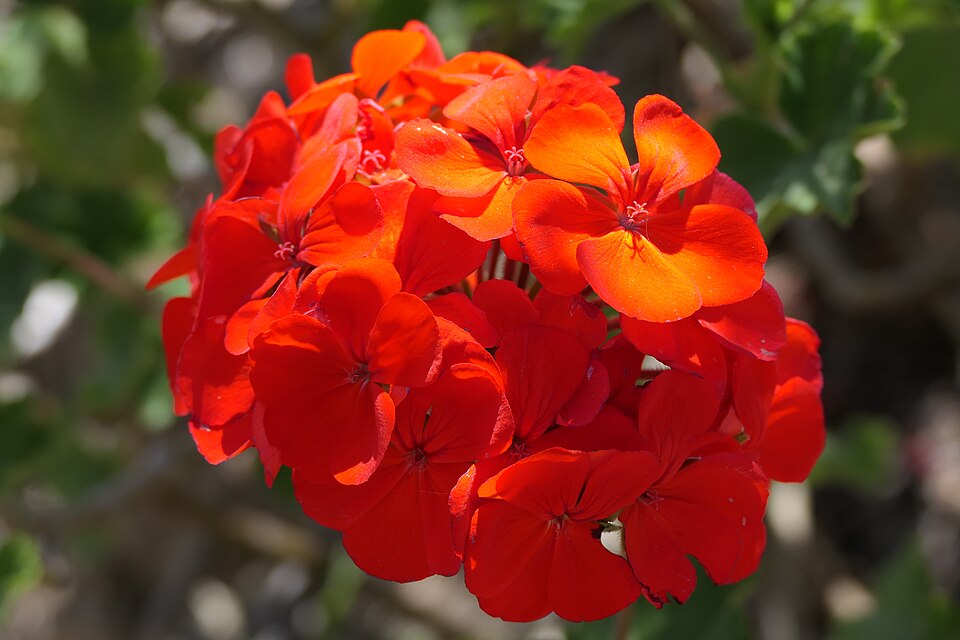
Pelargonium zonale, commonly known as zonal geranium, is a highly cherished herbaceous perennial native to the arid regions of South Africa. This resilient plant is a member of the Geraniaceae family, often colloquially referred to as 'geranium,' a term botanically reserved for a different genus within the same family. It is extensively cultivated globally for its exceptional ornamental value, characterized by a profusion of showy, vibrant flowers and distinctive foliage.
The 'zonal' epithet aptly describes the prominent, often horseshoe-shaped or butterfly-shaped band of darker pigmentation that frequently adorns its leaves, which can vary in color from bright green to bronze, variegated, or even deep maroon. Flowers typically present with five petals, clustered in rounded umbels, and display an astonishing array of colors including various shades of red, pink, white, orange, purple, and numerous bicolors. Pelargonium zonale generally exhibits an upright, bushy growth habit, forming a compact mound ideal for various garden applications.
It thrives in conditions of full sun and well-draining soil, establishing itself as a staple in bedding displays, decorative containers, and elegant hanging baskets across temperate and subtropical climates. Its widespread popularity among horticulturists is attributed to its ease of cultivation, extended blooming period throughout the warmer months, and notable resistance to many common pests and diseases. Extensive hybridization efforts have yielded thousands of cultivars, showcasing immense diversity in flower forms, colors, and intricate foliage patterns.
Trusted Scientific References
1. Authoritative external sources for Pelargonium zonale
1.1 Wikipedia — Pelargonium zonale
1.2 Kew POWO (Plants of the World Online)
1.3 PubMed — peer-reviewed research
1.4 NCBI Taxonomy Browser
1.5 GBIF — Global Biodiversity
1.6Geranium should be interpreted through verified botanical identity, practical care, and responsible safety language. This recovery note adds the missing context needed for a complete profile: match light to the plant's habit, use well-drained soil, water according to season, and avoid unsupported medicinal or edible claims. For publishing, the plant can be presented as a source-backed garden plant with clear care guidance, common problem diagnosis, and conservative safety wording.
1.1.Geranium — Key Features
- ✓ <strong>Distinctive Zonal Foliage</strong> — Leaves frequently display a prominent, often colorful, horseshoe-shaped band.
- ✓ <strong>Diverse Flower Colors</strong> — Available in an extensive palette of reds, pinks, whites, oranges, purples, and bicolors.
- ✓ <strong>Extended Blooming Period</strong> — Flowers profusely and continuously throughout the warmer months, providing long-lasting color.
- ✓ <strong>Drought</strong> — Tolerant — Exhibits good resilience to dry conditions once established in the garden.
- ✓ <strong>Versatile Cultivation</strong> — Highly suitable for use in containers, hanging baskets, and as a bedding plant.
- ✓ <strong>Succulent Stems</strong> — Characterized by fleshy stems that aid in water storage, contributing to its drought resistance.
- ✓ <strong>Half</strong> — Hardy Perennial — Requires protection from frost or overwintering indoors in colder climates to survive.
- ✓ <strong>Easy Propagation</strong> — Readily grown from seeds but more commonly propagated through stem cuttings for cultivar fidelity.
- ✓ <strong>Low Maintenance</strong> — Generally resistant to many common pests and diseases, making it a gardener-friendly plant.
- ✓ <strong>High Cultivar Diversity</strong> — Thousands of hybridized forms exist, offering a vast selection of flower and foliage variations.
1.2.Geranium — Quick Summary
- ✓ Vibrant Ornamental — Celebrated for its striking flowers and distinctive zonal leaf patterns.
- ✓ South African Origin — A half-hardy perennial that thrives in sunny, well-draining conditions.
- ✓ Primarily Ornamental — Not documented for significant medicinal uses, unlike some other Pelargonium species.
- ✓ Easy to Cultivate — Popular for containers, bedding, and baskets due to its resilience and long flowering season.
- ✓ Chemical Profile — Contains essential oils (e.g., geraniol, citronellol), flavonoids, and phenolic acids.
- ✓ Drought Tolerant — Exhibits good adaptability to periods of reduced water availability.
2.Geranium — Scientific Identity
3.Geranium — Quick Facts
4.Geranium — Appearance & Identification
5.Geranium — Native Habitat
6.Geranium — Water Requirements
- ✓ Climate Preference — Thrives as a half-hardy perennial in warm, frost-free climates; requires overwintering indoors or as annuals in temperate regions.
- ✓ Light Requirements — Prefers full sun exposure for optimal flowering, though zonal cultivars can tolerate partial shade, especially in hot climates.
- ✓ Soil and Potting Media — Requires well-draining, fertile soil with a neutral to alkaline pH; for containers, use a peat-free multipurpose or soil-based compost like John Innes No. 2.
- ✓ Watering Practices — Water moderately from spring to summer, allowing the compost to dry slightly between waterings; significantly reduce watering during the winter dormancy period.
- ✓ Fertilization Regime — Apply a balanced liquid fertilizer every 10-14 days in spring, transitioning to a high-potassium feed (e.g., tomato feed) fortnightly once flowers begin to form.
- ✓ Propagation Methods — Most commonly propagated by rooting stem cuttings for genetic consistency, or by sowing seeds indoors 8-10 weeks before the last anticipated frost.
- ✓ Overwintering Care — Bring plants indoors before the first frost, or take cuttings in late summer to overwinter in a bright, frost-free location with temperatures between 7-10°C (45-50°F).
- ✓ Hardening Off — Gradually acclimatize young plants or overwintered specimens to outdoor conditions over a period of two weeks before permanent placement outside.
Reviewed by the Flora Medical Global Botanical Review Panel
Multi-disciplinary editorial group · Botany · Ethnobotany · Herbal-medicine literature
Who reviewed this: This page was checked by the Flora Medical Global Botanical Review Panel — an in-house editorial group of botany graduates, ethnobotany researchers, and horticulture practitioners who collectively maintain our 7,000+ plant encyclopedia. Meet the team.
Our 4-step verification process
1. Taxonomic verification
Scientific names and synonyms cross-checked against Kew POWO, World Flora Online, and The Plant List.
2. Phytochemical & medicinal cross-reference
Active compounds, traditional uses, and reported activities are cross-referenced with PubMed, USDA Dr. Duke's database, and peer-reviewed ethnobotanical literature.
3. Conservation & distribution check
Distribution, ecology, and conservation status confirmed against GBIF occurrence records and the IUCN Red List.
4. Editorial & safety review
Every entry passes an editorial pass for clarity, originality, and safety notices (toxicity, contraindications, dosage caveats) before publication.
Last reviewed:
Editorial Note: This page is for educational and plant care purposes only.
Written by: Flora Medical Global Editorial Team
Reviewed by: Flora Medical Global Botanical Review Panel
Last Updated: June 15, 2026







Geranium — Comments & Community Reviews
Rate this plant