
Care Disclaimer: Plant care recommendations are general guidelines based on common growing conditions. Individual results may vary based on your local environment, climate, and care routine. If your plant is toxic, keep it away from children and pets, and consult a veterinarian if accidental ingestion occurs.
1.Globe Thistle — Overview
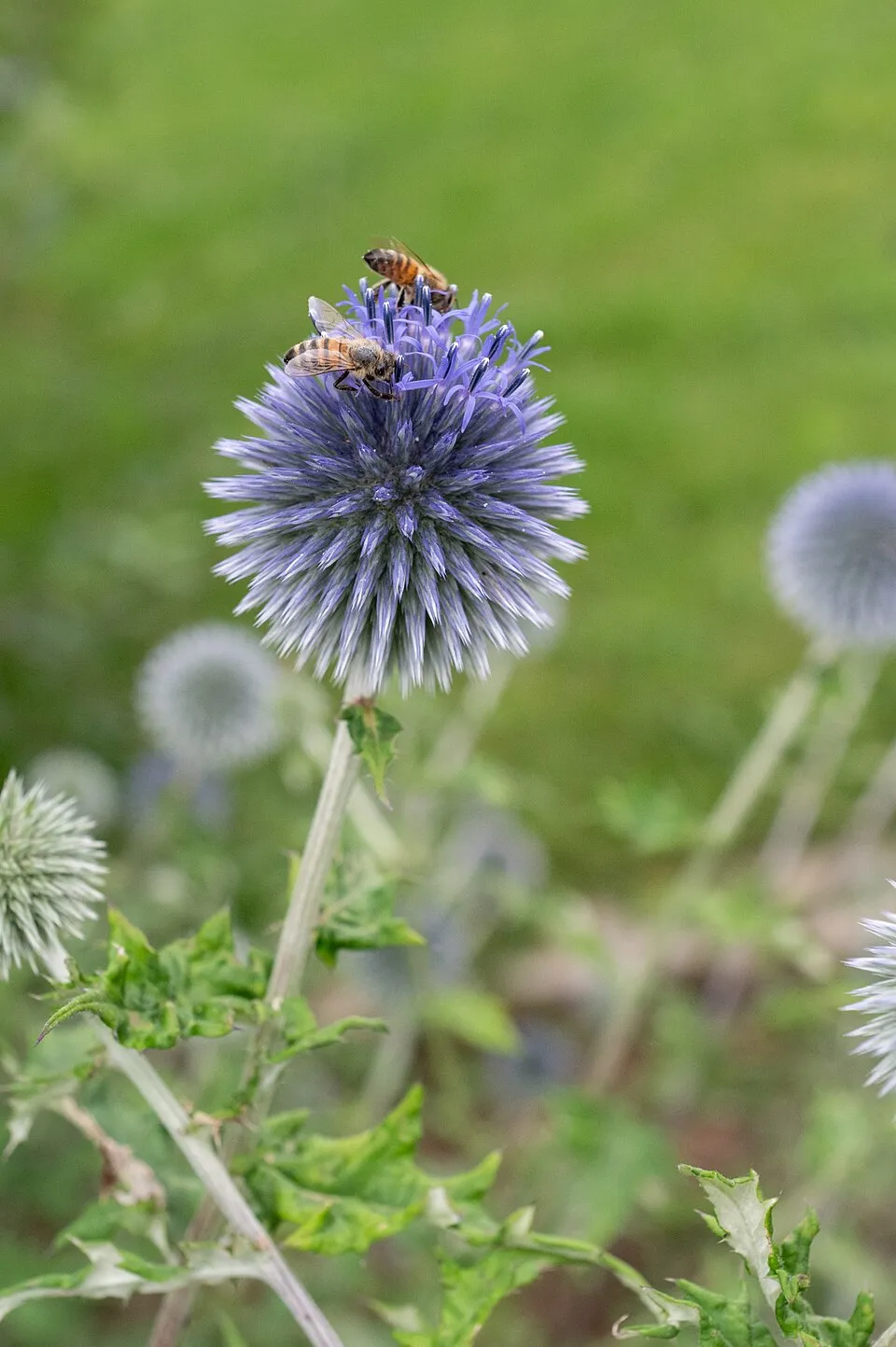
Echinops ritro, commonly known as Globe Thistle or Blue Globe-thistle, is a captivating herbaceous perennial belonging to the extensive Asteraceae family. This robust plant typically forms clumps of architectural foliage, reaching heights of 60 to 120 cm with a similar spread. Its deeply lobed, spiny leaves are a distinctive feature, often appearing silvery-green due to a fine layer of hairs on their undersides.
The plant's most striking characteristic is its unique, spherical, metallic blue flower heads, which emerge from mid-summer into early autumn. Each globe is a composite inflorescence, comprising numerous tiny, individual florets that open progressively from the top downwards, creating a mesmerizing display. Native to a wide range spanning from central and eastern Europe to western Asia, Echinops ritro thrives in dry, well-drained soils, often found in open woodlands, rocky slopes, and disturbed areas.
Its adaptability to poor soil conditions and drought tolerance make it a resilient species, while its nectar-rich flowers are a significant draw for a diverse array of pollinators, including bees and butterflies. The genus Echinops encompasses around 218 species, with E. ritro being one of the most recognized and cultivated for both ornamental and potential medicinal purposes.
Trusted Scientific References
1. Authoritative external sources for Echinops ritro
1.1 Wikipedia — Echinops ritro
1.2 Kew POWO (Plants of the World Online)
1.3 PubMed — peer-reviewed research
1.4 NCBI Taxonomy Browser
1.5 GBIF — Global Biodiversity
1.6Globe Thistle should be interpreted through verified botanical identity, practical care, and responsible safety language. This recovery note adds the missing context needed for a complete profile: match light to the plant's habit, use well-drained soil, water according to season, and avoid unsupported medicinal or edible claims. For publishing, the plant can be presented as a source-backed garden plant with clear care guidance, common problem diagnosis, and conservative safety wording.
1.1.Globe Thistle — Key Features
- ✓ <strong>Distinctive spherical, metallic</strong> — blue flower heads.
- ✓ <strong>Spiny, deeply lobed,</strong> — Spiny, deeply lobed, architectural foliage.
- ✓ <strong>Highly drought</strong> — tolerant once established.
- ✓ <strong>Attracts a wide</strong> — Attracts a wide range of pollinators, especially bees and butterflies.
- ✓ <strong>Hardy perennial, thriving in USDA Zones 3</strong> — 9.
- ✓ <strong>Low maintenance and</strong> — Low maintenance and resistant to most pests and diseases.
- ✓ <strong>Contains potent alkaloids</strong> — Contains potent alkaloids like echinopsine, contributing to neuroprotective research.
- ✓ <strong>Traditionally recognized for</strong> — Traditionally recognized for diuretic and diaphoretic actions.
- ✓ <strong>Excellent as a long</strong> — lasting cut flower or dried ornamental.
- ✓ <strong>Tolerant of poor</strong> — Tolerant of poor and sandy soil conditions.
1.2.Globe Thistle — Quick Summary
- ✓ Echinops ritro is a striking perennial known for its spherical blue flower heads.
- ✓ Traditionally used for its diuretic and diaphoretic properties, aiding detoxification.
- ✓ Modern research explores its neuroprotective and anti-inflammatory potential, rich in alkaloids and flavonoids.
- ✓ A low-maintenance, drought-tolerant plant that attracts pollinators.
- ✓ Requires caution due to potent alkaloid content; professional guidance is recommended.
- ✓ Valued for both its ornamental beauty and emerging medicinal applications.
2.Globe Thistle — Scientific Identity
3.Globe Thistle — Quick Facts
4.Globe Thistle — Appearance & Identification
5.Globe Thistle — Native Habitat
6.Globe Thistle — Water Requirements
- ✓ Site Selection — Choose a location with full sun exposure, ensuring at least 6-8 hours of direct sunlight daily, for optimal growth and abundant flowering; hardy in USDA zones 3-9.
- ✓ Soil Requirements — Globe Thistle thrives in dry to medium, well-drained soils, tolerating poor, sandy, and even alkaline conditions; heavy, wet clays should be avoided to prevent root rot.
- ✓ Propagation from Seed — Sow seeds directly in fall or early spring; cold stratification for 4-6 weeks can significantly improve germination rates for spring planting; self-seeds readily in favorable conditions.
- ✓ Transplanting & Spacing — Young plants or plugs should be planted out in spring after the last frost, ensuring adequate spacing of 18-24 inches (45-60 cm) between plants to allow for mature size.
- ✓ Watering — Once established, Echinops ritro is highly drought-tolerant, requiring minimal supplemental watering; overwatering is detrimental and can lead to crown or root rot.
- ✓ Fertilization — Generally not required, as Globe Thistle prefers lean soils; excessive fertilization can promote leggy growth at the expense of flower production.
- ✓ Maintenance & Cutting Back — Deadhead spent flower heads to prevent rampant self-seeding and encourage a tidier appearance, though leaving some for winter interest and bird feed is also an option; cut back old stems in early spring before new growth emerges.
- ✓ Pest and Disease — Highly resistant to most common garden pests and diseases, making it a low-maintenance plant; occasionally, powdery mildew may appear late in the season, or European corn borers in specific regions.
Reviewed by the Flora Medical Global Botanical Review Panel
Multi-disciplinary editorial group · Botany · Ethnobotany · Herbal-medicine literature
Who reviewed this: This page was checked by the Flora Medical Global Botanical Review Panel — an in-house editorial group of botany graduates, ethnobotany researchers, and horticulture practitioners who collectively maintain our 7,000+ plant encyclopedia. Meet the team.
Our 4-step verification process
1. Taxonomic verification
Scientific names and synonyms cross-checked against Kew POWO, World Flora Online, and The Plant List.
2. Phytochemical & medicinal cross-reference
Active compounds, traditional uses, and reported activities are cross-referenced with PubMed, USDA Dr. Duke's database, and peer-reviewed ethnobotanical literature.
3. Conservation & distribution check
Distribution, ecology, and conservation status confirmed against GBIF occurrence records and the IUCN Red List.
4. Editorial & safety review
Every entry passes an editorial pass for clarity, originality, and safety notices (toxicity, contraindications, dosage caveats) before publication.
Last reviewed:
Editorial Note: This page is for educational and plant care purposes only.
Written by: Flora Medical Global Editorial Team
Reviewed by: Flora Medical Global Botanical Review Panel
Last Updated: June 15, 2026







Globe Thistle — Comments & Community Reviews
Rate this plant