
Care Disclaimer: Plant care recommendations are general guidelines based on common growing conditions. Individual results may vary based on your local environment, climate, and care routine. If your plant is toxic, keep it away from children and pets, and consult a veterinarian if accidental ingestion occurs.
1.Griselinia Littoralis — Overview
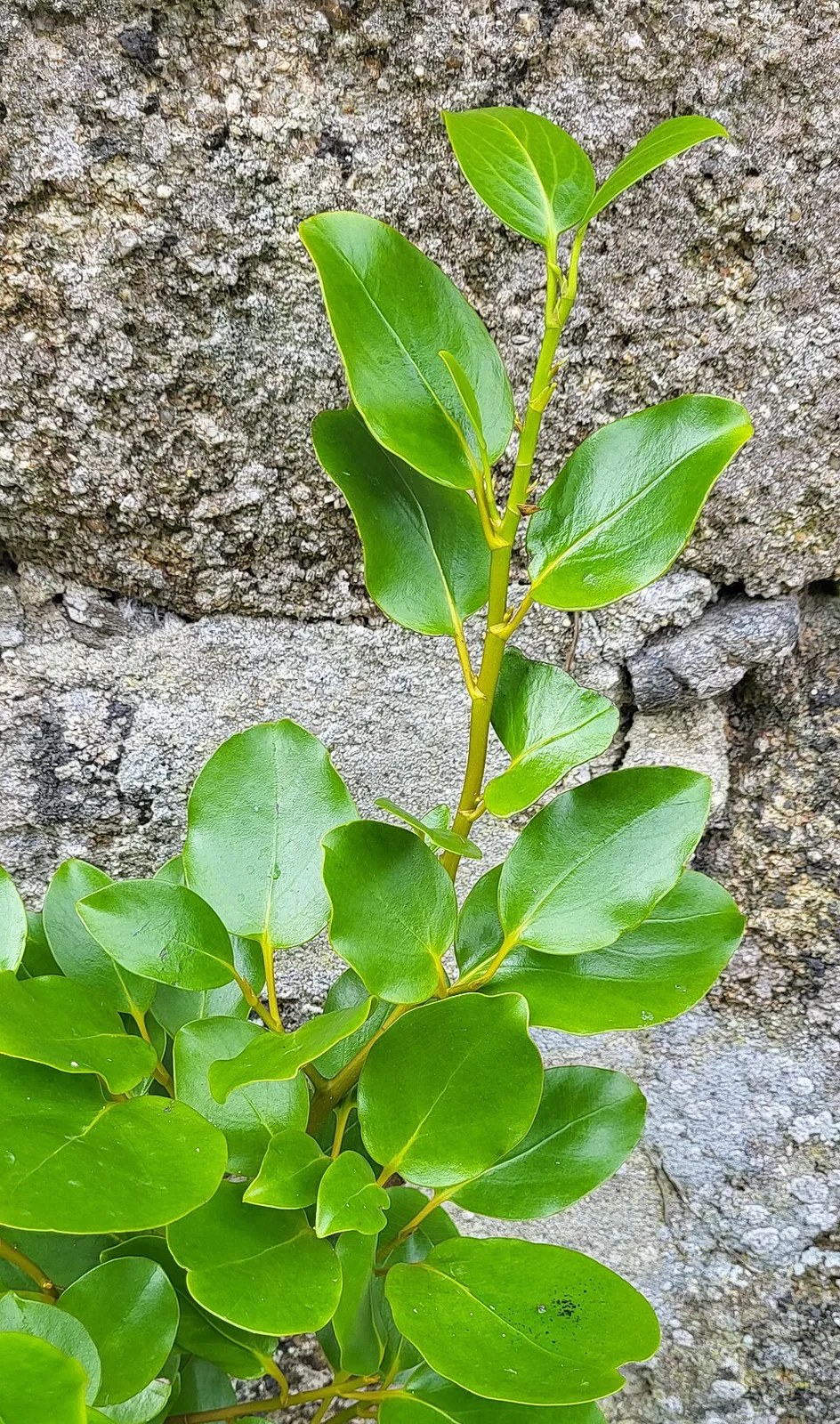
Griselinia littoralis, commonly known as Kapuka or New Zealand broadleaf, is an iconic and highly resilient evergreen shrub or small tree indigenous to the diverse coastal regions of New Zealand. This member of the Griseliniaceae family, which is itself a small and distinct lineage within the Apiales order, is characterized by its distinctive leathery, ovate to elliptical leaves. These leaves exhibit a glossy, vibrant apple-green upper surface and a paler underside, often displaying a subtly wavy margin.
They are arranged alternately along robust, often reddish stems. In its natural habitat, Griselinia littoralis demonstrates remarkable adaptability, thriving in exposed coastal environments where it withstands harsh salt spray, strong winds, and nutrient-poor, sandy or rocky soils. It typically forms a dense, bushy habit, making it an exceptional natural choice for hedging and windbreaks in challenging conditions.
The plant produces small, inconspicuous greenish-yellow flowers clustered in terminal panicles during late spring and early summer, which are followed by small, dark purplish-black, berry-like fruits that serve as a food source for native birds. Its unparalleled hardiness and aesthetic appeal have led to its widespread cultivation in temperate gardens globally, where it is prized as a valuable ornamental for its lush foliage and structural integrity. Historically, the pale, close-grained wood was utilized by Māori for intricate carving and crafting durable tool handles.
Trusted Scientific References
1. Authoritative external sources for Griselinia littoralis
1.1 Wikipedia — Griselinia littoralis
1.2 Kew POWO (Plants of the World Online)
1.3 PubMed — peer-reviewed research
1.4 NCBI Taxonomy Browser
1.5 GBIF — Global Biodiversity
1.6Griselinia Littoralis should be interpreted through verified botanical identity, practical care, and responsible safety language. This recovery note adds the missing context needed for a complete profile: match light to the plant's habit, use well-drained soil, water according to season, and avoid unsupported medicinal or edible claims. For publishing, the plant can be presented as a source-backed garden plant with clear care guidance, common problem diagnosis, and conservative safety wording.
1.1.Griselinia Littoralis — Key Features
- ✓ <strong>Scientific Name</strong> — Griselinia littoralis.
- ✓ <strong>Common Names</strong> — Kapuka, New Zealand broadleaf, Broadleaf.
- ✓ <strong>Family</strong> — Griseliniaceae, a unique monogeneric plant family.
- ✓ <strong>Native Habitat</strong> — Endemic to the coastal and lowland forests of New Zealand.
- ✓ <strong>Foliage</strong> — Distinctive glossy, apple-green, leathery evergreen leaves with wavy margins.
- ✓ <strong>Growth Habit</strong> — Resilient, fast-growing evergreen shrub or small tree, excellent for dense hedging.
- ✓ <strong>Environmental Tolerance</strong> — Exceptional tolerance to salt spray, strong winds, and a variety of soil types, including poor and sandy conditions.
- ✓ <strong>Medicinal Potential</strong> — Traditional Māori uses include support for respiratory issues, wound healing, and skin conditions.
- ✓ <strong>Key Phytochemicals</strong> — Rich in flavonoids, phenolic acids, tannins, and potentially triterpenoids.
- ✓ <strong>Ornamental Value</strong> — Widely cultivated globally for its aesthetic foliage, screening capability, and hardiness in challenging environments.
1.2.Griselinia Littoralis — Quick Summary
- ✓ Hardy New Zealand native, prized for coastal hedging and windbreaks.
- ✓ Traditionally used by Māori for respiratory comfort and skin healing.
- ✓ Contains beneficial antioxidants and anti-inflammatory compounds.
- ✓ Generally considered non-toxic for ornamental and traditional uses.
- ✓ Thrives in diverse soils and climates, highly tolerant to salt spray.
- ✓ Valued for its glossy, apple-green evergreen foliage.
2.Griselinia Littoralis — Scientific Identity
3.Griselinia Littoralis — Quick Facts
4.Griselinia Littoralis — Appearance & Identification
5.Griselinia Littoralis — Native Habitat
6.Griselinia Littoralis — Water Requirements
- ✓ Optimal Planting Time — Griselinia littoralis is best planted during autumn, winter, or early spring (October to March) when the ground is not frozen, allowing for root establishment before summer. Pot-grown plants can be planted year-round with diligent watering.
- ✓ Soil Requirements — Thrives in a wide range of well-drained soils, including heavy clay, but it is crucial to avoid areas prone to prolonged winter waterlogging to prevent root rot.
- ✓ Light Conditions — Prefers full sun to partial shade for optimal growth and dense foliage; avoid planting in heavily shaded locations where growth may be sparse.
- ✓ Temperature Tolerance — This hardy plant can tolerate temperatures down to approximately -13°C, making it well-suited for temperate climates, particularly in coastal regions.
- ✓ Watering & Establishment — Consistent moisture is critical during the first one to two years after planting to ensure the development of a strong root system, especially during dry periods.
- ✓ Pruning for Hedges — Light, regular trimming in the initial growth stages encourages the hedge to bush out. Once the desired size is achieved, an annual trim in early summer is recommended, taking care to check for nesting birds.
- ✓ Spacing for Hedges — For an effective privacy screen, Griselinia littoralis plants should generally be spaced 60-100 cm apart, measured from the center of one plant to the next.
Reviewed by the Flora Medical Global Botanical Review Panel
Multi-disciplinary editorial group · Botany · Ethnobotany · Herbal-medicine literature
Who reviewed this: This page was checked by the Flora Medical Global Botanical Review Panel — an in-house editorial group of botany graduates, ethnobotany researchers, and horticulture practitioners who collectively maintain our 7,000+ plant encyclopedia. Meet the team.
Our 4-step verification process
1. Taxonomic verification
Scientific names and synonyms cross-checked against Kew POWO, World Flora Online, and The Plant List.
2. Phytochemical & medicinal cross-reference
Active compounds, traditional uses, and reported activities are cross-referenced with PubMed, USDA Dr. Duke's database, and peer-reviewed ethnobotanical literature.
3. Conservation & distribution check
Distribution, ecology, and conservation status confirmed against GBIF occurrence records and the IUCN Red List.
4. Editorial & safety review
Every entry passes an editorial pass for clarity, originality, and safety notices (toxicity, contraindications, dosage caveats) before publication.
Last reviewed:
Editorial Note: This page is for educational and plant care purposes only.
Written by: Flora Medical Global Editorial Team
Reviewed by: Flora Medical Global Botanical Review Panel
Last Updated: June 15, 2026







Griselinia Littoralis — Comments & Community Reviews
Rate this plant