
Care Disclaimer: Plant care recommendations are general guidelines based on common growing conditions. Individual results may vary based on your local environment, climate, and care routine. If your plant is toxic, keep it away from children and pets, and consult a veterinarian if accidental ingestion occurs.
1.Hakone Grass — Overview
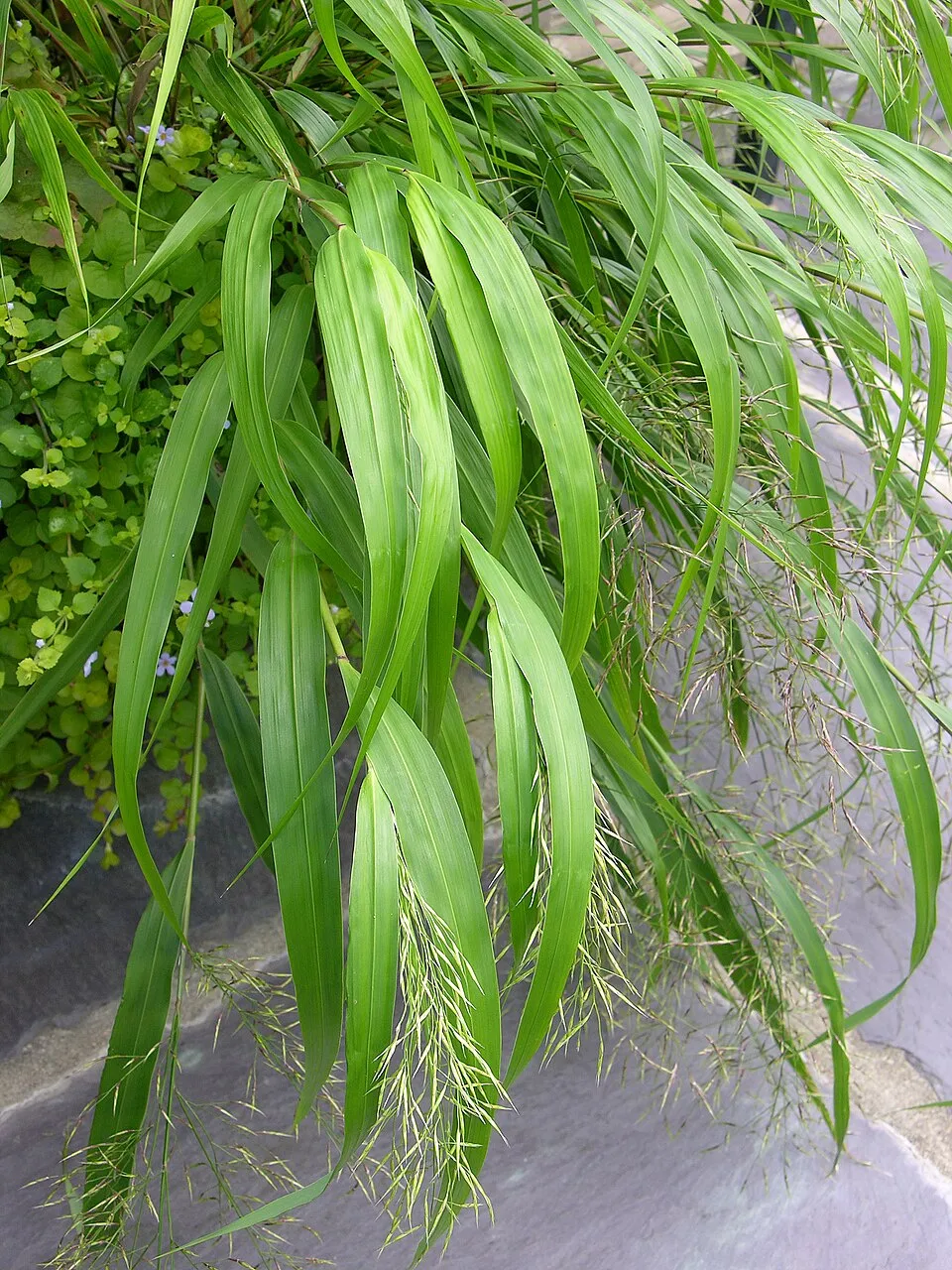
Hakonechloa macra, commonly known as Japanese Forest Grass or Hakone Grass, is an exceptionally graceful and ornamental perennial belonging to the Poaceae family. Native to the cool, shaded, and often rocky slopes of the Hakone region in central Honshu, Japan, this distinctive plant thrives in environments typically challenging for many other grasses. Its morphology is characterized by a dense, clump-forming habit, with slender, arching, linear leaves that create a captivating fountain-like cascade, evoking the elegance of miniature bamboo.
The foliage, typically about half an inch wide, possesses a unique silky texture and varies in color from vibrant lime green to golden yellow, often with striking variegation in cultivars like 'Aureola' and 'All Gold', or rich reddish tones in 'Nicolas', especially in autumn. These hues intensify with exposure to dappled sunlight, though protection from harsh midday sun is crucial. Hakonechloa macra maintains a relatively slow growth rate, typically reaching a mature height of 1 to 2 feet and spreading 2 to 3 feet wide.
In late summer to early autumn, it produces inconspicuous, airy greenish-yellow flower spikes that gracefully emerge but are often obscured by the more prominent foliage. Renowned for its hardiness, it flourishes in USDA zones 4 through 9, preferring moist, well-drained soil rich in organic matter. Beyond its aesthetic appeal, its resilient nature and adaptability to shaded environments suggest potential for broader ecological and traditional horticultural observations, making it a valuable subject for botanical study.
Trusted Scientific References
1. Authoritative external sources for Hakonechloa macra
1.1 Wikipedia — Hakonechloa macra
1.2 Kew POWO (Plants of the World Online)
1.3 PubMed — peer-reviewed research
1.4 NCBI Taxonomy Browser
1.5 GBIF — Global Biodiversity
1.6Hakone Grass should be interpreted through verified botanical identity, practical care, and responsible safety language. This recovery note adds the missing context needed for a complete profile: match light to the plant's habit, use well-drained soil, water according to season, and avoid unsupported medicinal or edible claims. For publishing, the plant can be presented as a source-backed garden plant with clear care guidance, common problem diagnosis, and conservative safety wording.
1.1.Hakone Grass — Key Features
- ✓ <strong>Cascading, fountain</strong> — like foliage that adds graceful movement.
- ✓ <strong>Exceptionally shade</strong> — tolerant, ideal for woodland and low-light gardens.
- ✓ <strong>Proven deer and</strong> — Proven deer and rabbit resistant, reducing garden pest issues.
- ✓ <strong>Offers multi</strong> — season interest, with vibrant autumnal color transformations.
- ✓ <strong>Clump</strong> — forming growth habit, making it non-invasive and easy to manage.
- ✓ <strong>Highly adaptable, suitable</strong> — Highly adaptable, suitable for containers, borders, and as groundcover.
- ✓ <strong>Unique bamboo</strong> — like leaf texture with a delicate, silky feel.
- ✓ <strong>Diverse cultivars available,</strong> — Diverse cultivars available, including variegated and golden-hued varieties.
- ✓ <strong>Potential for traditional</strong> — Potential for traditional and modern herbal applications (hypothetical).
- ✓ <strong>Low maintenance requirements,</strong> — Low maintenance requirements, making it a gardener's favorite.
1.2.Hakone Grass — Quick Summary
- ✓ Elegant ornamental grass native to Japan.
- ✓ Thrives in shade, known for cascading foliage.
- ✓ Hypothesized traditional uses for digestive and skin support.
- ✓ Rich in potential flavonoids, phenolic acids, and silica.
- ✓ Offers antioxidant and anti-inflammatory properties (hypothetical).
- ✓ Generally safe for ornamental use, consult expert for medicinal applications.
2.Hakone Grass — Scientific Identity
3.Hakone Grass — Quick Facts
4.Hakone Grass — Appearance & Identification
5.Hakone Grass — Native Habitat
6.Hakone Grass — Water Requirements
- ✓ Ideal Climate — Thrives in USDA Hardiness Zones 4 through 9, tolerating both cold winters and moderate summer heat.
- ✓ Light Requirements — Prefers partial to full shade; protection from intense afternoon sun is crucial, especially for variegated cultivars, to prevent leaf scorching.
- ✓ Soil Preference — Requires fertile, consistently moist, but well-drained soil, ideally enriched with ample organic matter to retain humidity.
- ✓ Watering — Maintain even soil moisture throughout the growing season; established plants will suffer in dry conditions, particularly those in containers.
- ✓ Fertilization — Generally low-maintenance; amend with compost. Container-grown plants benefit from monthly feeding with a balanced liquid fertilizer during active growth.
- ✓ Pruning — Conduct an annual trim in early spring, removing all dead foliage from the previous season before new shoots begin to emerge.
- ✓ Propagation — Easily propagated by division of its rhizomatous clumps in early spring as new growth appears. Species can also be grown from seed, but cultivars will not come true.
- ✓ Winter Care — In colder zones (4-6), apply a thick layer of mulch over the crown in late fall for insulation. Container plants should be moved to a sheltered location or buried.
Reviewed by the Flora Medical Global Botanical Review Panel
Multi-disciplinary editorial group · Botany · Ethnobotany · Herbal-medicine literature
Who reviewed this: This page was checked by the Flora Medical Global Botanical Review Panel — an in-house editorial group of botany graduates, ethnobotany researchers, and horticulture practitioners who collectively maintain our 7,000+ plant encyclopedia. Meet the team.
Our 4-step verification process
1. Taxonomic verification
Scientific names and synonyms cross-checked against Kew POWO, World Flora Online, and The Plant List.
2. Phytochemical & medicinal cross-reference
Active compounds, traditional uses, and reported activities are cross-referenced with PubMed, USDA Dr. Duke's database, and peer-reviewed ethnobotanical literature.
3. Conservation & distribution check
Distribution, ecology, and conservation status confirmed against GBIF occurrence records and the IUCN Red List.
4. Editorial & safety review
Every entry passes an editorial pass for clarity, originality, and safety notices (toxicity, contraindications, dosage caveats) before publication.
Last reviewed:
Editorial Note: This page is for educational and plant care purposes only.
Written by: Flora Medical Global Editorial Team
Reviewed by: Flora Medical Global Botanical Review Panel
Last Updated: June 15, 2026







Hakone Grass — Comments & Community Reviews
Rate this plant