
Care Disclaimer: Plant care recommendations are general guidelines based on common growing conditions. Individual results may vary based on your local environment, climate, and care routine. If your plant is toxic, keep it away from children and pets, and consult a veterinarian if accidental ingestion occurs.
1.Hamamelis Mollis — Overview
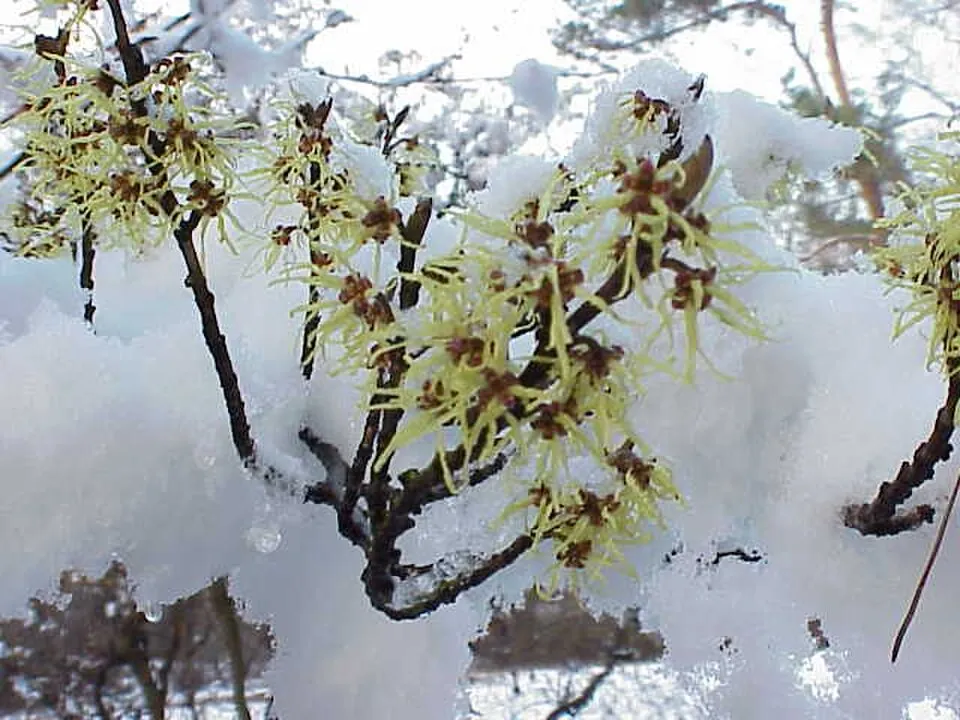
Hamamelis mollis, commonly known as Chinese Witch Hazel, is a captivating deciduous shrub or small tree belonging to the Hamamelidaceae family. Native to the woodlands and mountain slopes of central and eastern China, it is highly prized for its exceptional ornamental qualities, especially its remarkable ability to bloom in the late winter to early spring, often before the emergence of its leaves. The plant typically forms an elegant, spreading habit, reaching a mature height and spread of 10-15 feet (3-4.5 meters).
Its most striking feature is the clusters of fragrant, golden-yellow, spidery flowers, each with four strap-like petals that are twisted and crinkled, creating a unique texture. These blossoms emit a distinctive, often sweet and spicy aroma, providing a vital sensory experience and an early nectar source for pollinators during the colder months. The foliage consists of broad-ovate to obovate, deeply veined leaves, which provide a second season of interest by transforming into brilliant shades of yellow, orange, or even red in autumn.
Botanically, its classification within the Hamamelis genus highlights its close relation to other witch hazel species, though its specific characteristics, particularly its intense fragrance and flower form, distinguish it as a premier ornamental in temperate gardens worldwide.
Trusted Scientific References
1. Authoritative external sources for Hamamelis mollis
1.1 Wikipedia — Hamamelis mollis
1.2 Kew POWO (Plants of the World Online)
1.3 PubMed — peer-reviewed research
1.4 NCBI Taxonomy Browser
1.5 GBIF — Global Biodiversity
1.6Hamamelis Mollis should be interpreted through verified botanical identity, practical care, and responsible safety language. This recovery note adds the missing context needed for a complete profile: match light to the plant's habit, use well-drained soil, water according to season, and avoid unsupported medicinal or edible claims. For publishing, the plant can be presented as a source-backed garden plant with clear care guidance, common problem diagnosis, and conservative safety wording.
1.1.Hamamelis Mollis — Key Features
- ✓ <strong>Dazzling Winter Blooms</strong> — Clusters of golden-yellow, spidery, fragrant flowers appear in late winter.
- ✓ <strong>Distinctive Fragrance</strong> — Highly aromatic blossoms, often described as sweet and spicy, filling the air when little else is in bloom.
- ✓ <strong>Vibrant Autumn Foliage</strong> — Leaves turn brilliant shades of yellow, orange, and red, offering a second season of interest.
- ✓ <strong>Deciduous Shrub</strong> — A large, spreading shrub or small tree, reaching 10-15 feet tall and wide.
- ✓ <strong>Early Pollinator Support</strong> — Provides crucial nectar and pollen for early emerging insects.
- ✓ <strong>Native to China</strong> — Indigenous to central and eastern regions of China.
- ✓ <strong>Ornamental Value</strong> — Highly valued worldwide for its aesthetic appeal in temperate gardens.
- ✓ <strong>Low Maintenance</strong> — Generally resistant to pests and diseases, requiring minimal care once established.
- ✓ <strong>Cold Hardiness</strong> — Tolerant of cold temperatures, typically hardy in USDA Zones 5-8.
- ✓ <strong>Astringent Potential (Phytochemical)</strong> — Contains compounds (tannins) with inferred astringent properties, though not used medicinally.
1.2.Hamamelis Mollis — Quick Summary
- ✓ Chinese Witch Hazel, a prized deciduous ornamental shrub.
- ✓ Known for dazzling, fragrant winter blooms and vibrant autumn foliage.
- ✓ Primarily grown for aesthetic and ecological value, providing early pollinator support.
- ✓ Distinct from Hamamelis virginiana, the primary medicinal witch hazel species.
- ✓ Contains tannins and phenolics, suggesting potential (but unestablished) astringent properties.
- ✓ Low maintenance, deer-resistant, and adaptable to various garden settings.
2.Hamamelis Mollis — Scientific Identity
3.Hamamelis Mollis — Quick Facts
4.Hamamelis Mollis — Appearance & Identification
5.Hamamelis Mollis — Native Habitat
6.Hamamelis Mollis — Water Requirements
- ✓ Site Selection — Plant Hamamelis mollis in a location that receives full sun to partial shade, ideally with morning sun and some afternoon shade in hotter climates to protect its delicate winter blooms and leaves from scorching.
- ✓ Soil Requirements — Thrives in consistently moist, well-drained, fertile soil. It prefers an acidic to neutral pH (5.5-7.0) and benefits from soil enriched with organic matter to ensure good drainage and nutrient availability.
- ✓ Watering Regimen — Requires regular watering, especially during dry spells and in its establishment phase, to maintain consistently moist soil. Avoid waterlogging, which can lead to root rot.
- ✓ Air Circulation — Ensure good air circulation around the plant to prevent fungal diseases, especially in humid environments. Avoid overly crowded planting.
- ✓ Pruning Practices — Prune sparingly after flowering to maintain shape, remove dead or damaged branches, and eliminate suckers from the base. Avoid heavy pruning, as it can reduce bloom production.
- ✓ Mulching — Apply a 2-4 inch layer of organic mulch around the base of the plant annually to conserve soil moisture, regulate soil temperature, and suppress weeds.
- ✓ Pest and Disease Resistance — Generally resistant to most common pests and diseases, making it a low-maintenance choice for gardeners. Monitor for occasional issues like powdery mildew in overly humid conditions.
Reviewed by the Flora Medical Global Botanical Review Panel
Multi-disciplinary editorial group · Botany · Ethnobotany · Herbal-medicine literature
Who reviewed this: This page was checked by the Flora Medical Global Botanical Review Panel — an in-house editorial group of botany graduates, ethnobotany researchers, and horticulture practitioners who collectively maintain our 7,000+ plant encyclopedia. Meet the team.
Our 4-step verification process
1. Taxonomic verification
Scientific names and synonyms cross-checked against Kew POWO, World Flora Online, and The Plant List.
2. Phytochemical & medicinal cross-reference
Active compounds, traditional uses, and reported activities are cross-referenced with PubMed, USDA Dr. Duke's database, and peer-reviewed ethnobotanical literature.
3. Conservation & distribution check
Distribution, ecology, and conservation status confirmed against GBIF occurrence records and the IUCN Red List.
4. Editorial & safety review
Every entry passes an editorial pass for clarity, originality, and safety notices (toxicity, contraindications, dosage caveats) before publication.
Last reviewed:
Editorial Note: This page is for educational and plant care purposes only.
Written by: Flora Medical Global Editorial Team
Reviewed by: Flora Medical Global Botanical Review Panel
Last Updated: June 15, 2026







Hamamelis Mollis — Comments & Community Reviews
Rate this plant