


Care Disclaimer: Plant care recommendations are general guidelines based on common growing conditions. Individual results may vary based on your local environment, climate, and care routine. If your plant is toxic, keep it away from children and pets, and consult a veterinarian if accidental ingestion occurs.
1.Hedysarum Coronarium — Overview
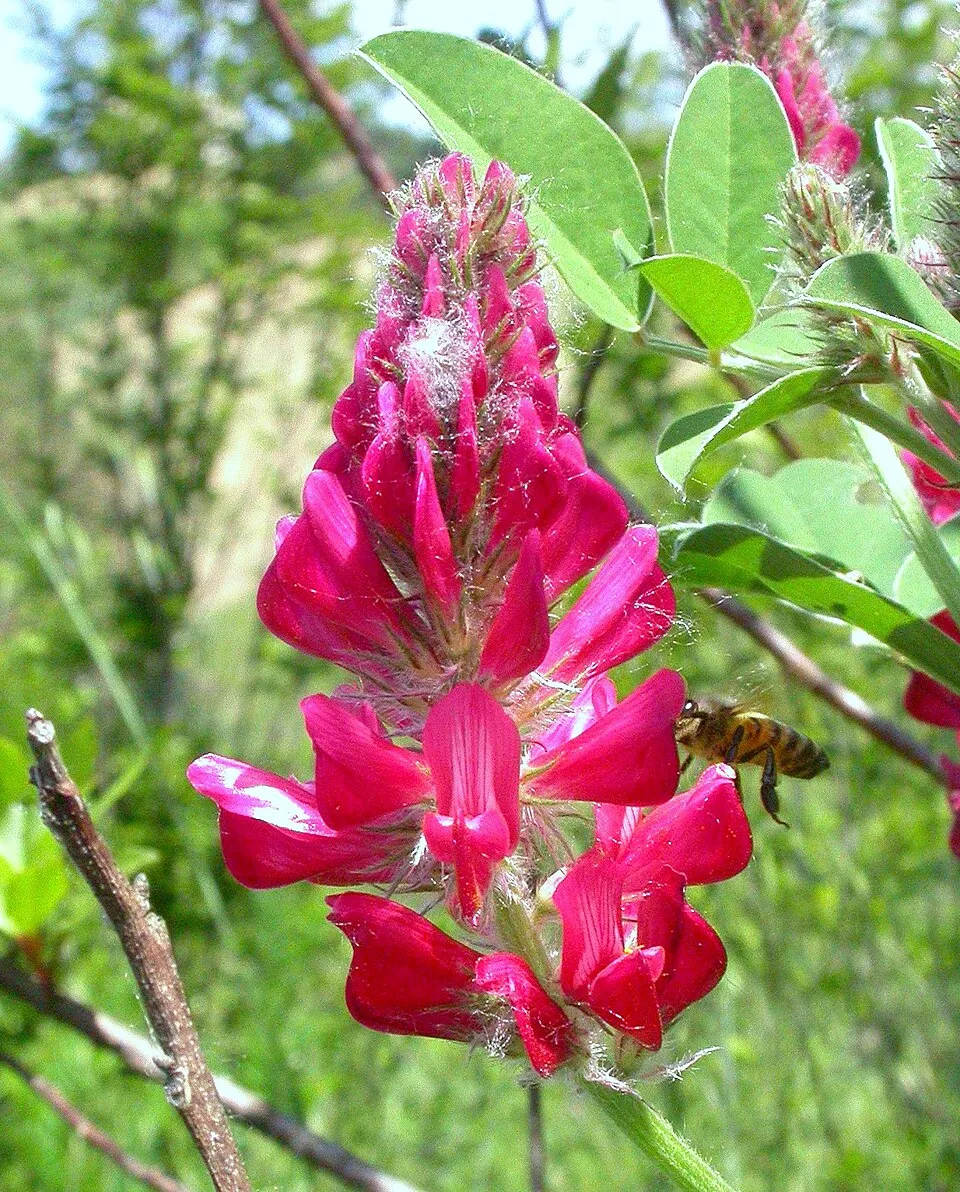
Hedysarum coronarium, widely recognized as Sulla or French Honeysuckle, is a captivating herbaceous perennial legume indigenous to the sun-drenched Mediterranean basin. This robust plant typically exhibits an erect to spreading growth habit, reaching an average height of 60 to 120 centimeters. Its foliage is characterized by pinnately compound leaves, each composed of numerous ovate to oblong leaflets that present a vibrant, often grey-green hue. The most striking feature of Hedysarum coronarium is its abundant and visually appealing inflorescences.
These are generally pendulous racemes, densely packed with numerous pea-like flowers, which display a brilliant spectrum from deep pink to reddish-purple. These vibrant blooms are highly attractive to various pollinators, especially bees, underscoring its ecological importance for supporting biodiversity. Following successful pollination, the plant produces a distinctive fruit in the form of a pod, typically segmented into 2-4 individual joints, which facilitates seed dispersal. Sulla thrives optimally in well-drained, gritty, or stony soils, demonstrating moderate drought tolerance once firmly established, and prefers full sun exposure, particularly in regions with cooler summer climates.
Its rapid growth, coupled with its inherent nitrogen-fixing capabilities as a legume, makes it an exceptional choice for cover cropping and as a high-quality forage plant, significantly enhancing soil fertility and promoting agricultural sustainability. Beyond its ecological and agricultural merits, the aesthetic charm of French Honeysuckle also makes it a valuable addition to ornamental gardens and landscapes, providing a vivid burst of color during its prolonged blooming season.
Trusted Scientific References
1. Authoritative external sources for Hedysarum Coronarium
1.1 Wikipedia — Hedysarum Coronarium
1.2 Kew POWO (Plants of the World Online)
1.3 PubMed — peer-reviewed research
1.4 NCBI Taxonomy Browser
1.5 GBIF — Global Biodiversity
1.6Hedysarum Coronarium should be interpreted through verified botanical identity, practical care, and responsible safety language. This recovery note adds the missing context needed for a complete profile: match light to the plant's habit, use well-drained soil, water according to season, and avoid unsupported medicinal or edible claims. For publishing, the plant can be presented as a source-backed garden plant with clear care guidance, common problem diagnosis, and conservative safety wording.
1.1.Hedysarum Coronarium — Key Features
- ✓ <strong>Botanical Identity</strong> — Herbaceous perennial legume, often biennial, native to the Mediterranean region.
- ✓ <strong>Distinctive Flowers</strong> — Produces showy, fragrant racemes of deep pink to reddish-purple, pea-like flowers.
- ✓ <strong>Ecological Role</strong> — Crucial nitrogen-fixer, improving soil fertility and acting as a valuable forage crop.
- ✓ <strong>Pollinator Attractor</strong> — Highly attractive to bees and other pollinators, supporting local biodiversity.
- ✓ <strong>Phytochemical Richness</strong> — Abundant in health-promoting compounds like flavonoids, phenolic acids, and tannins.
- ✓ <strong>Traditional Uses</strong> — Historically employed for digestive health, wound healing, and general wellness.
- ✓ <strong>Cultivation Adaptability</strong> — Thrives in full sun and well-drained, alkaline soils, moderately drought-tolerant.
- ✓ <strong>Growth Habit</strong> — Erect to spreading, typically reaching 60-120 cm in height with pinnately compound leaves.
- ✓ <strong>Sustainable Agriculture</strong> — Contributes to sustainable farming practices as a cover crop and green manure.
- ✓ <strong>Aesthetically Pleasing</strong> — Valued ornamentally for its vibrant bloom and attractive foliage.
1.2.Hedysarum Coronarium — Quick Summary
- ✓ Hedysarum coronarium, or Sulla, is a Mediterranean legume known for its vibrant flowers.
- ✓ Valued for its antioxidant, anti-inflammatory, and digestive support properties.
- ✓ Rich in flavonoids, phenolic acids, tannins, and saponins.
- ✓ Excellent as a cover crop and forage plant due to nitrogen fixation.
- ✓ Cultivated in well-drained, alkaline soil with full sun.
- ✓ Generally considered non-toxic but requires caution during pregnancy and with certain medications.
2.Hedysarum Coronarium — Scientific Identity
3.Hedysarum Coronarium — Quick Facts
4.Hedysarum Coronarium — Appearance & Identification
5.Hedysarum Coronarium — Native Habitat
6.Hedysarum Coronarium — Water Requirements
- ✓ Soil Preference — Thrives in well-drained, gritty or stony, alkaline soils; tolerates poor, shallow soil over chalk.
- ✓ Sunlight Requirements — Prefers full sun exposure; dislikes shade and consistently wet soil conditions.
- ✓ Climate Adaptability — Best suited for areas experiencing cool summer climates; hardy in USDA zones 4-9.
- ✓ Propagation Techniques — Can be propagated effectively by sowing seeds in a cold frame during autumn or spring.
- ✓ Division and Cuttings — Careful division in spring is possible, though the plant resents root disturbance; softwood cuttings can be taken in summer.
- ✓ Pruning Regimen — Cut back to the base after the first hard frost in autumn to encourage vigorous growth the following season.
- ✓ Watering Needs — Moderately drought-tolerant once established but benefits from consistent moisture during dry periods, avoiding waterlogging.
- ✓ Ecological Benefits — Attracts beneficial pollinators, especially bees, and enriches soil through its nitrogen-fixing capabilities.
Reviewed by the Flora Medical Global Botanical Review Panel
Multi-disciplinary editorial group · Botany · Ethnobotany · Herbal-medicine literature
Who reviewed this: This page was checked by the Flora Medical Global Botanical Review Panel — an in-house editorial group of botany graduates, ethnobotany researchers, and horticulture practitioners who collectively maintain our 7,000+ plant encyclopedia. Meet the team.
Our 4-step verification process
1. Taxonomic verification
Scientific names and synonyms cross-checked against Kew POWO, World Flora Online, and The Plant List.
2. Phytochemical & medicinal cross-reference
Active compounds, traditional uses, and reported activities are cross-referenced with PubMed, USDA Dr. Duke's database, and peer-reviewed ethnobotanical literature.
3. Conservation & distribution check
Distribution, ecology, and conservation status confirmed against GBIF occurrence records and the IUCN Red List.
4. Editorial & safety review
Every entry passes an editorial pass for clarity, originality, and safety notices (toxicity, contraindications, dosage caveats) before publication.
Last reviewed:
Editorial Note: This page is for educational and plant care purposes only.
Written by: Flora Medical Global Editorial Team
Reviewed by: Flora Medical Global Botanical Review Panel
Last Updated: June 15, 2026







Hedysarum Coronarium — Comments & Community Reviews
Rate this plant