

Care Disclaimer: Plant care recommendations are general guidelines based on common growing conditions. Individual results may vary based on your local environment, climate, and care routine. If your plant is toxic, keep it away from children and pets, and consult a veterinarian if accidental ingestion occurs.
1.Heliopsis Helianthoides — Overview
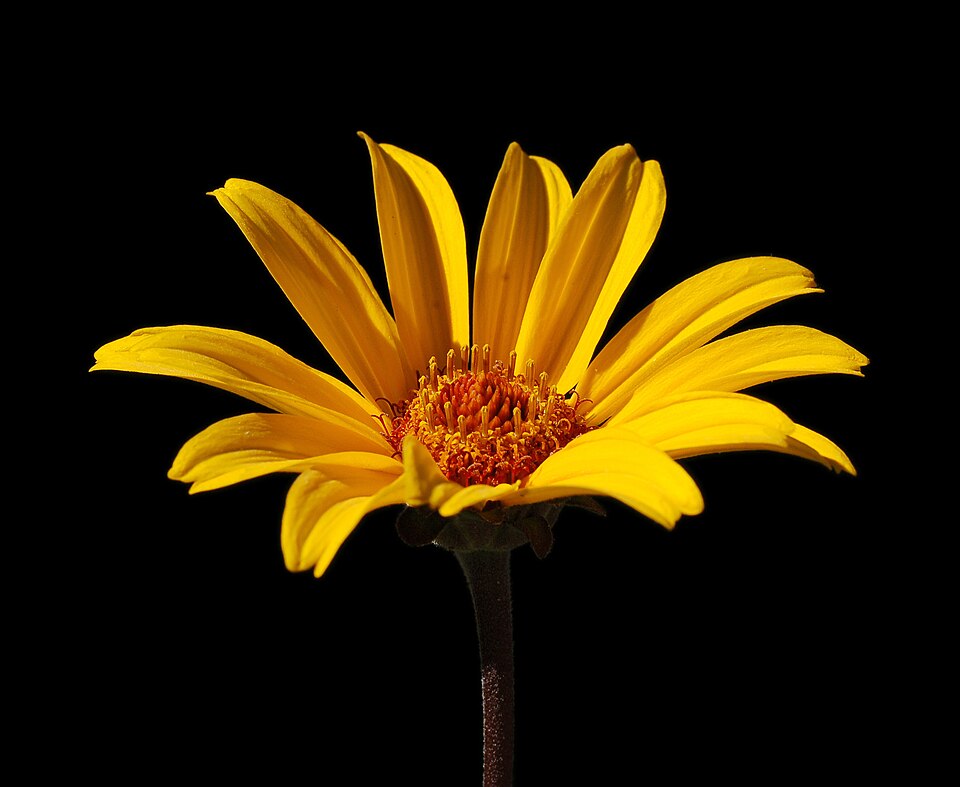
Heliopsis helianthoides, widely recognized as false sunflower or perennial sunflower, is a resilient herbaceous perennial indigenous to North America. Its natural habitat spans extensively across the central and eastern regions of the United States and into parts of Canada. As a prominent member of the vast Asteraceae family, which also encompasses true sunflowers, daisies, and asters, it strikingly mirrors the bloom structure of its namesake, hence its common designation. This robust plant typically achieves a stature of 2 to 5 feet (0.6 to 1.5 meters), characterized by sturdy, often branching stems.
Its leaves are ovate to lance-shaped, oppositely arranged along the stem, and possess a somewhat rough texture, a common trait within the Asteraceae family. The plant's most captivating attribute is its abundant and prolonged floral display, gracing gardens from mid-summer through the fall. It produces a profusion of daisy-like flower heads, each typically measuring 2 to 4 inches (5 to 10 cm) in diameter. The classic variety showcases bright yellow ray florets encircling a central, cone-shaped cluster of fertile disk florets, usually yellow or brownish-yellow.
This vivid coloration not only enhances garden aesthetics but also serves as a powerful attractant for a diverse array of pollinators, including bees, butterflies, and other beneficial insects, thereby significantly bolstering garden ecosystems. Numerous cultivars exist, offering variations in flower color, such as shades of orange and red, alongside differences in plant habit and height, making it highly versatile for various landscaping applications. Heliopsis helianthoides is highly valued for its adaptability, thriving in a broad spectrum of soil types, though it exhibits a preference for well-drained conditions. It demonstrates considerable drought tolerance once established and flourishes in full sun to partial shade, cementing its status as a versatile and impactful choice for sustained visual appeal throughout the warmer months.
Trusted Scientific References
1. Authoritative external sources for Heliopsis helianthoides
1.1 Wikipedia — Heliopsis helianthoides
1.2 Kew POWO (Plants of the World Online)
1.3 PubMed — peer-reviewed research
1.4 NCBI Taxonomy Browser
1.5 GBIF — Global Biodiversity
1.1.Heliopsis Helianthoides — Key Features
- ✓ <strong>Botanical Name</strong> — Heliopsis helianthoides, commonly known as False Sunflower or Oxeye Sunflower.
- ✓ <strong>Family</strong> — Asteraceae, a vast and diverse plant family that includes true sunflowers and daisies.
- ✓ <strong>Native Range</strong> — Indigenous to central and eastern North America, spanning much of the United States and parts of Canada.
- ✓ <strong>Growth Habit</strong> — An herbaceous perennial, typically growing to a height of 2-5 feet with sturdy, often branching stems.
- ✓ <strong>Floral Display</strong> — Produces abundant, long-lasting bright yellow, daisy-like flowers, 2-4 inches in diameter, from mid-summer through fall.
- ✓ <strong>Pollinator Magnet</strong> — Highly attractive to a wide array of pollinators, including bees, butterflies, and other beneficial insects, supporting ecosystem health.
- ✓ <strong>Cultivation Ease</strong> — Notably adaptable and low-maintenance, it is drought-tolerant once established and prefers full sun in well-drained soil.
- ✓ <strong>Traditional Uses</strong> — Historically employed by some Native American tribes for its potential diuretic effects and to help reduce fevers.
- ✓ <strong>Phytochemical Profile</strong> — Contains beneficial compounds such as flavonoids, phenolic acids, and carotenoids, contributing to its potential antioxidant properties.
- ✓ <strong>Ornamental Value</strong> — Highly prized in landscaping for its cheerful, persistent blooms and robust nature, providing sustained visual impact.
1.2.Heliopsis Helianthoides — Quick Summary
- ✓ Heliopsis helianthoides, commonly known as false sunflower or oxeye sunflower, is a vibrant North American native perennial in the Asteraceae family.
- ✓ It is cherished for its abundant, bright yellow, daisy-like flowers that bloom continuously from mid-summer through fall, attracting diverse pollinators.
- ✓ Historically, some Native American tribes utilized this plant for its traditional diuretic and fever-reducing properties.
- ✓ Its phytochemical profile suggests the presence of beneficial compounds like flavonoids, phenolic acids, and carotenoids, indicating potential antioxidant and anti-inflammatory activity.
- ✓ This highly adaptable ornamental plant thrives with minimal care in full sun and well-drained soils, making it a resilient addition to gardens in USDA zones 3-9.
2.Heliopsis Helianthoides — Scientific Identity
3.Heliopsis Helianthoides — Quick Facts
4.Heliopsis Helianthoides — Appearance & Identification
5.Heliopsis Helianthoides — Native Habitat
6.Heliopsis Helianthoides — Water Requirements
- ✓ Sun Exposure — Thrives best in full sun, requiring at least 4-5 hours of direct sunlight daily to ensure vigorous growth and prolific blooming; light shade may lead to leggy stems.
- ✓ Soil Requirements — Highly adaptable to a variety of soil types, including poor, rocky, sandy, or clay soils, but performs optimally in average, well-draining loam with a neutral pH.
- ✓ Watering Practices — While drought-tolerant once established, regular watering to maintain moderately moist soil is beneficial, especially during prolonged dry periods.
- ✓ Fertilization — Generally requires minimal to no fertilization; overly rich soil can promote excessive foliage at the expense of flowers and lead to leggy growth.
- ✓ Pruning and Deadheading — Pinch stem tips in spring to encourage bushier growth; deadhead spent flowers throughout the blooming season to stimulate continuous bud production. Prune back to about 2 inches in late fall or early spring.
- ✓ Propagation — Can be propagated effectively by seed (started indoors 4-6 weeks before the last frost or direct-sown in mid-to-late August) or by dividing clumps every 2-3 years in spring or fall to rejuvenate the plant.
- ✓ Hardiness Zones — A cold-hardy perennial reliably returning in USDA growing zones 3-9, with some cultivars demonstrating good heat tolerance for warmer climates.
Reviewed by the Flora Medical Global Botanical Review Panel
Multi-disciplinary editorial group · Botany · Ethnobotany · Herbal-medicine literature
Who reviewed this: This page was checked by the Flora Medical Global Botanical Review Panel — an in-house editorial group of botany graduates, ethnobotany researchers, and horticulture practitioners who collectively maintain our 7,000+ plant encyclopedia. Meet the team.
Our 4-step verification process
1. Taxonomic verification
Scientific names and synonyms cross-checked against Kew POWO, World Flora Online, and The Plant List.
2. Phytochemical & medicinal cross-reference
Active compounds, traditional uses, and reported activities are cross-referenced with PubMed, USDA Dr. Duke's database, and peer-reviewed ethnobotanical literature.
3. Conservation & distribution check
Distribution, ecology, and conservation status confirmed against GBIF occurrence records and the IUCN Red List.
4. Editorial & safety review
Every entry passes an editorial pass for clarity, originality, and safety notices (toxicity, contraindications, dosage caveats) before publication.
Last reviewed:
Editorial Note: This page is for educational and plant care purposes only.
Written by: Flora Medical Global Editorial Team
Reviewed by: Flora Medical Global Botanical Review Panel
Last Updated: June 15, 2026







Heliopsis Helianthoides — Comments & Community Reviews
Rate this plant