

Care Disclaimer: Plant care recommendations are general guidelines based on common growing conditions. Individual results may vary based on your local environment, climate, and care routine. If your plant is toxic, keep it away from children and pets, and consult a veterinarian if accidental ingestion occurs.
1.Heliopsis Helianthoides — Overview
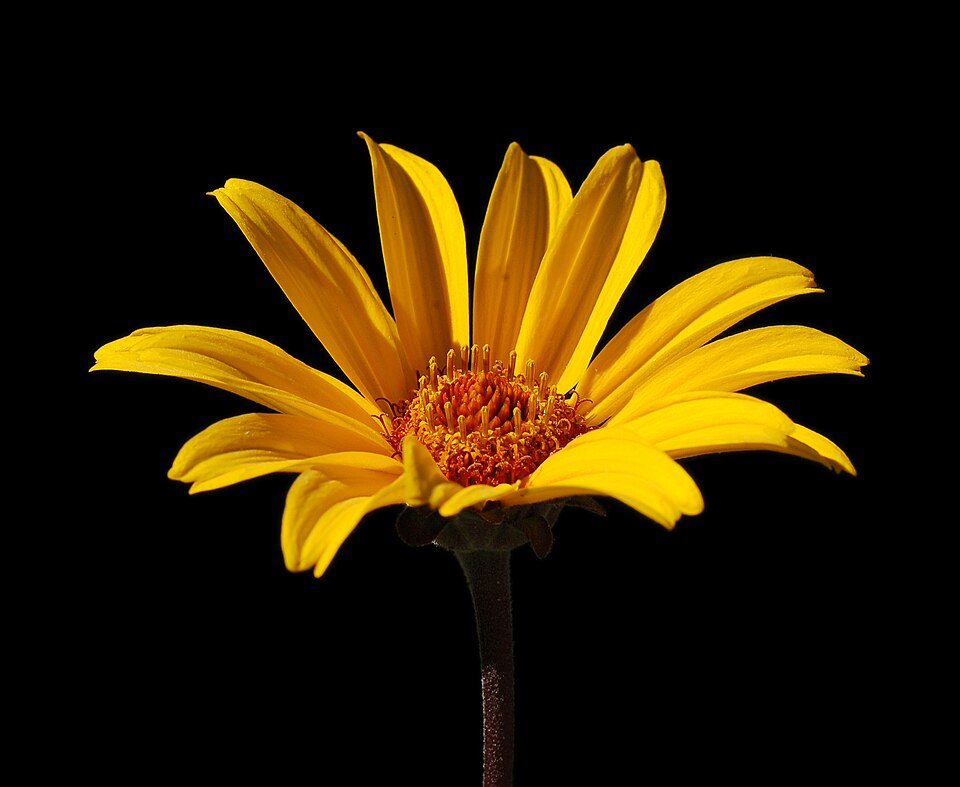
Heliopsis helianthoides, commonly known as False Sunflower or Smooth Oxeye, is a robust and cheerful herbaceous perennial native to a broad range across eastern and central North America. As a distinguished member of the extensive Asteraceae family, it is celebrated for its striking resemblance to true sunflowers, though typically on a smaller scale. This resilient plant generally achieves heights of 2 to 5 feet (0.6 to 1.5 meters) with a comparable spread, forming dense, attractive clumps of vibrant green foliage. Its leaves are typically broadly ovate to lanceolate, arranged oppositely along sturdy, often somewhat hollow stems, and feature smooth or finely toothed margins.
The most captivating attribute of Heliopsis helianthoides is its abundant, daisy-like flower heads, which bloom prolifically from mid-summer through early fall. Each flower is composed of bright yellow to golden-orange ray florets encircling a prominent, dome-shaped central disc comprising darker yellow or greenish-yellow tubular florets. These radiant flower heads can measure from 2 to 4 inches (5 to 10 cm) in diameter, varying by cultivar. Beyond its aesthetic appeal, Heliopsis helianthoides serves as a vital ecological resource, attracting a diverse array of pollinators, including bees, butterflies, and other beneficial insects.
It thrives in full sun but can tolerate partial shade, adapting to a wide range of well-draining soil types, from sandy to clay. Its hardiness, drought tolerance once established, and general resistance to pests and diseases make it an exceptionally low-maintenance and valuable addition to perennial borders, native plant gardens, and meadow plantings, enhancing both visual appeal and ecological function.
Trusted Scientific References
1. Authoritative external sources for Heliopsis Helianthoides
1.1 Wikipedia — Heliopsis Helianthoides
1.2 Kew POWO (Plants of the World Online)
1.3 PubMed — peer-reviewed research
1.4 NCBI Taxonomy Browser
1.5 GBIF — Global Biodiversity
1.6Heliopsis Helianthoides should be interpreted through verified botanical identity, practical care, and responsible safety language. This recovery note adds the missing context needed for a complete profile: match light to the plant's habit, use well-drained soil, water according to season, and avoid unsupported medicinal or edible claims. For publishing, the plant can be presented as a source-backed garden plant with clear care guidance, common problem diagnosis, and conservative safety wording.
1.1.Heliopsis Helianthoides — Key Features
- ✓ <strong>Botanical Name</strong> — Heliopsis helianthoides
- ✓ <strong>Common Names</strong> — False Sunflower, Smooth Oxeye, Oxeye Sunflower
- ✓ <strong>Family</strong> — Asteraceae
- ✓ <strong>Native Range</strong> — Eastern and Central North America
- ✓ <strong>Bloom Time</strong> — Mid-summer to early fall
- ✓ <strong>Flower Color</strong> — Bright yellow to golden-orange
- ✓ <strong>Plant Type</strong> — Herbaceous Perennial
- ✓ <strong>Mature Size</strong> — 2-5 feet (0.6-1.5 meters) tall and wide
- ✓ <strong>Sun Exposure</strong> — Full sun to partial shade
- ✓ <strong>Hardiness Zones</strong> — USDA Zones 3-9
1.2.Heliopsis Helianthoides — Quick Summary
- ✓ Cheerful herbaceous perennial native to North America, featuring vibrant yellow, daisy-like flowers.
- ✓ Highly adaptable, thriving in full sun and a variety of well-draining soils, and known for drought tolerance.
- ✓ Excellent for attracting and supporting diverse pollinators, contributing significantly to garden biodiversity.
- ✓ Primarily cultivated for its ornamental value, enhancing garden aesthetics and providing long-lasting blooms.
- ✓ Contains common Asteraceae phytochemicals like flavonoids and phenolic acids, warranting further scientific investigation.
- ✓ Generally safe for ornamental use, with minimal known medicinal applications or significant toxicity concerns for humans or pets.
2.Heliopsis Helianthoides — Scientific Identity
3.Heliopsis Helianthoides — Quick Facts
4.Heliopsis Helianthoides — Appearance & Identification
5.Heliopsis Helianthoides — Native Habitat
6.Heliopsis Helianthoides — Water Requirements
- ✓ Light Requirement — Thrives best in full sun, requiring at least 6 hours of direct sunlight daily for optimal blooming; tolerates light shade, but stems may become leggy and flowering reduced.
- ✓ Soil Preference — Highly adaptable to a wide range of soil types, including poor, rocky, sandy, or clay soils, provided they are well-draining; prefers average, moist, loamy soil with a neutral pH.
- ✓ Watering Schedule — While drought-tolerant once established, it performs best with regular watering to keep the soil moderately moist, especially during prolonged dry periods.
- ✓ Fertilization — Generally not required; over-fertilization, particularly with nitrogen, can lead to excessive foliage growth at the expense of flowers and cause leggy plants.
- ✓ Propagation — Easily propagated from seed (sown directly outdoors in fall/spring or started indoors) or by dividing established clumps every 2-3 years in spring or fall to maintain vigor.
- ✓ Pruning and Deadheading — Pinching back stem tips in spring encourages bushier growth; deadheading spent flowers prolongs the blooming period and prevents unwanted self-seeding.
- ✓ Hardiness Zones — A cold-hardy perennial, reliably returning yearly in USDA Zones 3-9, demonstrating good tolerance to both cold northern winters and some heat in southern climates.
- ✓ Pests and Diseases — Generally robust, but occasionally susceptible to common issues like aphids and powdery mildew, which can be mitigated by ensuring good air circulation.
Reviewed by the Flora Medical Global Botanical Review Panel
Multi-disciplinary editorial group · Botany · Ethnobotany · Herbal-medicine literature
Who reviewed this: This page was checked by the Flora Medical Global Botanical Review Panel — an in-house editorial group of botany graduates, ethnobotany researchers, and horticulture practitioners who collectively maintain our 7,000+ plant encyclopedia. Meet the team.
Our 4-step verification process
1. Taxonomic verification
Scientific names and synonyms cross-checked against Kew POWO, World Flora Online, and The Plant List.
2. Phytochemical & medicinal cross-reference
Active compounds, traditional uses, and reported activities are cross-referenced with PubMed, USDA Dr. Duke's database, and peer-reviewed ethnobotanical literature.
3. Conservation & distribution check
Distribution, ecology, and conservation status confirmed against GBIF occurrence records and the IUCN Red List.
4. Editorial & safety review
Every entry passes an editorial pass for clarity, originality, and safety notices (toxicity, contraindications, dosage caveats) before publication.
Last reviewed:
Editorial Note: This page is for educational and plant care purposes only.
Written by: Flora Medical Global Editorial Team
Reviewed by: Flora Medical Global Botanical Review Panel
Last Updated: June 15, 2026







Heliopsis Helianthoides — Comments & Community Reviews
Rate this plant