
Care Disclaimer: Plant care recommendations are general guidelines based on common growing conditions. Individual results may vary based on your local environment, climate, and care routine. If your plant is toxic, keep it away from children and pets, and consult a veterinarian if accidental ingestion occurs.
1.Helleborus Argutifolius — Overview
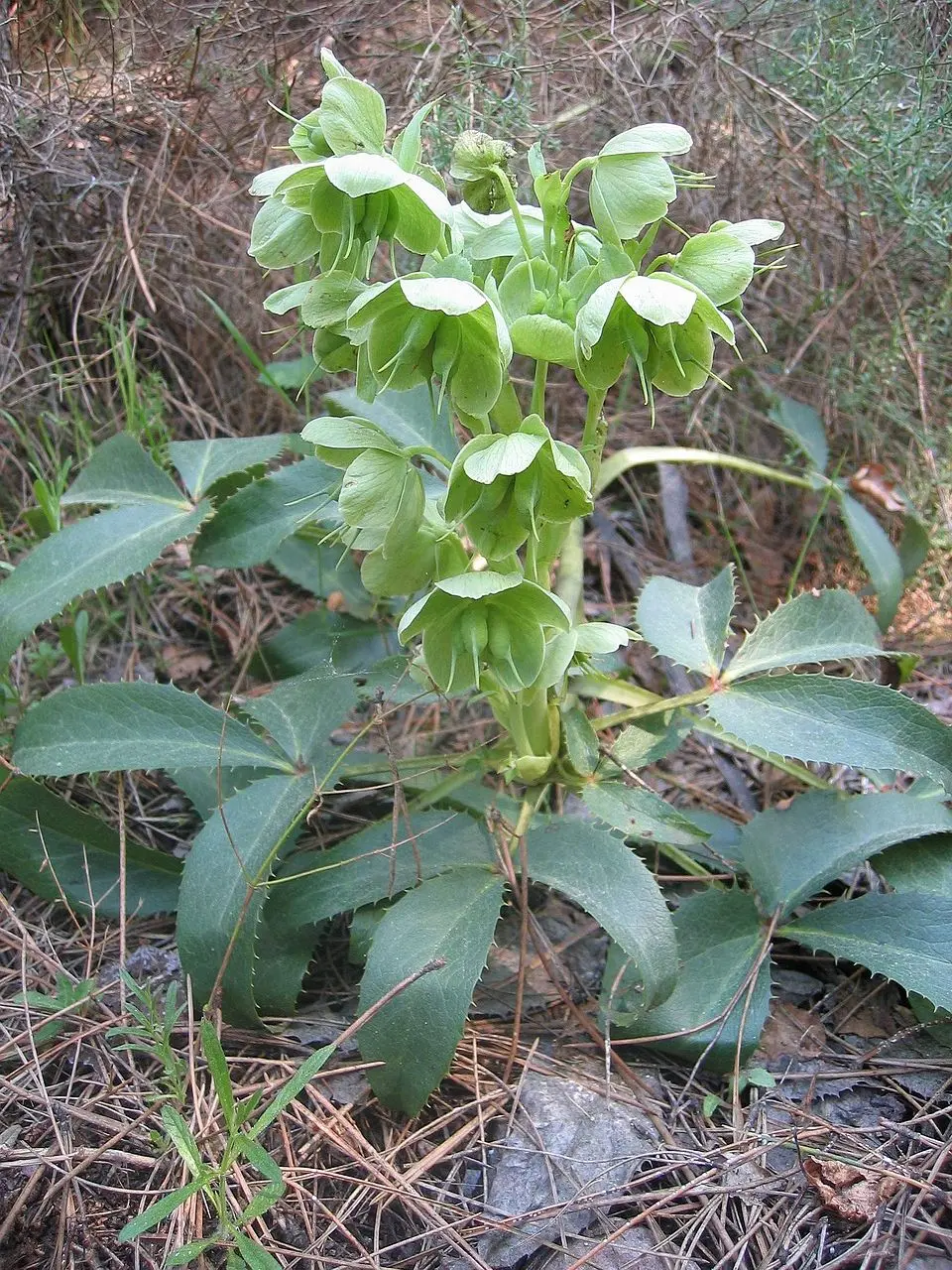
Helleborus argutifolius, commonly known as Corsican hellebore or holly-leaved hellebore, is a robust and captivating evergreen perennial native to the rugged landscapes of Corsica and Sardinia. This species typically establishes a dense, architectural clump, reaching heights of 60-120 cm (2-4 feet) with a spread of 45-75 cm (1.5-2.5 feet). Its defining feature is the distinctive, leathery foliage, composed of three sharply toothed, deep green leaflets that stand upright, providing year-round visual interest, even through the colder months.
The specific epithet 'argutifolius' perfectly describes these serrated leaf margins. Unlike some other hellebores, H. argutifolius maintains a strong, non-flopping structure, making it a valuable plant for consistent garden presence.
Flowering in late winter to early spring, typically from February to April, the Corsican hellebore produces sturdy, erect stems adorned with numerous cup-shaped, chartreuse-green or pale green flowers, often subtly blushed with rose. Each flower, measuring 3-5 cm (1.2-2 inches) in diameter, consists of prominent, long-lasting, petal-like sepals that encircle a cluster of stamens and nectaries. These early blooms are a vital nectar source for emerging pollinators like bees and hoverflies, signaling the advent of spring.
Following successful pollination, the plant develops attractive seed pods that mature and eventually split, dispersing seeds for natural regeneration. Taxonomically, Helleborus argutifolius belongs to the Ranunculaceae family, a diverse group known for both ornamental and historically medicinal, often toxic, plants.
Trusted Scientific References
1. Authoritative external sources for Helleborus Argutifolius
1.1 Wikipedia — Helleborus Argutifolius
1.2 Kew POWO (Plants of the World Online)
1.3 PubMed — peer-reviewed research
1.4 NCBI Taxonomy Browser
1.5 GBIF — Global Biodiversity
1.6Helleborus Argutifolius should be interpreted through verified botanical identity, practical care, and responsible safety language. This recovery note adds the missing context needed for a complete profile: match light to the plant's habit, use well-drained soil, water according to season, and avoid unsupported medicinal or edible claims. For publishing, the plant can be presented as a source-backed garden plant with clear care guidance, common problem diagnosis, and conservative safety wording.
1.1.Helleborus Argutifolius — Key Features
- ✓ <strong>Evergreen Perennial</strong> — Maintains its attractive, leathery foliage throughout the year, providing consistent garden structure and winter interest.
- ✓ <strong>Early Bloomer</strong> — Produces an abundance of flowers in late winter to early spring, typically from February to April, when few other plants are in bloom.
- ✓ <strong>Distinctive Foliage</strong> — Features robust, sharply toothed, palmate leaves, usually divided into three to seven deep green, upward-pointing leaflets.
- ✓ <strong>Chartreuse Flowers</strong> — Bears numerous cup-shaped, pale green to chartreuse flowers, often with a subtle rosy blush, held on sturdy stems above the foliage.
- ✓ <strong>Robust and Hardy</strong> — Known for its resilience, tolerating a range of conditions including some drought once established, and cold hardy in USDA Zones 6-10.
- ✓ <strong>Architectural Form</strong> — Exhibits an upright growth habit, forming dense, sculptural clumps that retain their form and resist flopping, unlike some other Hellebore species.
- ✓ <strong>Pollinator</strong> — Friendly — The early-season flowers are a crucial nectar source for emerging pollinators such as bees and hoverflies.
- ✓ <strong>Native to Mediterranean</strong> — Indigenous to the islands of Corsica and Sardinia, adapting to their specific climate and soil conditions.
- ✓ <strong>Highly Toxic</strong> — All parts of the plant contain potent cardiac glycosides and other compounds, making it poisonous if ingested and requiring careful handling.
- ✓ <strong>Low Maintenance</strong> — Generally considered an easy-to-grow plant in suitable conditions, requiring minimal care once established.
1.2.Helleborus Argutifolius — Quick Summary
- ✓ Common Name: Corsican Hellebore, Holly-leaved Hellebore.
- ✓ Scientific Name: Helleborus argutifolius.
- ✓ Family: Ranunculaceae.
- ✓ Native Range: Endemic to Corsica and Sardinia in the Mediterranean.
- ✓ Key Feature: Evergreen foliage, striking chartreuse-green winter/spring flowers.
- ✓ Medicinal Use: Highly toxic; absolutely no safe internal medicinal use due to potent cardiac glycosides.
2.Helleborus Argutifolius — Scientific Identity
3.Helleborus Argutifolius — Quick Facts
4.Helleborus Argutifolius — Appearance & Identification
5.Helleborus Argutifolius — Native Habitat
6.Helleborus Argutifolius — Water Requirements
- ✓ Soil Requirements — Thrives in fertile, humus-rich, well-draining soil; improve heavy clay with grit and compost, and sandy soil with organic matter to retain moisture.
- ✓ Light Conditions — Prefers partial shade, especially in hotter climates, but can tolerate full sun in cooler regions with consistent moisture.
- ✓ Watering — Requires moderate, consistent moisture; Helleborus argutifolius is more tolerant of drier conditions once established compared to other Hellebore species.
- ✓ Temperature and Hardiness — Hardy in USDA Zones 6-10, tolerating minimum temperatures down to -18°C (0°F); provides evergreen interest even in winter.
- ✓ Propagation — Primarily propagated by seed, which requires a period of warm stratification followed by cold for germination (sow fresh); also by division of established clumps in spring or autumn.
- ✓ Fertilization — Feed monthly during the active growing season with a balanced, slow-release granular fertilizer or organic compost to support robust growth and flowering.
- ✓ Pruning and Maintenance — Remove old, damaged, or spent leaves and flower stalks to maintain plant vigor and aesthetics, especially before new growth emerges in spring.
- ✓ Pest and Disease Management — Generally robust, but monitor for common pests like aphids and potential fungal leaf spots, especially in humid conditions.
Reviewed by the Flora Medical Global Botanical Review Panel
Multi-disciplinary editorial group · Botany · Ethnobotany · Herbal-medicine literature
Who reviewed this: This page was checked by the Flora Medical Global Botanical Review Panel — an in-house editorial group of botany graduates, ethnobotany researchers, and horticulture practitioners who collectively maintain our 7,000+ plant encyclopedia. Meet the team.
Our 4-step verification process
1. Taxonomic verification
Scientific names and synonyms cross-checked against Kew POWO, World Flora Online, and The Plant List.
2. Phytochemical & medicinal cross-reference
Active compounds, traditional uses, and reported activities are cross-referenced with PubMed, USDA Dr. Duke's database, and peer-reviewed ethnobotanical literature.
3. Conservation & distribution check
Distribution, ecology, and conservation status confirmed against GBIF occurrence records and the IUCN Red List.
4. Editorial & safety review
Every entry passes an editorial pass for clarity, originality, and safety notices (toxicity, contraindications, dosage caveats) before publication.
Last reviewed:
Editorial Note: This page is for educational and plant care purposes only.
Written by: Flora Medical Global Editorial Team
Reviewed by: Flora Medical Global Botanical Review Panel
Last Updated: June 15, 2026







Helleborus Argutifolius — Comments & Community Reviews
Rate this plant