
Care Disclaimer: Plant care recommendations are general guidelines based on common growing conditions. Individual results may vary based on your local environment, climate, and care routine. If your plant is toxic, keep it away from children and pets, and consult a veterinarian if accidental ingestion occurs.
1.Helleborus Viridis — Overview
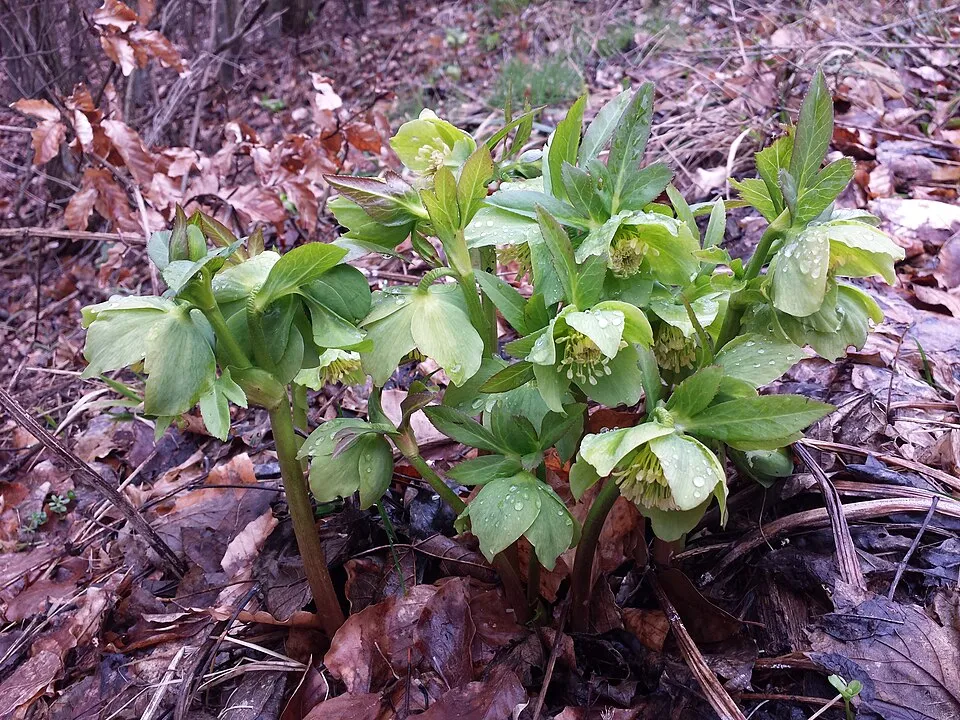
Helleborus viridis, commonly recognized as Green Hellebore, is an alluring herbaceous perennial native to the woodlands and shaded areas of Western and Central Europe, extending into southern England. This member of the Ranunculaceae family is cherished for its understated yet captivating beauty, particularly its distinctive greenish-yellow to pure green, cup-shaped flowers that emerge in late winter and early spring, offering a vital source of nectar for early pollinators. Unlike some of its Hellebore relatives, Helleborus viridis typically displays deeply divided, often prominently veined leaves with serrated margins, which provide a lush, attractive backdrop even outside of its blooming period.
The plant develops an upright growth habit, forming compact clumps that generally reach a height of 30 to 60 centimeters (12-24 inches). Its foliage remains evergreen in milder climates, providing year-round interest, but may recede in harsher winters to re-emerge vigorously with the onset of spring. This species is taxonomically classified within the Kingdom Plantae, Clade Angiosperms, Order Ranunculales, Family Ranunculaceae, Genus Helleborus, and Species Helleborus viridis.
Its robust nature and ability to thrive in shaded, naturalized settings make it a prized ornamental, albeit one requiring respectful handling due to its inherent toxicity.
Trusted Scientific References
1. Authoritative external sources for Helleborus Viridis
1.1 Wikipedia — Helleborus Viridis
1.2 Kew POWO (Plants of the World Online)
1.3 PubMed — peer-reviewed research
1.4 NCBI Taxonomy Browser
1.5 GBIF — Global Biodiversity
1.6Helleborus Viridis should be interpreted through verified botanical identity, practical care, and responsible safety language. This recovery note adds the missing context needed for a complete profile: match light to the plant's habit, use well-drained soil, water according to season, and avoid unsupported medicinal or edible claims. For publishing, the plant can be presented as a source-backed garden plant with clear care guidance, common problem diagnosis, and conservative safety wording.
1.1.Helleborus Viridis — Key Features
- ✓ <strong>Common Name</strong> — Green Hellebore, Bear's Foot, Green Christmas Rose.
- ✓ <strong>Scientific Name</strong> — Helleborus viridis.
- ✓ <strong>Botanical Family</strong> — Ranunculaceae (Buttercup Family).
- ✓ <strong>Extreme Toxicity</strong> — All plant parts are highly poisonous, especially when ingested, due to cardiac glycosides.
- ✓ <strong>Unique Green Blooms</strong> — Distinctive greenish-yellow to pure green, cup-shaped flowers that appear in late winter.
- ✓ <strong>Early Spring Interest</strong> — Flowers provide crucial early season color and nectar, often blooming through snow.
- ✓ <strong>Perennial Growth</strong> — Hardy herbaceous perennial, returning year after year from a persistent rootstock.
- ✓ <strong>Native Habitat</strong> — Indigenous to Western and Central Europe, including parts of Southern England.
- ✓ <strong>Key Phytochemicals</strong> — Contains potent cardiac glycosides (helleborin, hellebrin) and saponins.
- ✓ <strong>Shade Loving</strong> — Thrives in partial to full shade with well-draining, humus-rich soil, ideal for woodland gardens.
1.2.Helleborus Viridis — Quick Summary
- ✓ Helleborus viridis, or Green Hellebore, is a beautiful but highly toxic perennial ornamental.
- ✓ All parts of the plant are poisonous, containing potent cardiac glycosides like helleborin.
- ✓ Historically used as a purgative and emetic, but strictly contraindicated for any modern internal use due to severe toxicity.
- ✓ Cultivated for its early green blooms and attractive foliage in shaded garden settings.
- ✓ Requires careful handling with gloves to prevent skin irritation and must be kept away from children and pets.
- ✓ Ingestion can lead to severe gastrointestinal distress, cardiac arrhythmias, neurological symptoms, and can be fatal.
2.Helleborus Viridis — Scientific Identity
3.Helleborus Viridis — Quick Facts
4.Helleborus Viridis — Appearance & Identification
5.Helleborus Viridis — Native Habitat
6.Helleborus Viridis — Water Requirements
- ✓ Soil Requirements — Thrives in fertile, well-draining soil rich in organic matter, ideally a good garden loam amended with compost to improve structure and moisture retention.
- ✓ Light Conditions — Prefers partial to full shade, especially in warmer climates, to protect foliage from scorching, though it can tolerate more sun in cooler, consistently moist conditions.
- ✓ Watering Regimen — Requires consistent moisture throughout the growing season, keeping the soil moist but never waterlogged to prevent root rot, particularly important during dry spells.
- ✓ Propagation Methods — Can be propagated effectively from fresh seeds, which typically require a period of stratification for successful germination, or by carefully dividing mature clumps in early spring or autumn.
- ✓ Fertilization — Benefits from a light application of a balanced granular fertilizer or a top-dressing of well-rotted compost in early spring as new growth emerges.
- ✓ Mulching — An annual layer of organic mulch, such as leaf mold or bark chips, helps conserve soil moisture, regulate soil temperature, and suppress weed growth around the plant's base.
- ✓ Winter Care — In colder climates (USDA Zones 4-8), foliage may die back to the ground, but the plant will re-emerge vigorously in spring from its persistent rootstock; protect from harsh winter winds.
Reviewed by the Flora Medical Global Botanical Review Panel
Multi-disciplinary editorial group · Botany · Ethnobotany · Herbal-medicine literature
Who reviewed this: This page was checked by the Flora Medical Global Botanical Review Panel — an in-house editorial group of botany graduates, ethnobotany researchers, and horticulture practitioners who collectively maintain our 7,000+ plant encyclopedia. Meet the team.
Our 4-step verification process
1. Taxonomic verification
Scientific names and synonyms cross-checked against Kew POWO, World Flora Online, and The Plant List.
2. Phytochemical & medicinal cross-reference
Active compounds, traditional uses, and reported activities are cross-referenced with PubMed, USDA Dr. Duke's database, and peer-reviewed ethnobotanical literature.
3. Conservation & distribution check
Distribution, ecology, and conservation status confirmed against GBIF occurrence records and the IUCN Red List.
4. Editorial & safety review
Every entry passes an editorial pass for clarity, originality, and safety notices (toxicity, contraindications, dosage caveats) before publication.
Last reviewed:
Editorial Note: This page is for educational and plant care purposes only.
Written by: Flora Medical Global Editorial Team
Reviewed by: Flora Medical Global Botanical Review Panel
Last Updated: June 15, 2026







Helleborus Viridis — Comments & Community Reviews
Rate this plant