


Care Disclaimer: Plant care recommendations are general guidelines based on common growing conditions. Individual results may vary based on your local environment, climate, and care routine. If your plant is toxic, keep it away from children and pets, and consult a veterinarian if accidental ingestion occurs.
1.Heuchera Americana — Overview
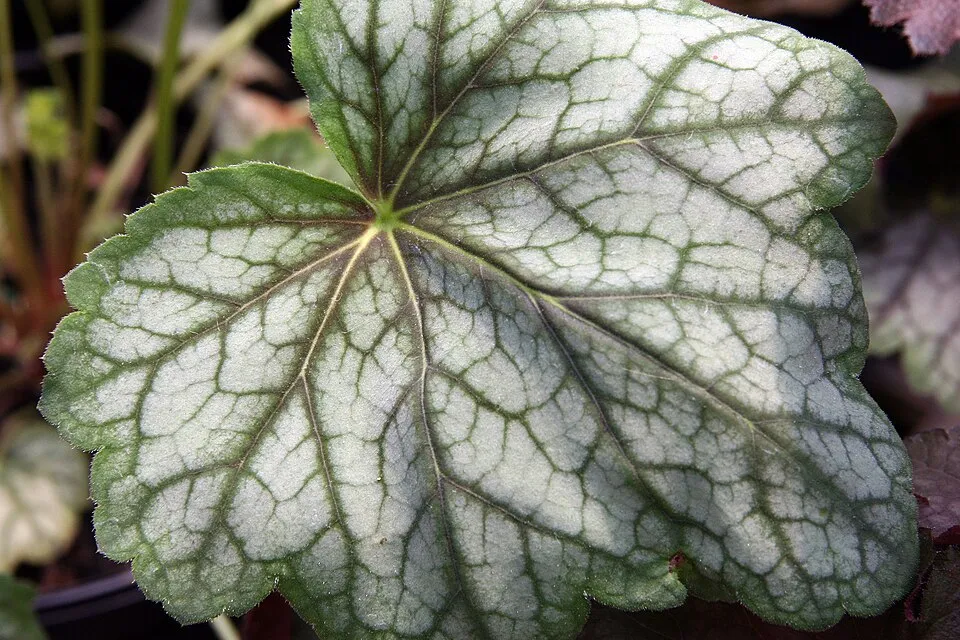
Heuchera Americana, widely recognized as American Alumroot or Coral Bells, is an elegant herbaceous perennial belonging to the Saxifragaceae family. This native of eastern North America thrives in the understory of woodlands, rocky outcrops, and along stream banks, favoring acidic soils and partial shade. It forms a robust basal rosette, giving rise to its distinctive broad, shallowly lobed, often evergreen leaves.
The foliage is a key ornamental feature, displaying a remarkable spectrum of colors, from vibrant greens with contrasting venation to deep purples, bronzes, and variegated patterns, frequently adorned with silver mottling, especially in its numerous cultivated varieties. In late spring to early summer, delicate, airy spires, typically reaching 1 to 3 feet in height, emerge gracefully above the foliage. These panicles bear numerous small, bell-shaped flowers, predominantly in shades of white, cream, or greenish-pink, which are a subtle yet attractive draw for hummingbirds and various native pollinators.
The plant’s fibrous root system anchors it firmly, contributing to its hardiness and drought tolerance once established. Botanists recognize three distinct varieties within Heuchera Americana, though they are often difficult to differentiate without expert analysis. Its adaptability, year-round visual interest, and low maintenance requirements make it a prized specimen in garden design, suitable for borders, groundcover, rock gardens, and container plantings, while also playing an ecological role in its native habitats.
Trusted Scientific References
1. Authoritative external sources for Heuchera Americana
1.1 Wikipedia — Heuchera Americana
1.2 Kew POWO (Plants of the World Online)
1.3 PubMed — peer-reviewed research
1.4 NCBI Taxonomy Browser
1.5 GBIF — Global Biodiversity
1.6Heuchera Americana should be interpreted through verified botanical identity, practical care, and responsible safety language. This recovery note adds the missing context needed for a complete profile: match light to the plant's habit, use well-drained soil, water according to season, and avoid unsupported medicinal or edible claims. For publishing, the plant can be presented as a source-backed garden plant with clear care guidance, common problem diagnosis, and conservative safety wording.
1.1.Heuchera Americana — Key Features
- ✓ <strong>Native North American Perennial</strong> — Indigenous to woodlands and rocky areas of eastern North America.
- ✓ <strong>Ornamental Foliage</strong> — Features attractive, often variegated or colorful, lobed leaves in a basal rosette.
- ✓ <strong>High Tannin Content</strong> — Roots are rich in tannins, conferring strong astringent properties.
- ✓ <strong>Traditional Medicinal Use</strong> — Historically used by Native Americans for wound healing, bleeding, and inflammation.
- ✓ <strong>Shade Tolerant</strong> — Thrives in partial to full shade, making it ideal for woodland gardens.
- ✓ <strong>Deer Resistant</strong> — High tannin content makes the foliage unpalatable to deer.
- ✓ <strong>Low Maintenance</strong> — Relatively easy to grow and care for once established.
- ✓ <strong>Pollinator Attractor</strong> — Delicate flowers attract hummingbirds and native bees.
- ✓ <strong>Drought Tolerant (Established)</strong> — Shows good resilience to dry periods once its root system is developed.
- ✓ <strong>Anti</strong> — inflammatory Properties — Helps reduce swelling and irritation, especially when applied topically.
1.2.Heuchera Americana — Quick Summary
- ✓ American Alumroot (Heuchera Americana) is a North American native known for its ornamental foliage and potent medicinal roots.
- ✓ Rich in tannins, it is traditionally valued for its strong astringent, anti-inflammatory, and wound-healing properties.
- ✓ Historically used by Native Americans as a topical remedy for bleeding, wounds, and skin irritations.
- ✓ Primarily recommended for external applications due to its intense astringency and potential for internal digestive upset.
- ✓ Cultivated for its shade tolerance and decorative foliage, making it a versatile garden plant.
- ✓ Requires caution with internal use; consult a professional.
2.Heuchera Americana — Scientific Identity
3.Heuchera Americana — Quick Facts
4.Heuchera Americana — Appearance & Identification
5.Heuchera Americana — Native Habitat
6.Heuchera Americana — Water Requirements
- ✓ Site Selection — Plant in a location with partial to full shade, especially protecting from intense afternoon sun, which can scorch the leaves.
- ✓ Soil Requirements — Prefers moist, well-drained, organically rich soils with a slightly acidic to neutral pH (6.0-7.0).
- ✓ Watering — Keep soil consistently moist, especially during dry periods; established plants show some drought tolerance but perform best with regular moisture.
- ✓ Propagation — Can be propagated by division of clumps every 3-4 years in spring or fall, or by seed, though cultivars may not come true from seed.
- ✓ Fertilization — Generally low-maintenance; a light application of balanced, slow-release fertilizer in spring is sufficient for optimal growth.
- ✓ Pest and Disease Management — Relatively pest-free; watch for root rot in overly wet conditions and occasional foliar diseases, though deer typically avoid it due to high tannin content.
- ✓ Winter Care — In colder zones, a layer of mulch around the crown can provide winter protection, though many cultivars are quite cold hardy.
- ✓ Landscape Use — Excellent for mass plantings, woodland gardens, borders, containers, and as groundcover, providing year-round foliage interest.
Reviewed by the Flora Medical Global Botanical Review Panel
Multi-disciplinary editorial group · Botany · Ethnobotany · Herbal-medicine literature
Who reviewed this: This page was checked by the Flora Medical Global Botanical Review Panel — an in-house editorial group of botany graduates, ethnobotany researchers, and horticulture practitioners who collectively maintain our 7,000+ plant encyclopedia. Meet the team.
Our 4-step verification process
1. Taxonomic verification
Scientific names and synonyms cross-checked against Kew POWO, World Flora Online, and The Plant List.
2. Phytochemical & medicinal cross-reference
Active compounds, traditional uses, and reported activities are cross-referenced with PubMed, USDA Dr. Duke's database, and peer-reviewed ethnobotanical literature.
3. Conservation & distribution check
Distribution, ecology, and conservation status confirmed against GBIF occurrence records and the IUCN Red List.
4. Editorial & safety review
Every entry passes an editorial pass for clarity, originality, and safety notices (toxicity, contraindications, dosage caveats) before publication.
Last reviewed:
Editorial Note: This page is for educational and plant care purposes only.
Written by: Flora Medical Global Editorial Team
Reviewed by: Flora Medical Global Botanical Review Panel
Last Updated: June 15, 2026







Heuchera Americana — Comments & Community Reviews
Rate this plant