
Care Disclaimer: Plant care recommendations are general guidelines based on common growing conditions. Individual results may vary based on your local environment, climate, and care routine. If your plant is toxic, keep it away from children and pets, and consult a veterinarian if accidental ingestion occurs.
1.Hosta Blue Angel — Overview
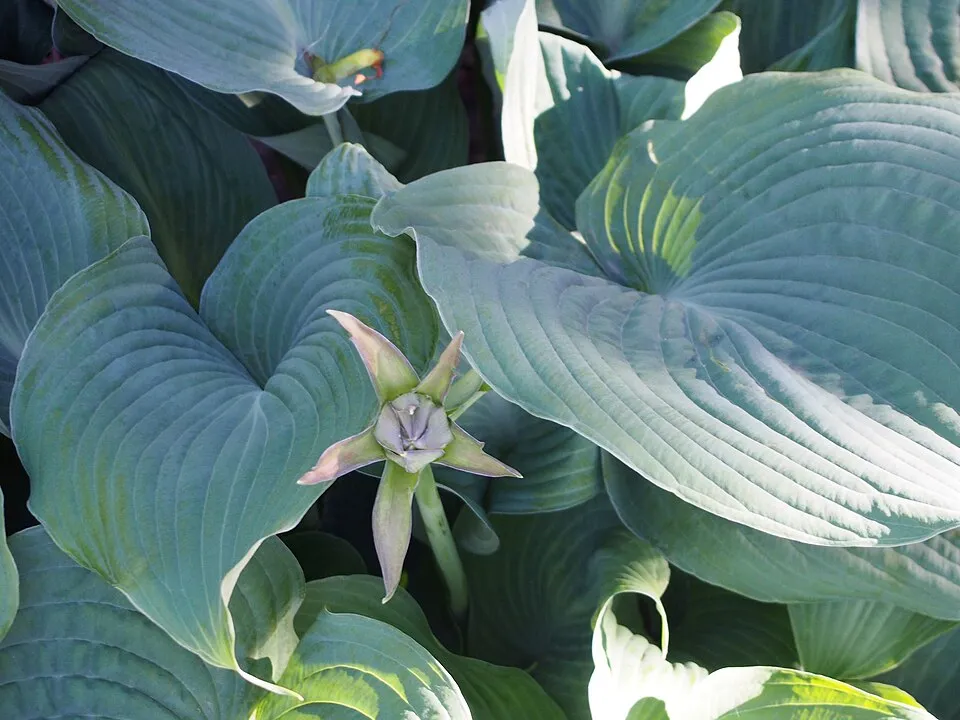
Hosta 'Blue Angel' is a highly acclaimed ornamental cultivar celebrated for its striking, architectural presence in shaded garden environments. This robust perennial forms an impressive, symmetrical mound, typically reaching a height of 30-36 inches (75-90 cm) and spreading 42-48 inches (105-120 cm). Its most distinctive feature is its gigantic, heart-shaped leaves, which present a unique blue-green hue, heavily corrugated texture, and a thick, waxy coating.
This glaucous bloom not only contributes to its visual appeal but also provides a natural resistance to common garden pests like slugs. In mid-to-late summer, 'Blue Angel' produces elegant, tall scapes, often reaching up to 48 inches (120 cm), adorned with delicate, bell-shaped, pale lavender flowers that attract hummingbirds and other pollinators. As a cultivar of the genus Hosta, which is native to the woodlands of East Asia (Japan, China, Korea), it belongs to the family Asparagaceae.
While primarily cultivated for its aesthetic value in temperate shade gardens globally, its resilience and adaptability to various soil conditions and urban pollutants further enhance its popularity as a landscape specimen.
Trusted Scientific References
1. Authoritative external sources for Hosta Blue Angel
1.1 Wikipedia — Hosta Blue Angel
1.2 Kew POWO (Plants of the World Online)
1.3 PubMed — peer-reviewed research
1.4 NCBI Taxonomy Browser
1.5 GBIF — Global Biodiversity
1.6Hosta Blue Angel should be interpreted through verified botanical identity, practical care, and responsible safety language. This recovery note adds the missing context needed for a complete profile: match light to the plant's habit, use well-drained soil, water according to season, and avoid unsupported medicinal or edible claims. For publishing, the plant can be presented as a source-backed garden plant with clear care guidance, common problem diagnosis, and conservative safety wording.
1.7Hosta Blue Angel (Hosta blue Angel) is maintained in this recovery file as a complete garden profile with practical care, safety, and identification context. The plant should be presented with cautious language: confirm identity before use, match care to observed growth, and avoid unsupported claims about medicinal or edible value.
1.1.Hosta Blue Angel — Key Features
- ✓ <strong>Gigantic, Heart</strong> — shaped Blue-Green Leaves — Distinctive, large foliage with a waxy, heavily corrugated texture.
- ✓ <strong>Slug Resistance</strong> — Natural defense provided by thick, waxy leaves, minimizing common pest damage.
- ✓ <strong>Shade Loving Perennial</strong> — Thrives optimally in partial to full shade, ideal for woodland and low-light garden areas.
- ✓ <strong>Low Maintenance</strong> — Requires minimal ongoing care once established, making it suitable for various garden settings.
- ✓ <strong>Urban Adaptability</strong> — Tolerant of city pollutants and challenging urban conditions, enhancing metropolitan green spaces.
- ✓ <strong>Long</strong> — lived Plant — Known to thrive for over 20 years, offering enduring beauty and garden impact.
- ✓ <strong>Attracts Pollinators</strong> — Pale lavender, bell-shaped flowers provide nectar for hummingbirds, bees, and other beneficial insects.
- ✓ <strong>Edible Young Shoots</strong> — Tender spring shoots can be carefully harvested for culinary use, similar to asparagus.
- ✓ <strong>Drought Tolerant (Once Established)</strong> — Shows resilience to drier conditions after its initial establishment phase, reducing water needs.
- ✓ <strong>Good Groundcover</strong> — Forms dense clumps that effectively suppress weeds and provide excellent coverage for dying bulb foliage.
1.2.Hosta Blue Angel — Quick Summary
- ✓ Hosta 'Blue Angel' is a highly valued ornamental shade perennial known for its striking large, blue-green, corrugated leaves.
- ✓ It forms an impressive mound, providing significant aesthetic appeal and effective groundcover in shaded garden environments.
- ✓ The plant exhibits natural resistance to slugs and adapts well to various urban conditions, making it a robust garden choice.
- ✓ Young, unfurled shoots can be harvested in early spring and carefully consumed as a culinary vegetable, similar to asparagus.
- ✓ Contains saponins, which are toxic if mature plant parts are ingested in significant quantities, posing a risk to humans and pets.
- ✓ Primarily cultivated for its beauty, 'Blue Angel' is not traditionally or scientifically recognized for internal medicinal benefits.
2.Hosta Blue Angel — Scientific Identity
3.Hosta Blue Angel — Quick Facts
4.Hosta Blue Angel — Appearance & Identification
5.Hosta Blue Angel — Native Habitat
6.Hosta Blue Angel — Water Requirements
- Hosta 'Blue Angel' is a relatively low-maintenance perennial that thrives with proper care, ensuring its longevity and vibrant display:
- ✓ Light Requirements — Plant in partial to full shade; direct afternoon sun can severely scorch its distinctive blue foliage, especially in warmer climates, diminishing its waxy coating and turning leaves green.
- ✓ Soil Preference — Thrives in consistently moist, well-drained, and organically rich loamy soils; ideal pH is slightly acidic to neutral (6.0-7.0); amend heavy clay or sandy soils with generous amounts of compost or well-rotted manure.
- ✓ Watering — Requires regular and consistent watering, particularly during dry spells and its establishment phase, to maintain evenly moist soil; avoid waterlogging to prevent root rot, ensuring adequate drainage.
- ✓ Planting — Best planted in spring or early fall, allowing ample space for its mature size, which can reach a spread of 3-4 feet (90-120 cm); ensure the crown is at or slightly above soil level.
- ✓ Fertilization — Apply a balanced, slow-release granular fertilizer in early spring as new growth emerges, or supplement annually with a generous layer of organic compost around the plant base.
- ✓ Pest and Disease Management — 'Blue Angel' exhibits good natural resistance to slugs due to its thick, waxy leaves; however, monitor for other common Hosta issues like foliar nematodes, crown rot, or viral infections, ensuring good air circulation.
- ✓ Propagation — Primarily propagated by division of mature clumps every 3-5 years in spring or early fall; carefully separate sections with at least one 'eye' (bud) and a portion of healthy roots for successful transplanting.
- ✓ Winter Care — In colder zones (USDA Zone 3-4), apply a 2-4 inch (5-10 cm) layer of organic mulch around the crown in late fall to provide insulation, protect against harsh winter freezes, and prevent damaging freeze-thaw cycles.
Reviewed by the Flora Medical Global Botanical Review Panel
Multi-disciplinary editorial group · Botany · Ethnobotany · Herbal-medicine literature
Who reviewed this: This page was checked by the Flora Medical Global Botanical Review Panel — an in-house editorial group of botany graduates, ethnobotany researchers, and horticulture practitioners who collectively maintain our 7,000+ plant encyclopedia. Meet the team.
Our 4-step verification process
1. Taxonomic verification
Scientific names and synonyms cross-checked against Kew POWO, World Flora Online, and The Plant List.
2. Phytochemical & medicinal cross-reference
Active compounds, traditional uses, and reported activities are cross-referenced with PubMed, USDA Dr. Duke's database, and peer-reviewed ethnobotanical literature.
3. Conservation & distribution check
Distribution, ecology, and conservation status confirmed against GBIF occurrence records and the IUCN Red List.
4. Editorial & safety review
Every entry passes an editorial pass for clarity, originality, and safety notices (toxicity, contraindications, dosage caveats) before publication.
Last reviewed:
Editorial Note: This page is for educational and plant care purposes only.
Written by: Flora Medical Global Editorial Team
Reviewed by: Flora Medical Global Botanical Review Panel
Last Updated: June 15, 2026







Hosta Blue Angel — Comments & Community Reviews
Rate this plant