

Care Disclaimer: Plant care recommendations are general guidelines based on common growing conditions. Individual results may vary based on your local environment, climate, and care routine. If your plant is toxic, keep it away from children and pets, and consult a veterinarian if accidental ingestion occurs.
1.Hydrangea Quercifolia — Overview
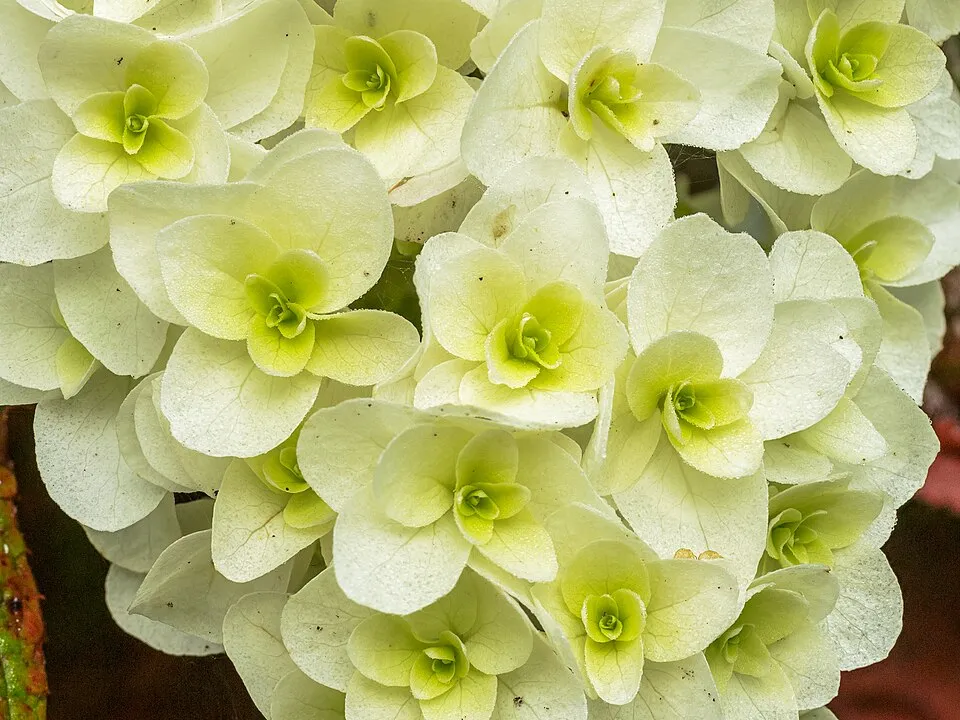
Hydrangea quercifolia, commonly known as the oakleaf hydrangea, is a truly distinctive and captivating deciduous shrub indigenous to the rich woodlands of the southeastern United States. Its taxonomic classification places it within the Hydrangeaceae family. The plant derives its common and specific epithet from its striking foliage—large, deeply lobed leaves that bear a remarkable resemblance to those of various oak species.
These leathery green leaves provide a lush backdrop for its dramatic, cone-shaped panicles of white flowers, which emerge in late spring to early summer. As the season progresses, these elegant blooms gradually transition to shades of soft pink, then mauve, and finally a warm russet brown, offering extended visual interest. Beyond its summer spectacle, the oakleaf hydrangea truly shines in autumn, when its foliage ignites into a breathtaking display of burgundy, bronze, and crimson, creating a vibrant landscape feature.
Typically reaching heights and widths of 4 to 8 feet, this multi-stemmed shrub also boasts attractive cinnamon-brown bark that peels in layers, revealing a textural element that provides significant winter appeal after the leaves have fallen. Its robust nature and four-season beauty make it a prized ornamental, thriving particularly in partial shade and consistently moist, well-drained, acidic to neutral soils within its native range and in cultivation.
Trusted Scientific References
1. Authoritative external sources for Hydrangea quercifolia
1.1 Wikipedia — Hydrangea quercifolia
1.2 Kew POWO (Plants of the World Online)
1.3 PubMed — peer-reviewed research
1.4 NCBI Taxonomy Browser
1.5 GBIF — Global Biodiversity
1.6Hydrangea Quercifolia should be interpreted through verified botanical identity, practical care, and responsible safety language. This recovery note adds the missing context needed for a complete profile: match light to the plant's habit, use well-drained soil, water according to season, and avoid unsupported medicinal or edible claims. For publishing, the plant can be presented as a source-backed garden plant with clear care guidance, common problem diagnosis, and conservative safety wording.
1.1.Hydrangea Quercifolia — Key Features
- ✓ <strong>Distinctive Oak</strong> — like Foliage — Large, deeply lobed leaves that closely resemble the foliage of an oak tree, offering unique texture.
- ✓ <strong>Dramatic Cone</strong> — shaped Flowers — Produces impressive, elongated panicles of white flowers that gradually transform to pink and mauve.
- ✓ <strong>Spectacular Autumn Color</strong> — Foliage transitions into vibrant shades of burgundy, bronze, and crimson, providing strong seasonal interest.
- ✓ <strong>Attractive Peeling Bark</strong> — Features cinnamon-brown bark that exfoliates in layers, adding significant visual appeal in winter.
- ✓ <strong>Native to Southeastern US</strong> — Naturally occurs in woodland habitats of its native range, indicating its preferred growing conditions.
- ✓ <strong>Traditional Diuretic & Litholytic</strong> — Historically valued by indigenous cultures for its use in promoting urination and addressing kidney stones.
- ✓ <strong>Contains Cyanogenic Glycosides</strong> — A key chemical constituent that imparts medicinal properties but also necessitates careful handling due to potential toxicity.
- ✓ <strong>Hardy and Adaptable Shrub</strong> — Tolerates a range of growing conditions and is hardy in USDA Zones 5-9.
- ✓ <strong>Low Maintenance</strong> — Generally robust against common pests and diseases, requiring minimal ongoing care.
- ✓ <strong>Four</strong> — Season Appeal — Offers continuous visual interest throughout the year, from spring growth to winter bark structure.
1.2.Hydrangea Quercifolia — Quick Summary
- ✓ Oakleaf hydrangea (Hydrangea quercifolia) is a striking deciduous shrub native to the southeastern US, prized for its oak-like leaves and seasonal beauty.
- ✓ Historically, Native Americans utilized its root as a diuretic and for kidney and bladder stones.
- ✓ Its chemical profile includes cyanogenic glycosides, coumarins, and flavonoids, contributing to both its traditional uses and potential toxicity.
- ✓ Cultivation requires partial shade, consistently moist, well-drained, acidic to neutral soil, and minimal pruning.
- ✓ Due to the presence of cyanogenic glycosides, extreme caution and professional guidance are paramount for any internal use.
- ✓ Offers significant ornamental value with dramatic flowers, vibrant fall foliage, and attractive peeling bark.
2.Hydrangea Quercifolia — Scientific Identity
3.Hydrangea Quercifolia — Quick Facts
4.Hydrangea Quercifolia — Appearance & Identification
5.Hydrangea Quercifolia — Native Habitat
6.Hydrangea Quercifolia — Water Requirements
- ✓ Soil Preference — Thrives in well-drained, organically rich, consistently moist, acidic to neutral soils (pH 5.5-7.0) to ensure optimal nutrient uptake and robust root development.
- ✓ Light Requirements — Prefers partial shade, especially protection from intense afternoon sun to prevent leaf scorch; it can tolerate full sun in cooler climates if provided with ample moisture, though its best fall color often develops with some sun exposure.
- ✓ Watering — Requires consistent moisture, particularly during dry spells and its establishment phase; once mature, it demonstrates greater drought tolerance compared to other Hydrangea species, but regular watering is still beneficial.
- ✓ Fertilization — Benefits from a slow-release granular fertilizer specifically formulated for trees and shrubs, applied in early spring, or a yearly top-dressing of well-rotted compost to support vigorous growth and flowering.
- ✓ Pruning — Prune immediately after flowering to remove spent blooms and maintain a desirable shape; minimal structural pruning is generally needed as it blooms on old wood, meaning next year's flowers form on the previous year's growth.
- ✓ Propagation — Easily propagated from softwood cuttings taken in early summer, or by carefully dividing suckers that emerge from the base of the plant, ensuring each division has an adequate root system.
- ✓ Pests and Diseases — Generally robust, but gardeners should monitor for common issues such as powdery mildew in humid conditions, and occasional aphid infestations, which can typically be managed with appropriate organic sprays.
- ✓ Winter Protection — In the colder reaches of its hardiness zones (USDA 5), mounding 6-8 inches of shredded bark mulch around the plant's base after the ground freezes can provide crucial root crown protection, which should be removed in early spring.
Reviewed by the Flora Medical Global Botanical Review Panel
Multi-disciplinary editorial group · Botany · Ethnobotany · Herbal-medicine literature
Who reviewed this: This page was checked by the Flora Medical Global Botanical Review Panel — an in-house editorial group of botany graduates, ethnobotany researchers, and horticulture practitioners who collectively maintain our 7,000+ plant encyclopedia. Meet the team.
Our 4-step verification process
1. Taxonomic verification
Scientific names and synonyms cross-checked against Kew POWO, World Flora Online, and The Plant List.
2. Phytochemical & medicinal cross-reference
Active compounds, traditional uses, and reported activities are cross-referenced with PubMed, USDA Dr. Duke's database, and peer-reviewed ethnobotanical literature.
3. Conservation & distribution check
Distribution, ecology, and conservation status confirmed against GBIF occurrence records and the IUCN Red List.
4. Editorial & safety review
Every entry passes an editorial pass for clarity, originality, and safety notices (toxicity, contraindications, dosage caveats) before publication.
Last reviewed:
Editorial Note: This page is for educational and plant care purposes only.
Written by: Flora Medical Global Editorial Team
Reviewed by: Flora Medical Global Botanical Review Panel
Last Updated: June 15, 2026







Hydrangea Quercifolia — Comments & Community Reviews
Rate this plant