

Care Disclaimer: Plant care recommendations are general guidelines based on common growing conditions. Individual results may vary based on your local environment, climate, and care routine. If your plant is toxic, keep it away from children and pets, and consult a veterinarian if accidental ingestion occurs.
1.Hylotelephium Spectabile — Overview
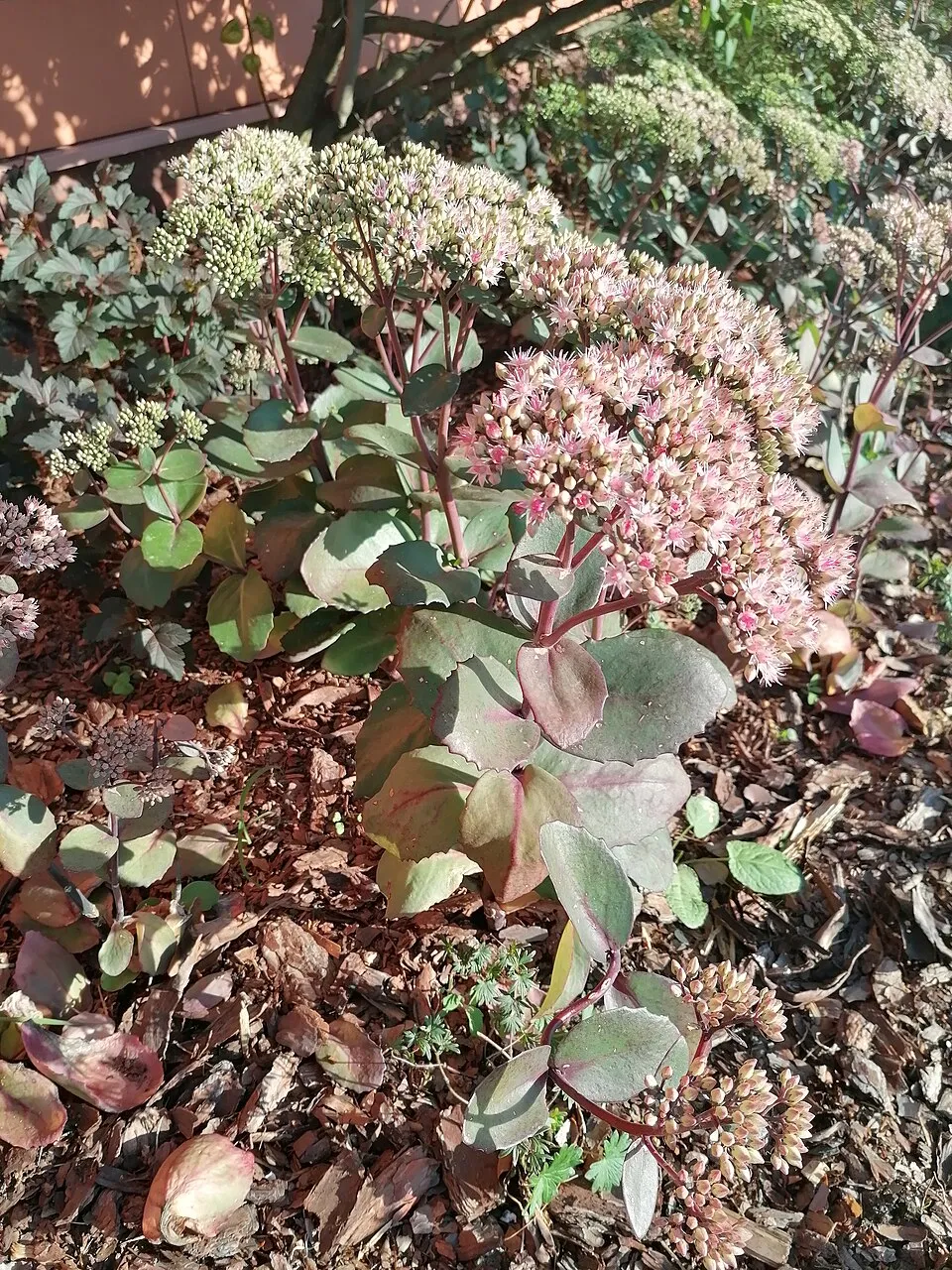
Hylotelephium spectabile, commonly known as Autumn Joy Sedum or Showy Stonecrop, is a resilient and aesthetically appealing succulent perennial belonging to the Crassulaceae family, formerly classified under the genus Sedum. This robust species typically forms an upright, clump-forming habit, reaching heights of 30 to 60 centimeters, with sturdy, unbranched stems emerging from a fibrous root system. Its most distinctive features are its thick, fleshy, obovate to elliptical leaves, which are characteristically a glaucous blue-green and measure approximately 8 to 12 centimeters in length and 4 to 6 centimeters in width.
These succulent leaves are alternately arranged along the stem, a crucial adaptation for efficient water storage that contributes to the plant's remarkable drought tolerance. The plant's ornamental peak occurs from late summer through autumn, producing dense, flattened, terminal cymes of numerous small, star-shaped flowers. These showy inflorescences, often 10 to 20 centimeters across, undergo a captivating color transformation, beginning as soft pink buds, deepening to a rich carmine or rosy-pink as they mature, and eventually fading to a coppery-bronze hue.
This extended late-season bloom provides an invaluable nectar source for various pollinators, particularly bees, butterflies, and hoverflies, making it a vital component of wildlife gardens. Native to the temperate regions of China and Korea, Hylotelephium spectabile thrives in well-drained, average to poor soils and demands full sun exposure to flourish. Its exceptional hardiness, capable of withstanding temperatures down to -20°C, combined with its low maintenance requirements and striking visual appeal, has led to its widespread cultivation in gardens and landscapes across Europe, North America, and other temperate zones globally.
Trusted Scientific References
1. Authoritative external sources for Hylotelephium Spectabile
1.1 Wikipedia — Hylotelephium Spectabile
1.2 Kew POWO (Plants of the World Online)
1.3 PubMed — peer-reviewed research
1.4 NCBI Taxonomy Browser
1.5 GBIF — Global Biodiversity
1.1.Hylotelephium Spectabile — Key Features
- ✓ <strong>Common Names</strong> — Autumn Joy Sedum, Showy Stonecrop.
- ✓ <strong>Botanical Family</strong> — Crassulaceae.
- ✓ <strong>Succulent Nature</strong> — Thick, fleshy leaves for water storage.
- ✓ <strong>Late</strong> — Season Bloom — Vibrant pink to rosy-pink flowers from late summer to autumn.
- ✓ <strong>Pollinator Magnet</strong> — Attracts bees, butterflies, and hoverflies.
- ✓ <strong>Drought Tolerance</strong> — Highly adaptable to dry conditions once established.
- ✓ <strong>Extreme Hardiness</strong> — Withstands temperatures down to -20°C.
- ✓ <strong>Low Maintenance</strong> — Requires minimal care, making it ideal for various landscapes.
- ✓ <strong>Traditional Topical Remedy</strong> — Historically used for skin inflammation and wound healing.
- ✓ <strong>Ornamental Value</strong> — Widely cultivated for its striking appearance and seasonal interest.
1.2.Hylotelephium Spectabile — Quick Summary
- ✓ Hylotelephium spectabile is a hardy, succulent perennial known as Autumn Joy Sedum.
- ✓ It boasts showy, late-season pink-to-carmine flowers that attract abundant pollinators.
- ✓ Traditionally used for its anti-inflammatory, wound-healing, and astringent properties on the skin.
- ✓ Rich in flavonoids, triterpenoids, and mucilage, contributing to its medicinal profile.
- ✓ A low-maintenance, drought-tolerant plant ideal for full sun and well-drained soils.
- ✓ Internal use is largely unsupported by modern research and should be approached with extreme caution.
2.Hylotelephium Spectabile — Scientific Identity
3.Hylotelephium Spectabile — Quick Facts
4.Hylotelephium Spectabile — Appearance & Identification
5.Hylotelephium Spectabile — Native Habitat
6.Hylotelephium Spectabile — Water Requirements
- ✓ Planting Time — Best planted in spring as new growth emerges or in early autumn when the soil is still warm.
- ✓ Soil Requirements — Prefers reasonably fertile, well-drained soil; improve heavy clay soils by incorporating organic matter like well-rotted compost.
- ✓ Light Exposure — Thrives and flowers best in full sun; too much shade can lead to weak, leggy growth and reduced flowering.
- ✓ Watering — Drought-tolerant once established, requiring minimal watering; however, container-grown plants need more consistent moisture.
- ✓ Pruning — Employ the 'Chelsea chop' in late May by cutting stems back by half to encourage more compact growth and extend the flowering season.
- ✓ Hardiness — Extremely hardy, capable of withstanding temperatures as low as -20°C (-4°F), making it suitable for many temperate climates.
- ✓ Propagation — Easily propagated from stem cuttings taken in spring or early summer, or by division of established clumps in spring.
- ✓ Winter Care — Old flower stems can be left in place over winter for ornamental interest and to provide shelter for beneficial insects.
Reviewed by the Flora Medical Global Botanical Review Panel
Multi-disciplinary editorial group · Botany · Ethnobotany · Herbal-medicine literature
Who reviewed this: This page was checked by the Flora Medical Global Botanical Review Panel — an in-house editorial group of botany graduates, ethnobotany researchers, and horticulture practitioners who collectively maintain our 7,000+ plant encyclopedia. Meet the team.
Our 4-step verification process
1. Taxonomic verification
Scientific names and synonyms cross-checked against Kew POWO, World Flora Online, and The Plant List.
2. Phytochemical & medicinal cross-reference
Active compounds, traditional uses, and reported activities are cross-referenced with PubMed, USDA Dr. Duke's database, and peer-reviewed ethnobotanical literature.
3. Conservation & distribution check
Distribution, ecology, and conservation status confirmed against GBIF occurrence records and the IUCN Red List.
4. Editorial & safety review
Every entry passes an editorial pass for clarity, originality, and safety notices (toxicity, contraindications, dosage caveats) before publication.
Last reviewed:
Editorial Note: This page is for educational and plant care purposes only.
Written by: Flora Medical Global Editorial Team
Reviewed by: Flora Medical Global Botanical Review Panel
Last Updated: June 15, 2026







Hylotelephium Spectabile — Comments & Community Reviews
Rate this plant