
Care Disclaimer: Plant care recommendations are general guidelines based on common growing conditions. Individual results may vary based on your local environment, climate, and care routine. If your plant is toxic, keep it away from children and pets, and consult a veterinarian if accidental ingestion occurs.
1.Hypericum Kalmianum — Overview
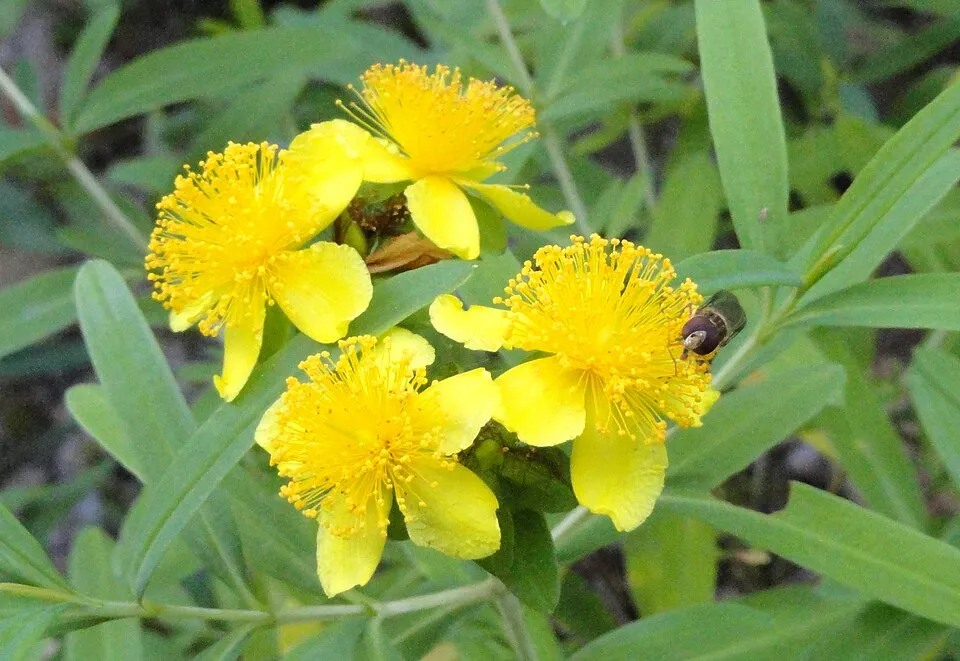
Hypericum kalmianum, commonly known as Kalm's St. John's Wort, is an enchanting deciduous to semi-evergreen shrub native to the Great Lakes region of North America. This resilient perennial typically forms a dense, bushy habit, reaching heights of 1 to 3 feet with a similar spread. Its stems are distinctly reddish-brown and become woody with age, providing structural interest.
The foliage consists of opposite, sessile, ovate to elliptical leaves, measuring approximately 1 to 2 inches in length. These leaves are a vibrant, deep green, sometimes exhibiting a slight glaucous or bluish tint, and possess a smooth, somewhat leathery texture. A hallmark feature is the presence of numerous small, translucent oil glands, readily visible when the leaves are held against light, which impart a subtle aromatic quality when crushed. The flowering period spans from June to August, during which Hypericum kalmianum becomes a profuse bloomer.
It produces clusters of brilliant, golden-yellow flowers, each about 1 inch in diameter, characterized by five distinct, often delicately crinkled petals arranged in a star-like fashion. The prominent central stamens are a striking orange-yellow, further enhancing their visual appeal. These blossoms are a valuable nectar and pollen source, actively attracting local pollinators such as bees and butterflies, thereby contributing significantly to regional biodiversity. Following successful pollination, the flowers give way to small, woody capsules that mature to a reddish-brown hue, containing numerous tiny seeds, offering subtle textural interest well into the fall.
Trusted Scientific References
1. Authoritative external sources for Hypericum kalmianum
1.1 Wikipedia — Hypericum kalmianum
1.2 Kew POWO (Plants of the World Online)
1.3 PubMed — peer-reviewed research
1.4 NCBI Taxonomy Browser
1.5 GBIF — Global Biodiversity
1.6Hypericum Kalmianum should be interpreted through verified botanical identity, practical care, and responsible safety language. This recovery note adds the missing context needed for a complete profile: match light to the plant's habit, use well-drained soil, water according to season, and avoid unsupported medicinal or edible claims. For publishing, the plant can be presented as a source-backed garden plant with clear care guidance, common problem diagnosis, and conservative safety wording.
1.1.Hypericum Kalmianum — Key Features
- ✓ <strong>Native North American Shrub</strong> — Indigenous to the Great Lakes region, adapting well to local conditions.
- ✓ <strong>Ornamental Value</strong> — Highly prized for its attractive golden-yellow flowers and dense, bushy habit.
- ✓ <strong>Pollinator Magnet</strong> — Flowers are a vital nectar and pollen source for bees and butterflies.
- ✓ <strong>Drought Tolerant</strong> — Exhibits good resilience to dry periods once established.
- ✓ <strong>Pest and Disease Resistant</strong> — Generally low-maintenance with few common issues.
- ✓ <strong>Distinctive Foliage</strong> — Leaves feature translucent oil glands visible against light.
- ✓ <strong>Woody Seed Capsules</strong> — Develops reddish-brown capsules that offer winter interest.
- ✓ <strong>Hardy Perennial</strong> — Returns year after year, providing reliable seasonal interest.
- ✓ <strong>Adaptable to Soils</strong> — Thrives in well-drained soils, from sandy to loamy.
- ✓ <strong>Low Maintenance</strong> — Requires minimal care, making it excellent for various landscapes.
1.2.Hypericum Kalmianum — Quick Summary
- ✓ Kalm's St. John's Wort is an ornamental shrub native to the Great Lakes region.
- ✓ Features bright golden-yellow flowers and glossy green foliage with translucent oil glands.
- ✓ Primarily valued for landscaping, pollinator support, and drought tolerance.
- ✓ While related to medicinal *Hypericum perforatum*, *H. kalmianum* is not widely studied for internal therapeutic use.
- ✓ Contains diverse phytochemicals, including flavonoids and phenolic acids.
- ✓ Requires well-drained soil and full sun to partial shade for optimal growth.
2.Hypericum Kalmianum — Scientific Identity
3.Hypericum Kalmianum — Quick Facts
4.Hypericum Kalmianum — Appearance & Identification
5.Hypericum Kalmianum — Native Habitat
6.Hypericum Kalmianum — Water Requirements
- ✓ Soil Requirements — Thrives in well-drained, sandy loam soils, adaptable to various types but intolerant of marshy or excessively wet conditions to prevent root rot.
- ✓ Light Exposure — Prefers full sun to partial shade, requiring a minimum of four hours of direct sunlight daily to ensure optimal flowering and robust growth.
- ✓ Watering — Once established, Kalm's St. John's Wort exhibits good drought tolerance; however, consistent moisture is beneficial, avoiding overwatering or standing water.
- ✓ Pruning — Best pruned in early spring while dormant to maintain shape, control size, and encourage vigorous new growth, as flowering occurs on new wood.
- ✓ Mulching — Apply a generous layer of organic mulch around the base to help retain soil moisture, regulate soil temperature, and suppress weed growth.
- ✓ Hardiness — A hardy perennial well-adapted to its native Great Lakes region, demonstrating resilience to cold and generally resistant to common pests and diseases.
- ✓ Fertilization — Typically requires minimal fertilization; a light application of a balanced slow-release fertilizer in spring can support vigorous growth if soil nutrients are poor.
Reviewed by the Flora Medical Global Botanical Review Panel
Multi-disciplinary editorial group · Botany · Ethnobotany · Herbal-medicine literature
Who reviewed this: This page was checked by the Flora Medical Global Botanical Review Panel — an in-house editorial group of botany graduates, ethnobotany researchers, and horticulture practitioners who collectively maintain our 7,000+ plant encyclopedia. Meet the team.
Our 4-step verification process
1. Taxonomic verification
Scientific names and synonyms cross-checked against Kew POWO, World Flora Online, and The Plant List.
2. Phytochemical & medicinal cross-reference
Active compounds, traditional uses, and reported activities are cross-referenced with PubMed, USDA Dr. Duke's database, and peer-reviewed ethnobotanical literature.
3. Conservation & distribution check
Distribution, ecology, and conservation status confirmed against GBIF occurrence records and the IUCN Red List.
4. Editorial & safety review
Every entry passes an editorial pass for clarity, originality, and safety notices (toxicity, contraindications, dosage caveats) before publication.
Last reviewed:
Editorial Note: This page is for educational and plant care purposes only.
Written by: Flora Medical Global Editorial Team
Reviewed by: Flora Medical Global Botanical Review Panel
Last Updated: June 15, 2026







Hypericum Kalmianum — Comments & Community Reviews
Rate this plant