

Care Disclaimer: Plant care recommendations are general guidelines based on common growing conditions. Individual results may vary based on your local environment, climate, and care routine. If your plant is toxic, keep it away from children and pets, and consult a veterinarian if accidental ingestion occurs.
1.Imperata — Overview
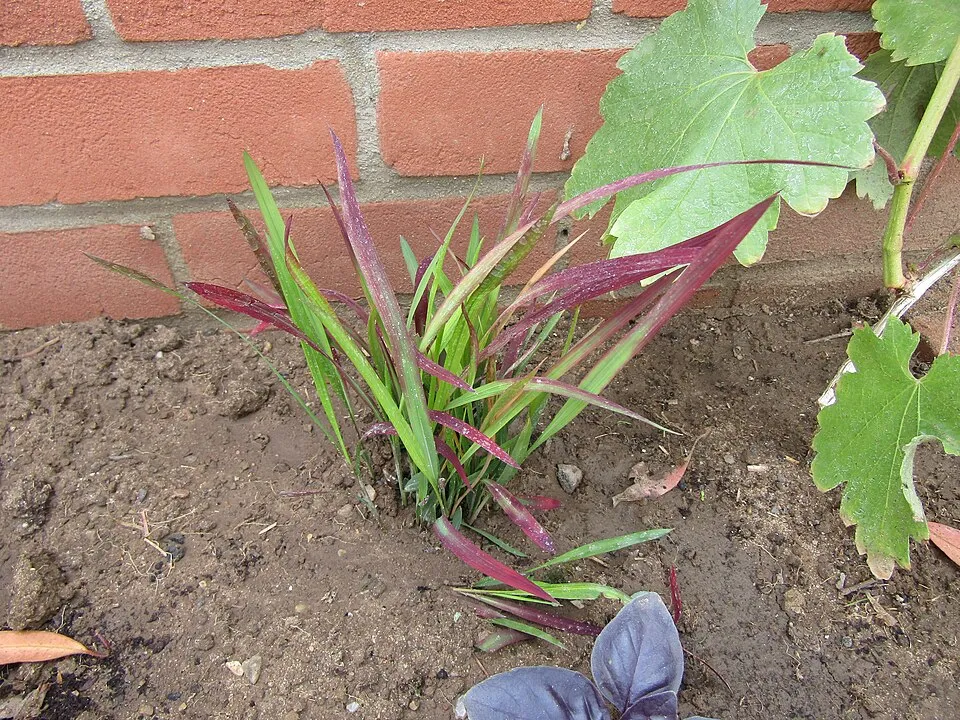
Imperata cylindrica 'Red Baron', popularly known as Japanese Blood Grass or Cogon Grass 'Red Baron', is a visually striking ornamental perennial grass within the Poaceae (Grass) family. This specific cultivar is admired for its dynamic foliage, which emerges green in spring and progressively develops brilliant crimson-red tips, intensifying to a deep burgundy as the season advances into autumn. Typically forming upright clumps, it reaches a height and spread of 1 to 2 feet (30-60 cm) through its robust, creeping rhizomes.
Its blade-like leaves provide a captivating vertical accent, swaying gracefully in garden landscapes. While the wild species, Imperata cylindrica, is globally recognized as an aggressive and invasive weed, the 'Red Baron' cultivar is generally considered less invasive due to its reduced vigor and infrequent flowering, especially outside of very warm climates. This characteristic helps limit its seed dispersal potential, though gardeners are still advised to monitor its spread and watch for any reversion to the more aggressive green form.
Native to Asia, the broader species thrives in diverse habitats, from disturbed lands to cultivated fields, showcasing remarkable adaptability. The 'Red Baron' cultivar is a favored choice for adding dramatic color to borders, rock gardens, and mass plantings, offering aesthetic appeal without the severe invasiveness of its parent species.
Trusted Scientific References
1. Authoritative external sources for Imperata cylindrica Red Baron
1.1 Wikipedia — Imperata cylindrica Red Baron
1.2 Kew POWO (Plants of the World Online)
1.3 PubMed — peer-reviewed research
1.4 NCBI Taxonomy Browser
1.5 GBIF — Global Biodiversity
1.6Imperata should be interpreted through verified botanical identity, practical care, and responsible safety language. This recovery note adds the missing context needed for a complete profile: match light to the plant's habit, use well-drained soil, water according to season, and avoid unsupported medicinal or edible claims. For publishing, the plant can be presented as a source-backed garden plant with clear care guidance, common problem diagnosis, and conservative safety wording.
1.1.Imperata — Key Features
- ✓ <strong>Striking crimson</strong> — red foliage of the 'Red Baron' cultivar.
- ✓ <strong>Rhizoma Imperatae (Cogon</strong> — Rhizoma Imperatae (Cogon Grass rhizome) is a staple in traditional Asian medicine.
- ✓ <strong>Exhibits significant diuretic</strong> — Exhibits significant diuretic and hemostatic properties.
- ✓ <strong>Low</strong> — maintenance ornamental grass, adaptable to various garden conditions.
- ✓ <strong>Deer and rabbit</strong> — Deer and rabbit resistant, making it a good choice for diverse landscapes.
- ✓ <strong>Effective for erosion</strong> — Effective for erosion control due to its strong rhizomatous root system (species).
- ✓ <strong>Tolerant of a</strong> — Tolerant of a wide range of soil types and pH levels.
- ✓ <strong>The species is</strong> — The species is globally recognized as an invasive weed, requiring careful management.
- ✓ <strong>Provides a unique</strong> — Provides a unique vertical accent and texture in garden designs.
- ✓ <strong>Rich in bioactive</strong> — Rich in bioactive compounds such as flavonoids and triterpenoids.
1.2.Imperata — Quick Summary
- ✓ Imperata cylindrica 'Red Baron' is a popular ornamental grass, known for its vibrant red foliage.
- ✓ The species Imperata cylindrica (Cogon Grass) has a long history in traditional medicine, particularly its rhizome (Rhizoma Imperatae).
- ✓ Key medicinal properties include diuretic, hemostatic, and anti-inflammatory actions.
- ✓ The ornamental 'Red Baron' cultivar is less invasive than the species but requires monitoring for reversion.
- ✓ Contains beneficial compounds like triterpenoids, flavonoids, and chromones.
- ✓ Medicinal use of Imperata cylindrica should always be under professional guidance due to potential side effects and interactions.
2.Imperata — Scientific Identity
3.Imperata — Quick Facts
4.Imperata — Appearance & Identification
5.Imperata — Native Habitat
6.Imperata — Water Requirements
- ✓ Light Requirements — Thrives best in full sun for optimal foliage coloration, tolerating partial shade in hotter climates.
- ✓ Soil Preferences — Prefers moist but well-drained soil, adaptable to a range of soil types from sandy to loamy, with a pH between 6.5 and 7.5.
- ✓ Watering Schedule — Water regularly to establish, but mature plants are drought-tolerant; only irrigate during prolonged dry spells to prevent browning.
- ✓ Fertilization Needs — Generally requires no fertilization; excessive nutrients can encourage vigorous, potentially invasive growth in the species.
- ✓ Pruning Practices — Cut back dead foliage in early spring before new growth emerges, or leave standing through winter for ornamental interest.
- ✓ Propagation Method — Primarily propagated by division of rhizomes in spring or fall, as the 'Red Baron' cultivar rarely produces viable seeds.
- ✓ Container Growing — Recommended for controlling its spread, especially in regions where the species is known to be highly invasive.
- ✓ Monitoring for Reversion — Regularly inspect plants for any green shoots, which indicate a reversion to the invasive species and should be promptly removed.
Reviewed by the Flora Medical Global Botanical Review Panel
Multi-disciplinary editorial group · Botany · Ethnobotany · Herbal-medicine literature
Who reviewed this: This page was checked by the Flora Medical Global Botanical Review Panel — an in-house editorial group of botany graduates, ethnobotany researchers, and horticulture practitioners who collectively maintain our 7,000+ plant encyclopedia. Meet the team.
Our 4-step verification process
1. Taxonomic verification
Scientific names and synonyms cross-checked against Kew POWO, World Flora Online, and The Plant List.
2. Phytochemical & medicinal cross-reference
Active compounds, traditional uses, and reported activities are cross-referenced with PubMed, USDA Dr. Duke's database, and peer-reviewed ethnobotanical literature.
3. Conservation & distribution check
Distribution, ecology, and conservation status confirmed against GBIF occurrence records and the IUCN Red List.
4. Editorial & safety review
Every entry passes an editorial pass for clarity, originality, and safety notices (toxicity, contraindications, dosage caveats) before publication.
Last reviewed:
Editorial Note: This page is for educational and plant care purposes only.
Written by: Flora Medical Global Editorial Team
Reviewed by: Flora Medical Global Botanical Review Panel
Last Updated: June 15, 2026







Imperata — Comments & Community Reviews
Rate this plant