

Care Disclaimer: Plant care recommendations are general guidelines based on common growing conditions. Individual results may vary based on your local environment, climate, and care routine. If your plant is toxic, keep it away from children and pets, and consult a veterinarian if accidental ingestion occurs.
1.Indigofera Heterantha — Overview
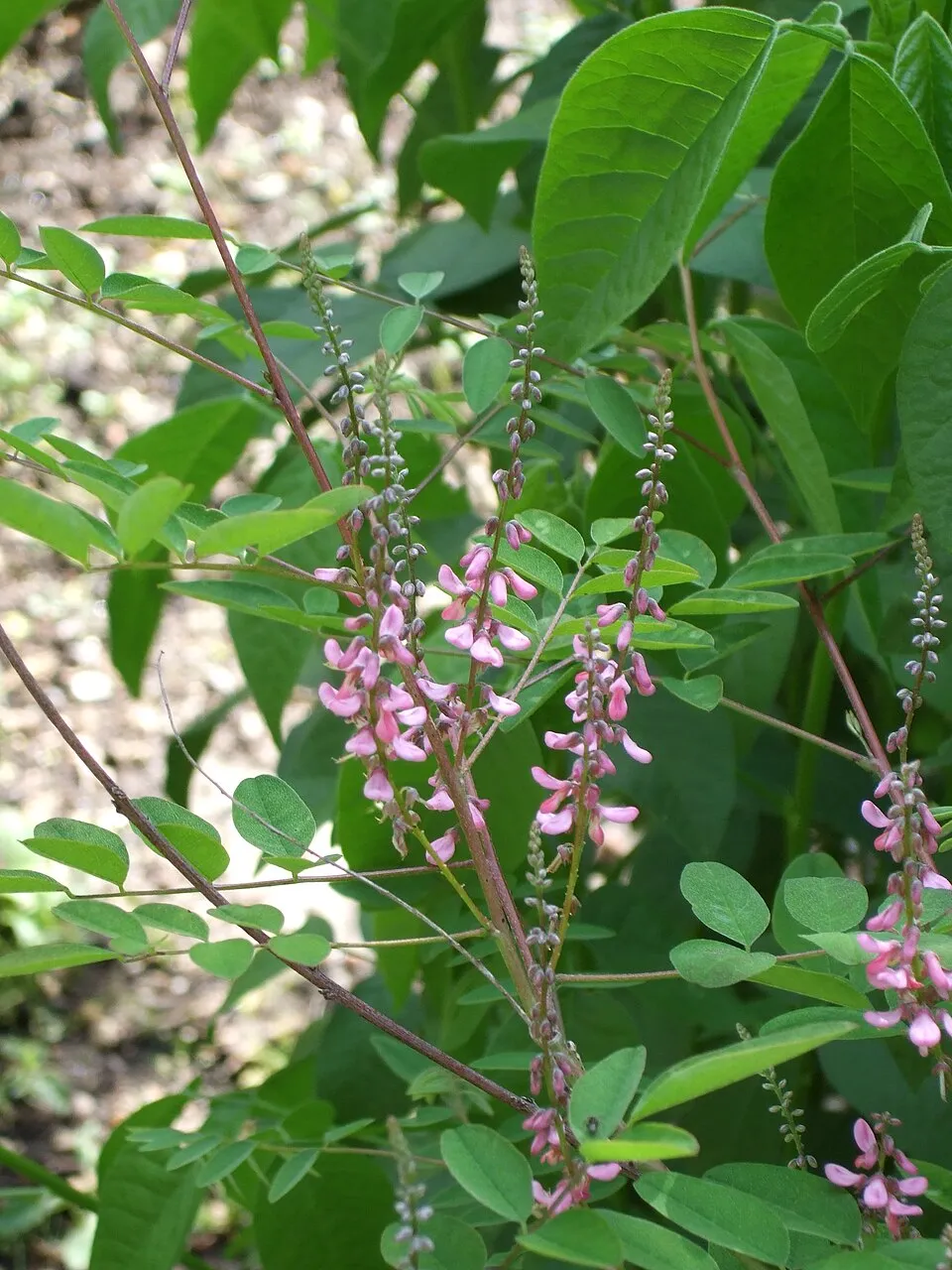
Indigofera heterantha, commonly known as Himalayan Indigo or Indigo Bush, is a captivating deciduous shrub belonging to the Fabaceae (Leguminosae) family. Native to the rugged mountainous terrains of the Himalayas, its natural distribution spans Afghanistan, Pakistan, India, Nepal, Bhutan, China, and even Sri Lanka, thriving at elevations typically between 5,000 to 9,000 feet. This robust and highly ornamental plant typically achieves a height of 1 to 2.5 meters (3 to 8 feet) with an equivalent spread, forming an elegant, arching, and bushy habit. Its delicate, pinnate leaves are comprised of numerous small, oval leaflets, imparting a fine, feathery texture to the foliage.
The most striking feature of Indigofera heterantha is its abundant display of rosy-purple or hot pink, pea-like flowers. These emerge in dense, upright racemes from early summer through autumn, typically June to October in temperate climates, making it a prolonged source of vibrant color. Following the prolific bloom, slender, elongated seed pods develop, containing small, dark seeds. Renowned for its adaptability, Himalayan Indigo flourishes in a variety of well-drained soils and tolerates conditions ranging from full sun to partial shade.
It exhibits remarkable cold-hardiness, enduring temperatures down to approximately -20°C (-4°F), making it an excellent choice for temperate garden landscapes. Beyond its aesthetic appeal, it is also a significant pollinator plant, attracting bees and butterflies, and its deep root system aids in soil stabilization.
Trusted Scientific References
1. Authoritative external sources for Indigofera Heterantha
1.1 Wikipedia — Indigofera Heterantha
1.2 Kew POWO (Plants of the World Online)
1.3 PubMed — peer-reviewed research
1.4 NCBI Taxonomy Browser
1.5 GBIF — Global Biodiversity
1.6Indigofera Heterantha should be interpreted through verified botanical identity, practical care, and responsible safety language. This recovery note adds the missing context needed for a complete profile: match light to the plant's habit, use well-drained soil, water according to season, and avoid unsupported medicinal or edible claims. For publishing, the plant can be presented as a source-backed garden plant with clear care guidance, common problem diagnosis, and conservative safety wording.
1.1.Indigofera Heterantha — Key Features
- ✓ <strong>Botanical Name</strong> — Indigofera heterantha (syn. Indigofera gerardiana).
- ✓ <strong>Common Names</strong> — Himalayan Indigo, Indigo Bush.
- ✓ <strong>Family</strong> — Fabaceae (Leguminosae).
- ✓ <strong>Native Range</strong> — Himalayas (Afghanistan, Pakistan, India, Nepal, Bhutan, China, Sri Lanka).
- ✓ <strong>Growth Habit</strong> — Deciduous shrub, typically 1-2.5 meters (3-8 feet) tall with similar spread.
- ✓ <strong>Flowering Season</strong> — Profuse blooming from early summer through autumn (June to October).
- ✓ <strong>Flower Color</strong> — Vibrant rosy-purple or pink, pea-like flowers in racemes.
- ✓ <strong>Hardiness</strong> — Cold-hardy, suitable for USDA Zones 6a to 9b (down to -20°C).
- ✓ <strong>Primary Use</strong> — Highly valued ornamental plant for hedges, borders, and specimen planting.
- ✓ <strong>Traditional Medicinal Use</strong> — Seeds historically used for gastrointestinal and abdominal disorders.
1.2.Indigofera Heterantha — Quick Summary
- ✓ Himalayan Indigo — Deciduous ornamental shrub native to the mountainous regions of the Himalayas.
- ✓ Rosy-Purple Blooms — Features abundant, pea-like, rosy-purple to pink flowers from summer to autumn, attracting pollinators.
- ✓ Cold Hardy & Adaptable — Thrives in USDA Zones 6a-9b, tolerant of various well-drained soils and both sun/partial shade.
- ✓ Limited Medicinal Use — Seeds traditionally used for gastrointestinal disorders; genus-level research suggests anti-inflammatory potential.
- ✓ Pollinator Friendly — Highly valued for attracting bees and butterflies, contributing to garden biodiversity.
2.Indigofera Heterantha — Scientific Identity
3.Indigofera Heterantha — Quick Facts
4.Indigofera Heterantha — Appearance & Identification
5.Indigofera Heterantha — Native Habitat
6.Indigofera Heterantha — Water Requirements
- ✓ Climate/Hardiness Zones — Thrives in USDA Hardiness Zones 6a to 9b, tolerating winter temperatures down to approximately -20°C (-4°F).
- ✓ Sunlight Requirements — Prefers full sun for optimal flowering but can also perform well in partial shade conditions.
- ✓ Soil Preferences — Adaptable to various well-drained soil types, including sandy, loamy, or clay soils, but avoids waterlogging.
- ✓ Watering — Established plants are notably drought-tolerant; young plants require regular watering until established, then moderate watering suffices.
- ✓ Planting — Best planted in spring or early autumn to allow root establishment before extreme temperatures.
- ✓ Pruning — Prune in late winter or early spring to remove dead wood, maintain a desirable shape, and encourage vigorous new growth and abundant flowering.
- ✓ Propagation — Can be propagated from seeds, which may require stratification, or more commonly from semi-hardwood cuttings taken in summer.
- ✓ Pests and Diseases — Generally a robust plant with few significant pest or disease problems, making it relatively low-maintenance.
Reviewed by the Flora Medical Global Botanical Review Panel
Multi-disciplinary editorial group · Botany · Ethnobotany · Herbal-medicine literature
Who reviewed this: This page was checked by the Flora Medical Global Botanical Review Panel — an in-house editorial group of botany graduates, ethnobotany researchers, and horticulture practitioners who collectively maintain our 7,000+ plant encyclopedia. Meet the team.
Our 4-step verification process
1. Taxonomic verification
Scientific names and synonyms cross-checked against Kew POWO, World Flora Online, and The Plant List.
2. Phytochemical & medicinal cross-reference
Active compounds, traditional uses, and reported activities are cross-referenced with PubMed, USDA Dr. Duke's database, and peer-reviewed ethnobotanical literature.
3. Conservation & distribution check
Distribution, ecology, and conservation status confirmed against GBIF occurrence records and the IUCN Red List.
4. Editorial & safety review
Every entry passes an editorial pass for clarity, originality, and safety notices (toxicity, contraindications, dosage caveats) before publication.
Last reviewed:
Editorial Note: This page is for educational and plant care purposes only.
Written by: Flora Medical Global Editorial Team
Reviewed by: Flora Medical Global Botanical Review Panel
Last Updated: June 15, 2026







Indigofera Heterantha — Comments & Community Reviews
Rate this plant