
Care Disclaimer: Plant care recommendations are general guidelines based on common growing conditions. Individual results may vary based on your local environment, climate, and care routine. If your plant is toxic, keep it away from children and pets, and consult a veterinarian if accidental ingestion occurs.
1.Jacaranda Mimosifolia — Overview
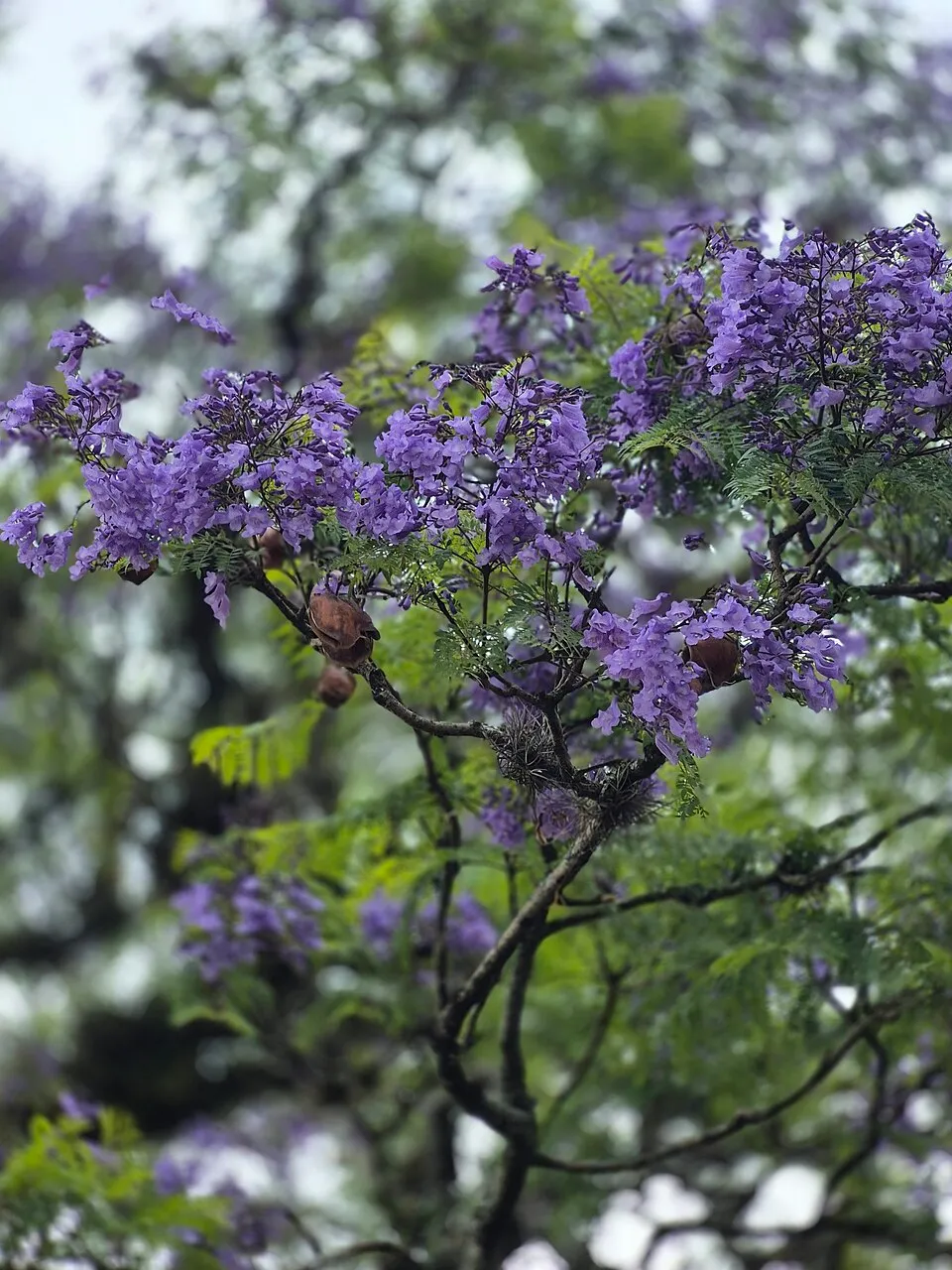
Jacaranda mimosifolia, commonly known as the Jacaranda tree, blue jacaranda, or black poui, is a magnificent deciduous to semi-evergreen tree belonging to the Bignoniaceae family. Native to South America, particularly Brazil, Bolivia, Argentina, and Paraguay, it has become widely cultivated in tropical and subtropical regions worldwide for its ornamental value. The tree typically reaches heights of 25-50 feet with an equally impressive spread, forming a broad, umbrella-shaped canopy.
Its most striking feature is the profusion of vibrant lavender-blue to purple, trumpet-shaped flowers that appear in large terminal panicles, often before the new leaves emerge, creating a breathtaking spectacle. These blooms carpet the ground beneath, giving rise to its common name, 'purple rain tree.'
The foliage consists of delicate, fern-like, bipinnately compound leaves, each comprising numerous small leaflets, which lend a fine texture to the tree. The bark is thin and grayish-brown, becoming slightly fissured with age. After flowering, the tree produces distinctive, flattened, woody seed pods, 1-3 inches wide, which mature from green to brown and persist on the tree for a considerable time, containing numerous winged seeds.
Jacaranda mimosifolia thrives in full sun and well-drained, sandy soils, demonstrating moderate drought tolerance once established. Its rapid growth rate in ideal conditions makes it a popular choice for avenues, parks, and large gardens, though its vigorous root system and prolific seed dispersal can be a consideration in some landscapes, particularly where it has become invasive in certain tropical zones.
Trusted Scientific References
1. Authoritative external sources for Jacaranda mimosifolia
1.1 Wikipedia — Jacaranda mimosifolia
1.2 Kew POWO (Plants of the World Online)
1.3 PubMed — peer-reviewed research
1.4 NCBI Taxonomy Browser
1.5 GBIF — Global Biodiversity
1.6Jacaranda Mimosifolia should be interpreted through verified botanical identity, practical care, and responsible safety language. This recovery note adds the missing context needed for a complete profile: match light to the plant's habit, use well-drained soil, water according to season, and avoid unsupported medicinal or edible claims. For publishing, the plant can be presented as a source-backed garden plant with clear care guidance, common problem diagnosis, and conservative safety wording.
1.1.Jacaranda Mimosifolia — Key Features
- ✓ <strong>Ornamental Value</strong> — Stunning display of vibrant purple, trumpet-shaped flowers.
- ✓ <strong>Fast Growing</strong> — Rapid growth rate in ideal tropical and subtropical conditions.
- ✓ <strong>Fern</strong> — like Foliage — Delicate, bipinnate leaves provide fine texture.
- ✓ <strong>Medicinal Potential</strong> — Traditional uses for anti-inflammatory and antimicrobial effects.
- ✓ <strong>Bioactive Compounds</strong> — Contains flavonoids, iridoids, triterpenes, and phenylethanoid glycosides.
- ✓ <strong>Drought Tolerant</strong> — Moderately resilient to dry spells once established.
- ✓ <strong>Woody Seed Pods</strong> — Distinctive, flattened brown seed pods persist on the tree.
- ✓ <strong>Adaptable</strong> — Can grow in various soil types if well-drained.
- ✓ <strong>Invasive Potential</strong> — Can spread aggressively in some tropical environments.
- ✓ <strong>Landscape Tree</strong> — Popular for avenues, parks, and large gardens.
1.2.Jacaranda Mimosifolia — Quick Summary
- ✓ Jacaranda mimosifolia is a beautiful South American tree with vibrant purple flowers.
- ✓ Traditionally used for anti-inflammatory, antimicrobial, and antioxidant benefits.
- ✓ Rich in flavonoids, iridoids, triterpenes, and phenylethanoid glycosides.
- ✓ Requires full sun, well-drained soil, and warm climates for optimal growth.
- ✓ Common preparations include decoctions, infusions, and poultices.
- ✓ Potential side effects include allergies, GI upset, and drug interactions; avoid during pregnancy.
2.Jacaranda Mimosifolia — Scientific Identity
3.Jacaranda Mimosifolia — Quick Facts
4.Jacaranda Mimosifolia — Appearance & Identification
5.Jacaranda Mimosifolia — Native Habitat
6.Jacaranda Mimosifolia — Water Requirements
- ✓ Climate Requirement — Thrives in tropical and subtropical climates (USDA Zones 10-11), requiring full sun exposure and protection from frost, especially when young.
- ✓ Soil Preference — Prefers well-drained, sandy loam soil with a slightly acidic to neutral pH (6.0-7.0) for optimal growth and to prevent root rot.
- ✓ Watering Schedule — Requires consistent moisture, especially during establishment; mature trees are moderately drought-tolerant but benefit from deep watering during dry periods.
- ✓ Propagation Techniques — Can be propagated effectively from seeds, which germinate readily after soaking, or through semi-hardwood cuttings for genetic consistency and earlier blooming.
- ✓ Pruning Practices — Prune young trees to establish a strong central leader and good branching structure; mature trees need minimal pruning to remove dead, diseased, or crossing branches.
- ✓ Fertilization Needs — Apply a balanced fertilizer (e.g., 10-10-10 NPK) annually in spring; avoid excessive nitrogen, which can hinder flowering.
- ✓ Pest and Disease Management — Generally robust, but monitor for common pests like aphids and whiteflies, and address occasional fungal spots with appropriate integrated pest management strategies.
- ✓ Planting Location — Due to its mature size and potentially aggressive root system, plant away from foundations, septic systems, and paved areas.
Reviewed by the Flora Medical Global Botanical Review Panel
Multi-disciplinary editorial group · Botany · Ethnobotany · Herbal-medicine literature
Who reviewed this: This page was checked by the Flora Medical Global Botanical Review Panel — an in-house editorial group of botany graduates, ethnobotany researchers, and horticulture practitioners who collectively maintain our 7,000+ plant encyclopedia. Meet the team.
Our 4-step verification process
1. Taxonomic verification
Scientific names and synonyms cross-checked against Kew POWO, World Flora Online, and The Plant List.
2. Phytochemical & medicinal cross-reference
Active compounds, traditional uses, and reported activities are cross-referenced with PubMed, USDA Dr. Duke's database, and peer-reviewed ethnobotanical literature.
3. Conservation & distribution check
Distribution, ecology, and conservation status confirmed against GBIF occurrence records and the IUCN Red List.
4. Editorial & safety review
Every entry passes an editorial pass for clarity, originality, and safety notices (toxicity, contraindications, dosage caveats) before publication.
Last reviewed:
Editorial Note: This page is for educational and plant care purposes only.
Written by: Flora Medical Global Editorial Team
Reviewed by: Flora Medical Global Botanical Review Panel
Last Updated: June 15, 2026







Jacaranda Mimosifolia — Comments & Community Reviews
Rate this plant