

Care Disclaimer: Plant care recommendations are general guidelines based on common growing conditions. Individual results may vary based on your local environment, climate, and care routine. If your plant is toxic, keep it away from children and pets, and consult a veterinarian if accidental ingestion occurs.
1.Japanese Iris — Overview
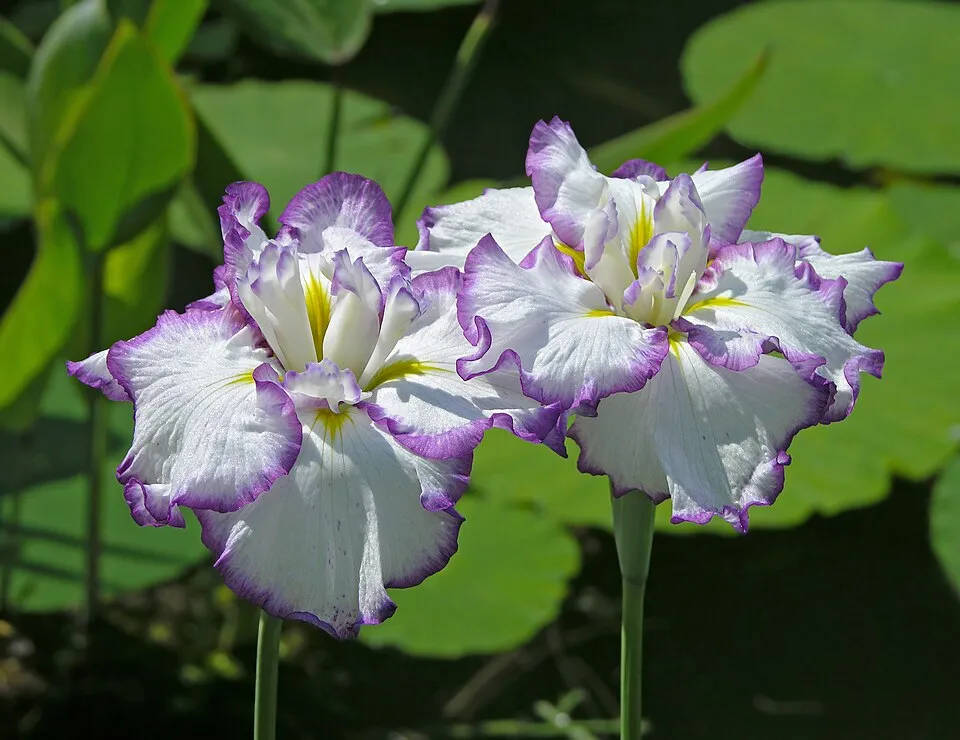
The Japanese Iris, botanically designated Iris ensata, is a striking perennial herbaceous plant celebrated for its exceptionally large and ornate flowers. Indigenous to the moist environments of Japan, China, Korea, and Russia, this species is a distinguished member of the Iridaceae family. Its magnificent blooms, which typically emerge in shades of purple, blue, white, and pink, are frequently adorned with contrasting venation and intricate patterns, making them a captivating focal point in any landscape.
A key distinguishing feature of Iris ensata, setting it apart from many other Iris species, is its preference for consistently moist to wet soil conditions, even thriving in shallow standing water, earning it the monikers 'water iris' or 'bog iris'. The plant develops dense clumps of upright, sword-shaped leaves that contribute an attractive linear texture to gardens even before flowering. Its impressive floral displays typically unfold from late spring through early summer, imparting an air of sophisticated beauty to pond margins, stream banks, and damp garden borders.
Extensive horticultural efforts have led to the development of numerous cultivars, enhancing flower size, color diversity, and overall hardiness, solidifying its global popularity in ornamental cultivation. Beyond its aesthetic allure, the Japanese Iris is valued for its resilience and precise adaptation to specific moist ecological niches, which underpins its widespread cultivation.
Trusted Scientific References
1. Authoritative external sources for Iris ensata
1.1 Wikipedia — Iris ensata
1.2 Kew POWO (Plants of the World Online)
1.3 PubMed — peer-reviewed research
1.4 NCBI Taxonomy Browser
1.5 GBIF — Global Biodiversity
1.6Japanese Iris should be interpreted through verified botanical identity, practical care, and responsible safety language. This recovery note adds the missing context needed for a complete profile: match light to the plant's habit, use well-drained soil, water according to season, and avoid unsupported medicinal or edible claims. For publishing, the plant can be presented as a source-backed garden plant with clear care guidance, common problem diagnosis, and conservative safety wording.
1.1.Japanese Iris — Key Features
- ✓ <strong>Large, Showy Flowers</strong> — Up to 6 inches across, with intricate patterns.
- ✓ <strong>Water Iris</strong> — Thrives in consistently moist to wet soil, even shallow standing water.
- ✓ <strong>Acidic Soil Preference</strong> — Requires soil pH between 5.5 and 6.5.
- ✓ <strong>Clump</strong> — Forming Growth — Forms attractive upright clumps of sword-shaped leaves.
- ✓ <strong>Late Spring to Early Summer Bloom</strong> — Provides vibrant color during this period.
- ✓ <strong>Cold</strong> — Hardy Perennial — Tolerates a wide range of temperatures.
- ✓ <strong>Ornamental Value</strong> — Highly prized for landscape and cut flower use.
- ✓ <strong>High Nitrogen Feeder</strong> — Benefits from specific fertilization.
- ✓ <strong>Toxic Plant</strong> — All parts are poisonous if ingested.
- ✓ <strong>Rhizomatous Spread</strong> — Propagates via underground rhizomes, requiring division.
1.2.Japanese Iris — Quick Summary
- ✓ Iris ensata is a highly ornamental, moisture-loving perennial.
- ✓ Native to East Asia, known for large, showy flowers.
- ✓ All parts are toxic; not for internal medicinal use.
- ✓ Thrives in acidic, wet soil conditions.
- ✓ Contains iridins and triterpenoids, but toxicity outweighs benefits.
- ✓ Primarily grown for its aesthetic value in water gardens.
2.Japanese Iris — Scientific Identity
3.Japanese Iris — Quick Facts
4.Japanese Iris — Appearance & Identification
5.Japanese Iris — Native Habitat
6.Japanese Iris — Water Requirements
- ✓ Site Selection — Choose full sun to partial shade, especially afternoon shade in hotter climates.
- ✓ Soil Preparation — Requires moist, rich, loamy soil with an acidic pH (5.5-6.5); amend heavy clay with organic matter.
- ✓ Watering Regimen — Needs abundant water in spring, consistent moisture in summer, and less in fall/winter.
- ✓ Fertilization — Apply a high-nitrogen fertilizer in early spring and again after blooming; avoid fertilizing new transplants.
- ✓ Planting Depth — Plant rhizomes shallowly, 1-2 inches deep, in early fall.
- ✓ Division — Divide overcrowded clumps every few years in spring or fall to maintain vigor and bloom.
- ✓ Container Growing — Suitable for pots, allowing placement in standing water during growing season and drier conditions in winter.
- ✓ Pest Management — Monitor for slugs, snails, aphids, and iris borers; use appropriate organic or chemical controls.
Reviewed by the Flora Medical Global Botanical Review Panel
Multi-disciplinary editorial group · Botany · Ethnobotany · Herbal-medicine literature
Who reviewed this: This page was checked by the Flora Medical Global Botanical Review Panel — an in-house editorial group of botany graduates, ethnobotany researchers, and horticulture practitioners who collectively maintain our 7,000+ plant encyclopedia. Meet the team.
Our 4-step verification process
1. Taxonomic verification
Scientific names and synonyms cross-checked against Kew POWO, World Flora Online, and The Plant List.
2. Phytochemical & medicinal cross-reference
Active compounds, traditional uses, and reported activities are cross-referenced with PubMed, USDA Dr. Duke's database, and peer-reviewed ethnobotanical literature.
3. Conservation & distribution check
Distribution, ecology, and conservation status confirmed against GBIF occurrence records and the IUCN Red List.
4. Editorial & safety review
Every entry passes an editorial pass for clarity, originality, and safety notices (toxicity, contraindications, dosage caveats) before publication.
Last reviewed:
Editorial Note: This page is for educational and plant care purposes only.
Written by: Flora Medical Global Editorial Team
Reviewed by: Flora Medical Global Botanical Review Panel
Last Updated: June 15, 2026







Japanese Iris — Comments & Community Reviews
Rate this plant