

Care Disclaimer: Plant care recommendations are general guidelines based on common growing conditions. Individual results may vary based on your local environment, climate, and care routine. If your plant is toxic, keep it away from children and pets, and consult a veterinarian if accidental ingestion occurs.
1.Jovibarba Hirta — Overview
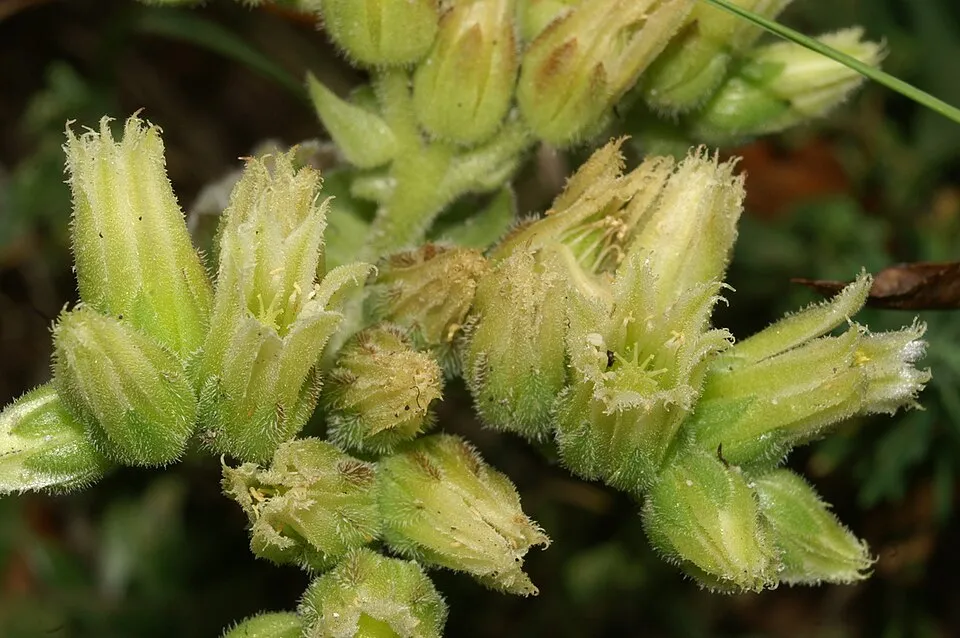
Jovibarba hirta, commonly known as the Hairy Houseleek or Jupiter's Beard, is a striking perennial succulent belonging to the Crassulaceae family, closely allied with the genus Sempervivum. This species is characterized by its formation of dense, globular rosettes, typically 2-5 cm in diameter, composed of numerous fleshy, spatulate leaves. The leaves are distinctively ciliate along the margins, giving them a 'hairy' appearance, and often terminate in a reddish-brown point.
Native to the mountainous regions of central and southeastern Europe, including the Alps and Carpathians, Jovibarba hirta thrives in rocky, well-drained alpine environments, often colonizing crevices and exposed slopes. It is remarkably resilient, exhibiting extreme cold-hardiness (down to USDA Zone 3) and exceptional drought tolerance. The plant is monocarpic, meaning individual rosettes flower only once before dying, but it ensures its survival through prolific production of offsets, or 'chicks,' which cluster tightly around the parent rosette.
In summer, mature rosettes send up a flowering stalk, typically 10-20 cm tall, bearing clusters of bell-shaped, pale yellow to greenish-yellow flowers. These flowers are hermaphroditic and feature six petals, distinguishing them from the typically 8-16 petaled flowers of Sempervivum. Jovibarba hirta is a classic example of adaptation to harsh, arid conditions, making it a popular choice for rock gardens and xeriscaping.
Trusted Scientific References
1. Authoritative external sources for Jovibarba Hirta
1.1 Wikipedia — Jovibarba Hirta
1.2 Kew POWO (Plants of the World Online)
1.3 PubMed — peer-reviewed research
1.4 NCBI Taxonomy Browser
1.5 GBIF — Global Biodiversity
1.6Jovibarba Hirta should be interpreted through verified botanical identity, practical care, and responsible safety language. This recovery note adds the missing context needed for a complete profile: match light to the plant's habit, use well-drained soil, water according to season, and avoid unsupported medicinal or edible claims. For publishing, the plant can be presented as a source-backed garden plant with clear care guidance, common problem diagnosis, and conservative safety wording.
1.1.Jovibarba Hirta — Key Features
- ✓ <strong>Botanical Name</strong> — Jovibarba hirta (Hairy Houseleek).
- ✓ <strong>Family</strong> — Crassulaceae (Stonecrop family).
- ✓ <strong>Growth Habit</strong> — Low-growing, perennial succulent forming dense rosettes.
- ✓ <strong>Leaf Characteristics</strong> — Fleshy, spatulate, with distinctive hairy/ciliate margins.
- ✓ <strong>Hardiness</strong> — Exceptional cold-hardiness (USDA Zones 3-9) and drought tolerance.
- ✓ <strong>Flowering</strong> — Monocarpic rosettes produce pale yellow, bell-shaped flowers on stalks.
- ✓ <strong>Propagation Method</strong> — Primarily through prolific offset (chick) production.
- ✓ <strong>Habitat</strong> — Rocky, alpine environments in central and southeastern Europe.
- ✓ <strong>Traditional Uses</strong> — Predominantly topical for skin inflammation, wounds, and astringency.
- ✓ <strong>Phytochemistry</strong> — Rich in anti-inflammatory flavonoids, astringent tannins, and antioxidant phenolics.
1.2.Jovibarba Hirta — Quick Summary
- ✓ Hardy succulent, Crassulaceae family, related to Sempervivum.
- ✓ Forms tight rosettes of hairy, pointed leaves; produces offsets.
- ✓ Native to central/southeastern European mountains; extremely cold-hardy.
- ✓ Traditional topical use for inflammation, wounds, and skin irritations.
- ✓ Rich in flavonoids, tannins, and triterpenes with antioxidant and astringent properties.
- ✓ Not recommended for internal use without professional guidance due to limited research.
2.Jovibarba Hirta — Scientific Identity
3.Jovibarba Hirta — Quick Facts
4.Jovibarba Hirta — Appearance & Identification
5.Jovibarba Hirta — Native Habitat
6.Jovibarba Hirta — Water Requirements
- ✓ Sun Exposure — Requires full sun (6+ hours daily) for best growth and vibrant leaf coloration, though it tolerates partial shade.
- ✓ Soil Requirements — Thrives in very well-draining, gritty or sandy loam soil, similar to a cactus mix, with a pH between 6.0-7.0.
- ✓ Watering — Water sparingly; allow soil to dry completely between waterings. Reduce frequency significantly in winter to prevent root rot.
- ✓ Planting Depth — Plant rosettes at the soil surface, ensuring the crown is not buried. Offsets can be placed shallowly or allowed to root on top.
- ✓ Hardiness — Extremely cold-hardy, suitable for USDA Zones 3-9, tolerating harsh winter conditions.
- ✓ Propagation — Primarily by separating offsets ('chicks') from the mother plant. Allow cut surfaces to callus for a day or two before replanting.
- ✓ Fertilization — Generally not required; these plants thrive in lean conditions. Over-fertilization can lead to leggy growth.
- ✓ Pest Management — Monitor for mealybugs, aphids, and spider mites. Ensure good air circulation and avoid overwatering to prevent root rot.
Reviewed by the Flora Medical Global Botanical Review Panel
Multi-disciplinary editorial group · Botany · Ethnobotany · Herbal-medicine literature
Who reviewed this: This page was checked by the Flora Medical Global Botanical Review Panel — an in-house editorial group of botany graduates, ethnobotany researchers, and horticulture practitioners who collectively maintain our 7,000+ plant encyclopedia. Meet the team.
Our 4-step verification process
1. Taxonomic verification
Scientific names and synonyms cross-checked against Kew POWO, World Flora Online, and The Plant List.
2. Phytochemical & medicinal cross-reference
Active compounds, traditional uses, and reported activities are cross-referenced with PubMed, USDA Dr. Duke's database, and peer-reviewed ethnobotanical literature.
3. Conservation & distribution check
Distribution, ecology, and conservation status confirmed against GBIF occurrence records and the IUCN Red List.
4. Editorial & safety review
Every entry passes an editorial pass for clarity, originality, and safety notices (toxicity, contraindications, dosage caveats) before publication.
Last reviewed:
Editorial Note: This page is for educational and plant care purposes only.
Written by: Flora Medical Global Editorial Team
Reviewed by: Flora Medical Global Botanical Review Panel
Last Updated: June 15, 2026







Jovibarba Hirta — Comments & Community Reviews
Rate this plant