

Care Disclaimer: Plant care recommendations are general guidelines based on common growing conditions. Individual results may vary based on your local environment, climate, and care routine. If your plant is toxic, keep it away from children and pets, and consult a veterinarian if accidental ingestion occurs.
1.Juniper Blue Star — Overview
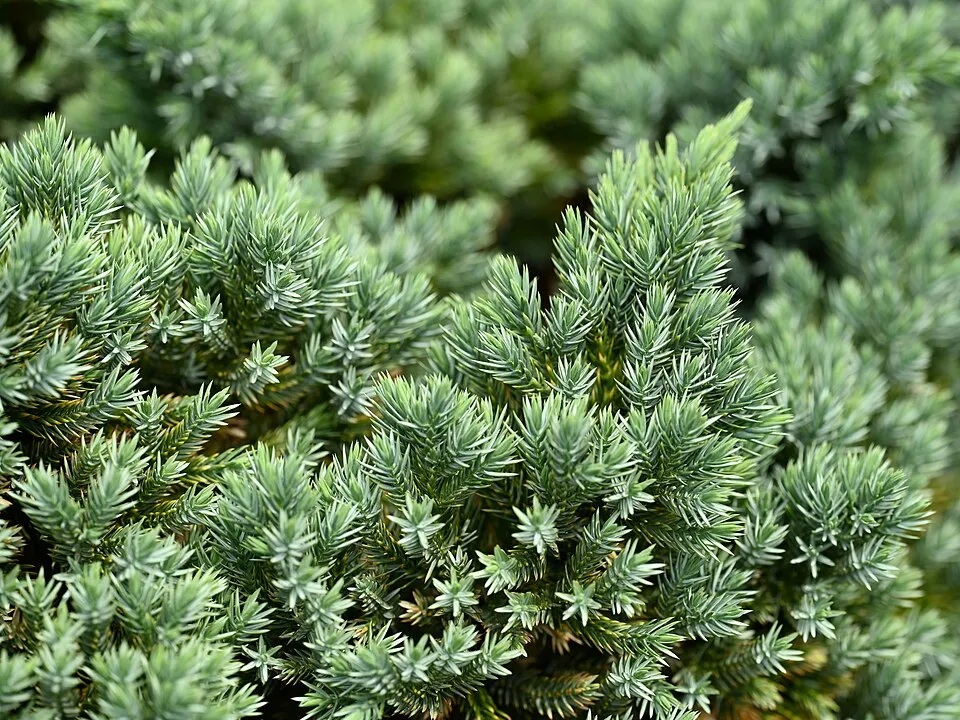
Juniperus squamata 'Blue Star' is a distinctive dwarf conifer belonging to the Cupressaceae family, renowned for its striking silvery-blue, needle-like foliage. This slow-growing evergreen shrub typically forms a dense, mounding habit, reaching mature dimensions of approximately 2-3 feet in height and width. It is a cultivar of Juniperus squamata, a species native to the high-altitude regions of the Himalayas and East Asia, specifically found across Afghanistan, Pakistan, India, China, and Taiwan.
The 'Blue Star' cultivar is specifically bred for its ornamental qualities, including its compact size and intense foliage coloration, which remains vibrant throughout the year. Its needles are short, sharp, and tightly packed, contributing to its unique texture. As a member of the Juniperus genus, it shares botanical characteristics with its wild relatives, such as the production of small, berry-like cones, though these are less prominent in the 'Blue Star' cultivar.
It thrives in conditions mimicking its mountainous origins, preferring full sun exposure and well-drained soil, demonstrating excellent cold hardiness and drought tolerance once established. Its morphological adaptations, such as its tough, scale-like leaves, help it conserve water and withstand harsh environmental conditions.
Trusted Scientific References
1. Authoritative external sources for Juniperus squamata Blue Star
1.1 Wikipedia — Juniperus squamata Blue Star
1.2 Kew POWO (Plants of the World Online)
1.3 PubMed — peer-reviewed research
1.4 NCBI Taxonomy Browser
1.5 GBIF — Global Biodiversity
1.6Juniper Blue Star should be interpreted through verified botanical identity, practical care, and responsible safety language. This recovery note adds the missing context needed for a complete profile: match light to the plant's habit, use well-drained soil, water according to season, and avoid unsupported medicinal or edible claims. For publishing, the plant can be presented as a source-backed garden plant with clear care guidance, common problem diagnosis, and conservative safety wording.
1.1.Juniper Blue Star — Key Features
- ✓ <strong>Botanical Name</strong> — Juniperus squamata 'Blue Star'.
- ✓ <strong>Family</strong> — Cupressaceae (Cypress family).
- ✓ <strong>Foliage Color</strong> — Intense silvery-blue, needle-like.
- ✓ <strong>Growth Habit</strong> — Compact, dense, rounded mound.
- ✓ <strong>Mature Size</strong> — Typically 2-3 feet tall and wide.
- ✓ <strong>Growth Rate</strong> — Slow-growing, 2-3 inches per year.
- ✓ <strong>Hardiness Zones</strong> — USDA Zones 4-8.
- ✓ <strong>Sun Requirements</strong> — Full sun (6-8 hours daily).
- ✓ <strong>Soil Preference</strong> — Well-drained, sandy or loamy.
- ✓ <strong>Drought Tolerance</strong> — High, once established.
1.2.Juniper Blue Star — Quick Summary
- ✓ Juniperus squamata 'Blue Star' is an ornamental dwarf conifer.
- ✓ Known for its striking silvery-blue foliage and compact growth.
- ✓ While 'Blue Star' itself isn't used medicinally, the Juniperus genus offers various traditional health benefits.
- ✓ Key benefits include diuretic, antiseptic, anti-inflammatory, and antioxidant properties.
- ✓ Essential oils are rich in monoterpenes like alpha-pinene and sabinene.
- ✓ Requires full sun and well-drained soil for optimal growth.
2.Juniper Blue Star — Scientific Identity
3.Juniper Blue Star — Quick Facts
4.Juniper Blue Star — Appearance & Identification
5.Juniper Blue Star — Native Habitat
6.Juniper Blue Star — Water Requirements
- ✓ Soil Preference — Requires well-drained soil; sandy or loamy compositions are ideal to prevent root rot.
- ✓ Sun Exposure — Thrives in full sun, needing at least 6-8 hours daily to maintain its vibrant blue foliage color.
- ✓ Watering — Water thoroughly and regularly during the first year for establishment; drought-tolerant once mature, requiring less frequent watering.
- ✓ Hardiness Zones — Best suited for USDA hardiness zones 4-8, demonstrating good cold tolerance.
- ✓ Fertilization — Benefits from occasional feeding with a slow-release conifer-specific fertilizer once or twice during the growing season, avoiding autumn and winter.
- ✓ Pruning — Generally requires minimal pruning due to its slow growth and natural mounding habit; remove only dead or damaged branches.
- ✓ Propagation — Can be propagated via stem cuttings taken in spring or late fall, using rooting hormone to encourage success.
- ✓ Container Growing — Excellent for container gardening, but requires protection in colder zones if temperatures drop below 30°F.
Reviewed by the Flora Medical Global Botanical Review Panel
Multi-disciplinary editorial group · Botany · Ethnobotany · Herbal-medicine literature
Who reviewed this: This page was checked by the Flora Medical Global Botanical Review Panel — an in-house editorial group of botany graduates, ethnobotany researchers, and horticulture practitioners who collectively maintain our 7,000+ plant encyclopedia. Meet the team.
Our 4-step verification process
1. Taxonomic verification
Scientific names and synonyms cross-checked against Kew POWO, World Flora Online, and The Plant List.
2. Phytochemical & medicinal cross-reference
Active compounds, traditional uses, and reported activities are cross-referenced with PubMed, USDA Dr. Duke's database, and peer-reviewed ethnobotanical literature.
3. Conservation & distribution check
Distribution, ecology, and conservation status confirmed against GBIF occurrence records and the IUCN Red List.
4. Editorial & safety review
Every entry passes an editorial pass for clarity, originality, and safety notices (toxicity, contraindications, dosage caveats) before publication.
Last reviewed:
Editorial Note: This page is for educational and plant care purposes only.
Written by: Flora Medical Global Editorial Team
Reviewed by: Flora Medical Global Botanical Review Panel
Last Updated: June 15, 2026







Juniper Blue Star — Comments & Community Reviews
Rate this plant