

Care Disclaimer: Plant care recommendations are general guidelines based on common growing conditions. Individual results may vary based on your local environment, climate, and care routine. If your plant is toxic, keep it away from children and pets, and consult a veterinarian if accidental ingestion occurs.
1.Kniphofia Uvaria — Overview
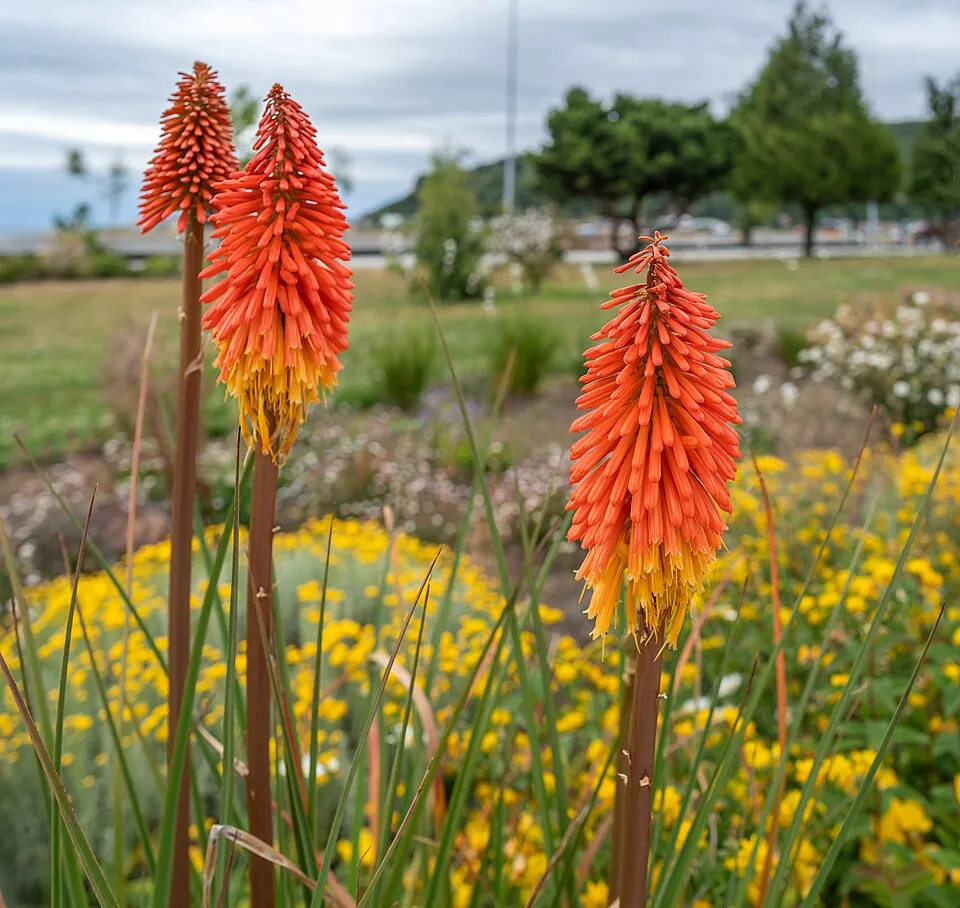
Kniphofia uvaria, commonly known as Red Hot Poker or Torch Lily, is a striking perennial herb native to the grasslands, rocky outcrops, and montane regions of South Africa, particularly the Eastern Cape. This iconic member of the Asphodelaceae family, which also includes aloes and daylilies, is celebrated for its dramatic and vibrant inflorescences.
The plant typically forms robust clumps of long, linear, and somewhat leathery basal leaves, which are often glaucous (bluish-green) and can extend up to 90 cm in length. These evergreen leaves provide a lush, architectural foundation for much of the year, contributing to its appeal even outside of its blooming season.
The most distinctive feature of Kniphofia uvaria is its spectacular flower spikes. Emerging from late spring through late summer, and sometimes into fall, these rigid, upright scapes can reach impressive heights of 1 to 1.5 meters, or even more in optimal conditions. Each scape is topped with a dense, cylindrical to conical raceme composed of numerous tubular florets.
The coloration of these racemes is particularly captivating, typically displaying a gradient from bright scarlet or fiery orange at the apex (where the buds are still developing) to softer shades of yellow or creamy white towards the base (where the flowers are mature). This fiery transition, reminiscent of glowing embers or a burning torch, is the origin of its common names. Individual florets are about 2.5 cm long, featuring prominent stamens and pistils that attract a wide array of pollinators, including bees, butterflies, and hummingbirds.
The plant's rhizomatous root system allows it to form substantial, spreading clumps over time, making it a vigorous and long-lived addition to landscapes. It thrives in full sun and well-drained soil, exhibiting considerable drought tolerance once established.
Trusted Scientific References
1. Authoritative external sources for Kniphofia uvaria
1.1 Wikipedia — Kniphofia uvaria
1.2 Kew POWO (Plants of the World Online)
1.3 PubMed — peer-reviewed research
1.4 NCBI Taxonomy Browser
1.5 GBIF — Global Biodiversity
1.1.Kniphofia Uvaria — Key Features
- ✓ <strong>Striking Red</strong> — Orange-Yellow Gradient Flowers — Unique fiery inflorescences.
- ✓ <strong>Drought</strong> — Tolerant — Low water needs once established.
- ✓ <strong>Attracts Pollinators</strong> — Highly attractive to bees, butterflies, and hummingbirds.
- ✓ <strong>Deer and Rabbit Resistant</strong> — Seldom browsed by wildlife.
- ✓ <strong>Architectural Form</strong> — Provides strong vertical accent in gardens.
- ✓ <strong>Evergreen to Semi</strong> — Evergreen Foliage — Maintains green presence year-round in many climates.
- ✓ <strong>Low Maintenance</strong> — Easy to grow and care for.
- ✓ <strong>South African Native</strong> — Originates from diverse habitats in Southern and Eastern Africa.
- ✓ <strong>Long Blooming Period</strong> — Flowers from late spring through fall.
- ✓ <strong>Rhizomatous Growth</strong> — Forms substantial, spreading clumps over time.
1.2.Kniphofia Uvaria — Quick Summary
- ✓ Red Hot Poker is a vibrant perennial from South Africa, known for fiery, gradient flower spikes.
- ✓ Traditionally used for anti-inflammatory, wound healing, and mild antiseptic properties.
- ✓ Contains flavonoids, saponins, and anthraquinones contributing to its biological activities.
- ✓ Requires full sun and well-drained soil; highly drought-tolerant once established.
- ✓ Primarily used externally; internal consumption is not recommended due to limited safety data.
- ✓ Attracts pollinators like hummingbirds and bees, making it excellent for garden biodiversity.
2.Kniphofia Uvaria — Scientific Identity
3.Kniphofia Uvaria — Quick Facts
4.Kniphofia Uvaria — Appearance & Identification
5.Kniphofia Uvaria — Native Habitat
6.Kniphofia Uvaria — Water Requirements
- ✓ Site Selection — Plant in full sun (at least 6 hours daily) for optimal flowering; tolerates partial shade but with reduced bloom.
- ✓ Soil Requirements — Prefers well-drained soil rich in organic matter; avoid waterlogged conditions, especially in winter.
- ✓ Watering — Water regularly until established; once mature, it is highly drought-tolerant, requiring minimal irrigation.
- ✓ Fertilization — Apply a balanced, all-purpose fertilizer sparingly in spring if soil fertility is low; excessive feeding can reduce flowering.
- ✓ Pruning — Deadhead spent flower spikes to encourage reblooming and maintain a tidy appearance; leave foliage through winter for crown protection.
- ✓ Division — Divide established clumps every 3-5 years in spring or fall to rejuvenate plants and prevent overcrowding.
- ✓ Pest & Disease Management — Generally pest-resistant; watch for thrips and prevent root rot by ensuring good drainage.
- ✓ Hardiness — Suitable for USDA Zones 5-9; mulch in colder zones for winter protection.
Reviewed by the Flora Medical Global Botanical Review Panel
Multi-disciplinary editorial group · Botany · Ethnobotany · Herbal-medicine literature
Who reviewed this: This page was checked by the Flora Medical Global Botanical Review Panel — an in-house editorial group of botany graduates, ethnobotany researchers, and horticulture practitioners who collectively maintain our 7,000+ plant encyclopedia. Meet the team.
Our 4-step verification process
1. Taxonomic verification
Scientific names and synonyms cross-checked against Kew POWO, World Flora Online, and The Plant List.
2. Phytochemical & medicinal cross-reference
Active compounds, traditional uses, and reported activities are cross-referenced with PubMed, USDA Dr. Duke's database, and peer-reviewed ethnobotanical literature.
3. Conservation & distribution check
Distribution, ecology, and conservation status confirmed against GBIF occurrence records and the IUCN Red List.
4. Editorial & safety review
Every entry passes an editorial pass for clarity, originality, and safety notices (toxicity, contraindications, dosage caveats) before publication.
Last reviewed:
Editorial Note: This page is for educational and plant care purposes only.
Written by: Flora Medical Global Editorial Team
Reviewed by: Flora Medical Global Botanical Review Panel
Last Updated: June 15, 2026







Kniphofia Uvaria — Comments & Community Reviews
Rate this plant