


Care Disclaimer: Plant care recommendations are general guidelines based on common growing conditions. Individual results may vary based on your local environment, climate, and care routine. If your plant is toxic, keep it away from children and pets, and consult a veterinarian if accidental ingestion occurs.
1.Kohlrabi — Overview
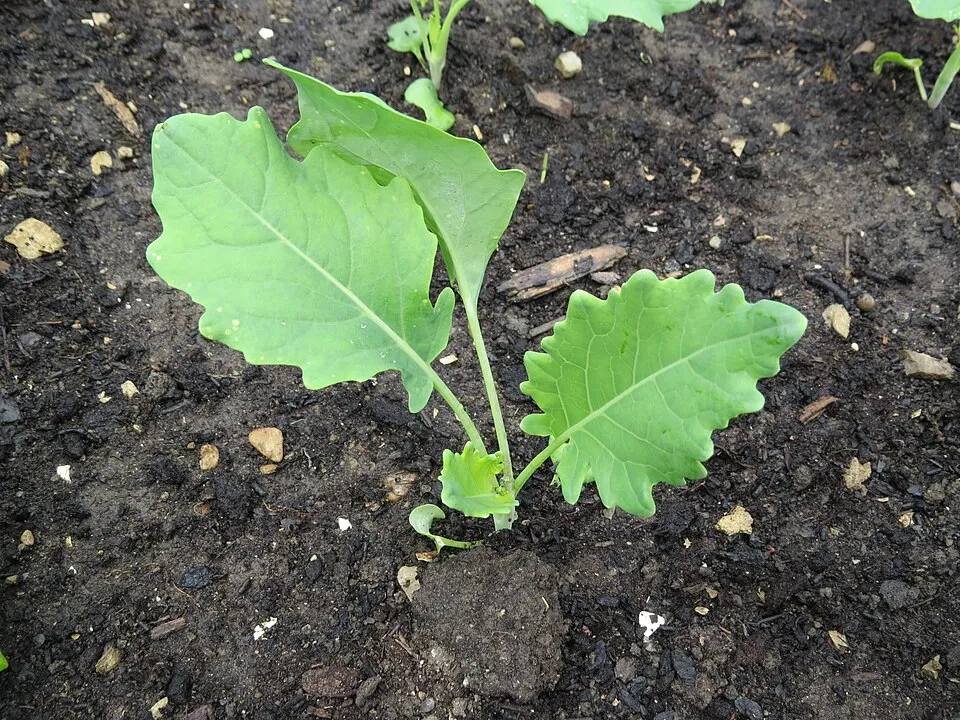
Kohlrabi, scientifically known as Brassica oleracea var. gongylodes, is a distinctive biennial vegetable belonging to the Brassicaceae family, which also includes cabbage, broccoli, and kale. Its name, derived from German words for 'cabbage' (Kohl) and 'turnip' (Rabi), accurately describes its unique morphology: an enlarged, globular, turnip-like stem that develops entirely above ground, giving it an almost alien appearance.
This swollen stem, often referred to as a 'bulb' though botanically incorrect, can vary in color from pale green to vibrant purple, with leaves radiating outwards like spokes. Originating in Northern Europe, where it was first documented in 1554, Kohlrabi made its way to North America by the early 19th century. It thrives in cool-season climates and is cultivated globally, adapting well to diverse soil conditions, provided they are well-drained and rich in organic matter.
Both the crisp, succulent stem and the tender leaves are edible, offering a mild, slightly sweet, and peppery flavor profile that is often compared to a cross between broccoli stems and radish. Its versatility makes it a popular ingredient in various culinary traditions, consumed raw, steamed, roasted, or stir-fried. The plant typically reaches maturity within 40 to 80 days depending on the cultivar, with varieties like 'Gigante' producing exceptionally large stems without becoming woody.
Trusted Scientific References
1. Authoritative external sources for Brassica oleracea gongylodes
1.1 Wikipedia — Brassica oleracea gongylodes
1.2 Kew POWO (Plants of the World Online)
1.3 PubMed — peer-reviewed research
1.4 NCBI Taxonomy Browser
1.5 GBIF — Global Biodiversity
1.6Kohlrabi should be interpreted through verified botanical identity, practical care, and responsible safety language. This recovery note adds the missing context needed for a complete profile: match light to the plant's habit, use well-drained soil, water according to season, and avoid unsupported medicinal or edible claims. For publishing, the plant can be presented as a source-backed garden plant with clear care guidance, common problem diagnosis, and conservative safety wording.
1.1.Kohlrabi — Key Features
- ✓ <strong>Botanical Identity</strong> — *Brassica oleracea* var. *gongylodes*, member of the Brassicaceae family.
- ✓ <strong>Edible Parts</strong> — Bulbous stem and leafy greens are both consumed.
- ✓ <strong>Flavor Profile</strong> — Mild, sweet, and slightly peppery, akin to broccoli stems and radish.
- ✓ <strong>Nutritional Density</strong> — Excellent source of vitamins (C, B), minerals (K, Mn, P), and antioxidants.
- ✓ <strong>Antioxidant Rich</strong> — Contains Vitamin C, anthocyanins, and carotenoids.
- ✓ <strong>High Fiber Content</strong> — Promotes digestive health and blood sugar regulation.
- ✓ <strong>Glucosinolate Source</strong> — Provides compounds with potential health benefits.
- ✓ <strong>Cool Season Crop</strong> — Thrives in cooler temperatures, tolerant of mild heat.
- ✓ <strong>Above</strong> — Ground Growth — Distinctive swollen stem develops entirely above soil.
- ✓ <strong>Color Varieties</strong> — Available in pale green and vibrant purple cultivars.
1.2.Kohlrabi — Quick Summary
- ✓ Unique Cabbage Family Member — Distinct swollen stem grows above ground.
- ✓ Nutritional Powerhouse — Rich in Vitamin C, fiber, potassium, and glucosinolates.
- ✓ Versatile Culinary Ingredient — Enjoyed raw, roasted, steamed, or stir-fried.
- ✓ Supports Immune and Digestive Health — Boosts immunity and aids gut function.
- ✓ Potential Anti-Cancer Properties — Due to glucosinolate content.
- ✓ Easy to Grow — Adaptable to cool climates and various soil types.
2.Kohlrabi — Scientific Identity
3.Kohlrabi — Quick Facts
4.Kohlrabi — Appearance & Identification
5.Kohlrabi — Native Habitat
6.Kohlrabi — Water Requirements
- ✓ Soil Preparation — Thrives in well-drained, fertile soil rich in organic matter with a pH between 6.0 and 7.5.
- ✓ Planting Time — Best planted in early spring as soon as soil is workable for a spring harvest, or mid-summer for a fall crop.
- ✓ Seed Starting — Can be direct-sown ¼-½ inch deep or started indoors 4-6 weeks before transplanting.
- ✓ Spacing — Thin seedlings to 2-5 inches apart, or wider for larger varieties, ensuring adequate air circulation.
- ✓ Watering — Requires consistent and plentiful moisture for rapid growth to prevent the stem from becoming tough and woody.
- ✓ Fertilization — Benefits from fertilization before planting and a mid-season application, as it is a heavy feeder.
- ✓ Sun Exposure — Prefers full sun, requiring at least 6 hours of direct sunlight daily for optimal growth.
- ✓ Pest Management — Generally robust, but watch for cabbage caterpillars; use hand-picking or *Bacillus thuringiensis* (Bt) if necessary.
Reviewed by the Flora Medical Global Botanical Review Panel
Multi-disciplinary editorial group · Botany · Ethnobotany · Herbal-medicine literature
Who reviewed this: This page was checked by the Flora Medical Global Botanical Review Panel — an in-house editorial group of botany graduates, ethnobotany researchers, and horticulture practitioners who collectively maintain our 7,000+ plant encyclopedia. Meet the team.
Our 4-step verification process
1. Taxonomic verification
Scientific names and synonyms cross-checked against Kew POWO, World Flora Online, and The Plant List.
2. Phytochemical & medicinal cross-reference
Active compounds, traditional uses, and reported activities are cross-referenced with PubMed, USDA Dr. Duke's database, and peer-reviewed ethnobotanical literature.
3. Conservation & distribution check
Distribution, ecology, and conservation status confirmed against GBIF occurrence records and the IUCN Red List.
4. Editorial & safety review
Every entry passes an editorial pass for clarity, originality, and safety notices (toxicity, contraindications, dosage caveats) before publication.
Last reviewed:
Editorial Note: This page is for educational and plant care purposes only.
Written by: Flora Medical Global Editorial Team
Reviewed by: Flora Medical Global Botanical Review Panel
Last Updated: June 15, 2026







Kohlrabi — Comments & Community Reviews
Rate this plant