
Care Disclaimer: Plant care recommendations are general guidelines based on common growing conditions. Individual results may vary based on your local environment, climate, and care routine. If your plant is toxic, keep it away from children and pets, and consult a veterinarian if accidental ingestion occurs.
1.Lamium — Overview
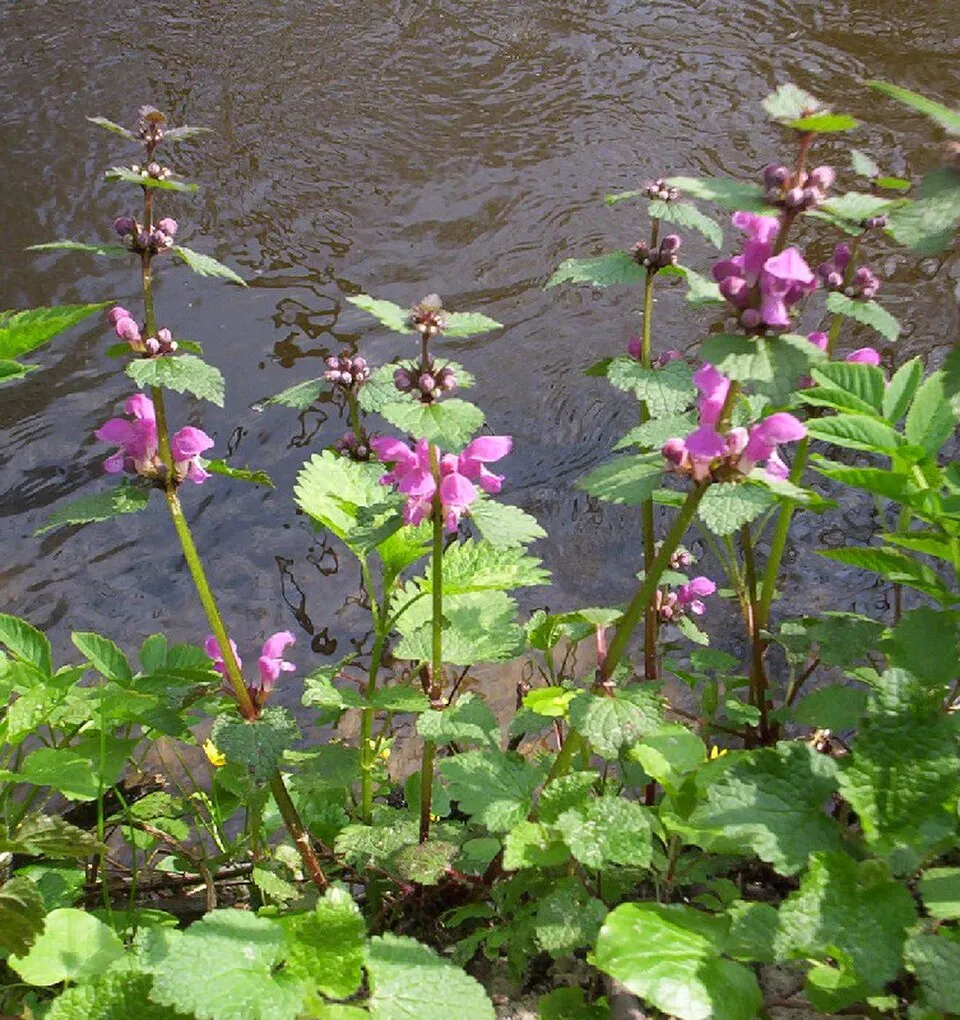
Lamium maculatum, commonly known as Spotted Dead-nettle or Spotted Henbit, is a charming perennial herbaceous species belonging to the Lamiaceae family, which also includes true mints. Native to Europe, temperate western Asia, and North Africa, it has become widely naturalized globally. This plant is characterized by its prostrate, spreading growth habit, typically reaching 6-9 inches in height, forming a dense mat as its square, hollow stems root at the nodes. The foliage is a key ornamental feature, displaying opposite, toothed, pointed oval to heart-shaped leaves, often over 3 inches long.
A distinctive silvery stripe or blotch frequently adorns the midvein, giving rise to numerous variegated cultivars. Unlike its stinging nettle namesake (Urtica dioica), Lamium maculatum leaves are non-urticating, hence the 'dead-nettle' moniker. From late spring through early summer, and sporadically into fall, the plant produces small, hooded, two-lipped flowers in whorls (verticillasters) along the upper stems. These flowers, typically pink to purple, but sometimes white, are highly attractive to pollinators, especially bumblebees.
After flowering, inconspicuous dry fruits, each containing four nutlets, develop. Lamium maculatum thrives in partial to full shade, preferring moist, humus-rich, well-drained soils, making it an excellent groundcover for challenging shady areas and an adaptable addition to various garden designs.
Trusted Scientific References
1. Authoritative external sources for Lamium maculatum
1.1 Wikipedia — Lamium maculatum
1.2 Kew POWO (Plants of the World Online)
1.3 PubMed — peer-reviewed research
1.4 NCBI Taxonomy Browser
1.5 GBIF — Global Biodiversity
1.6Lamium should be interpreted through verified botanical identity, practical care, and responsible safety language. This recovery note adds the missing context needed for a complete profile: match light to the plant's habit, use well-drained soil, water according to season, and avoid unsupported medicinal or edible claims. For publishing, the plant can be presented as a source-backed garden plant with clear care guidance, common problem diagnosis, and conservative safety wording.
1.1.Lamium — Key Features
- ✓ <strong>Non</strong> — Stinging Leaves — Safe to handle, unlike true nettles.
- ✓ <strong>Ornamental Foliage</strong> — Often variegated with silver or white markings.
- ✓ <strong>Groundcover Habit</strong> — Spreads readily to form a dense mat.
- ✓ <strong>Shade Tolerant</strong> — Thrives in low light conditions.
- ✓ <strong>Attracts Pollinators</strong> — Flowers provide nectar for bees.
- ✓ <strong>Medicinal Properties</strong> — Astringent, anti-inflammatory, diuretic.
- ✓ <strong>Low Maintenance</strong> — Requires minimal care once established.
- ✓ <strong>Deer and Rabbit Resistant</strong> — Generally not favored by wildlife.
- ✓ <strong>Versatile Use</strong> — Suitable for beds, borders, containers, and hanging baskets.
- ✓ <strong>Hardy Perennial</strong> — Resilient in various climates (USDA Zones 3-8).
1.2.Lamium — Quick Summary
- ✓ Non-stinging nettle-like plant with attractive foliage.
- ✓ Traditionally used for astringent, anti-inflammatory, and diuretic effects.
- ✓ Rich in flavonoids, tannins, and phenolic acids.
- ✓ Excellent groundcover for shady garden areas.
- ✓ Low-maintenance and generally pest-resistant.
- ✓ Not recommended for pregnant or breastfeeding individuals.
2.Lamium — Scientific Identity
3.Lamium — Quick Facts
4.Lamium — Appearance & Identification
5.Lamium — Native Habitat
6.Lamium — Water Requirements
- ✓ Site Selection — Thrives optimally in partial to full shade, tolerating some morning sun; protect from harsh afternoon sun to prevent leaf scorch.
- ✓ Soil Requirements — Prefers well-drained, consistently moist, humus-rich soil with a slightly acidic to neutral pH (6.0-7.0); avoid compacted or waterlogged conditions.
- ✓ Propagation — Easily propagated by division of established clumps in spring or fall, stem cuttings taken in summer, or by direct sowing of seeds in spring.
- ✓ Planting — Space plants 12-18 inches apart to allow for its vigorous spreading habit; it will quickly form a dense, weed-suppressing groundcover.
- ✓ Watering — Requires consistent moisture, especially during dry periods; water deeply when the top inch of soil feels dry, but ensure good drainage.
- ✓ Fertilization — Generally low-maintenance; a light application of balanced slow-release granular fertilizer or compost in early spring is usually sufficient.
- ✓ Pest and Disease — Highly resistant to most common pests and diseases; occasional issues may include slug or snail damage in damp conditions, or crown rot in overly wet soils.
- ✓ Maintenance — Trim back after the main flowering flush to encourage new growth, maintain a tidy appearance, and manage self-seeding; can be sheared to rejuvenate foliage in mid-summer.
Reviewed by the Flora Medical Global Botanical Review Panel
Multi-disciplinary editorial group · Botany · Ethnobotany · Herbal-medicine literature
Who reviewed this: This page was checked by the Flora Medical Global Botanical Review Panel — an in-house editorial group of botany graduates, ethnobotany researchers, and horticulture practitioners who collectively maintain our 7,000+ plant encyclopedia. Meet the team.
Our 4-step verification process
1. Taxonomic verification
Scientific names and synonyms cross-checked against Kew POWO, World Flora Online, and The Plant List.
2. Phytochemical & medicinal cross-reference
Active compounds, traditional uses, and reported activities are cross-referenced with PubMed, USDA Dr. Duke's database, and peer-reviewed ethnobotanical literature.
3. Conservation & distribution check
Distribution, ecology, and conservation status confirmed against GBIF occurrence records and the IUCN Red List.
4. Editorial & safety review
Every entry passes an editorial pass for clarity, originality, and safety notices (toxicity, contraindications, dosage caveats) before publication.
Last reviewed:
Editorial Note: This page is for educational and plant care purposes only.
Written by: Flora Medical Global Editorial Team
Reviewed by: Flora Medical Global Botanical Review Panel
Last Updated: June 15, 2026







Lamium — Comments & Community Reviews
Rate this plant