
Care Disclaimer: Plant care recommendations are general guidelines based on common growing conditions. Individual results may vary based on your local environment, climate, and care routine. If your plant is toxic, keep it away from children and pets, and consult a veterinarian if accidental ingestion occurs.
1.Lathyrus Latifolius — Overview
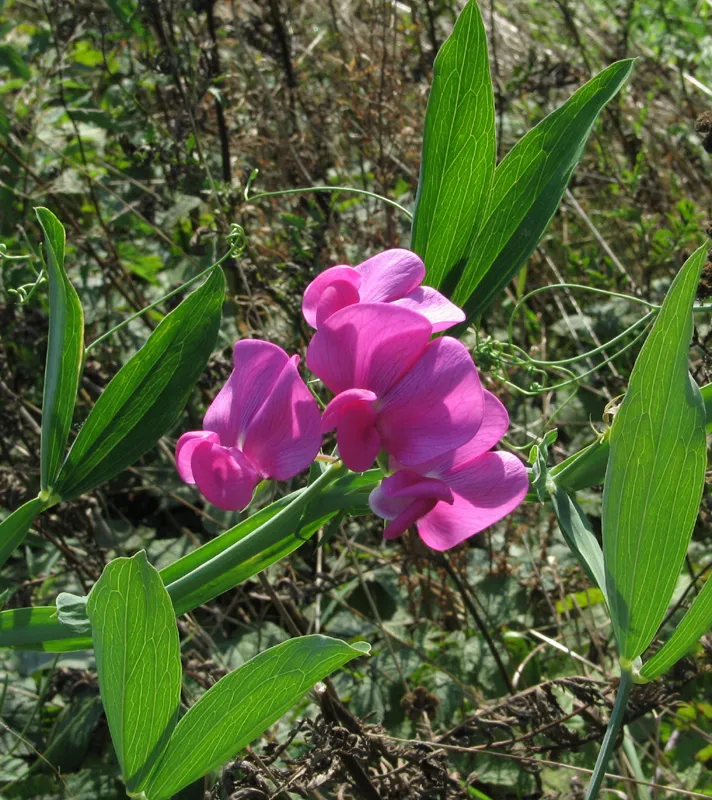
Lathyrus latifolius, commonly known as Perennial Sweet Pea or Everlasting Pea, is a robust, herbaceous perennial climbing plant belonging to the Fabaceae family, native to Southern and Central Europe. This vigorous species is characterized by its broad, winged stems and distinctive pinnate leaves, each ending in a branched tendril that aids its ascent, allowing it to reach impressive heights of 6 to 9 feet (1.8 to 2.7 meters). Its striking floral display, appearing from summer through early autumn, consists of abundant clusters of pea-like flowers in shades ranging from vibrant pink and rose to white and magenta.
Unlike its aromatic annual counterpart, Lathyrus odoratus, L. latifolius is not fragrant. It is widely cultivated as an ornamental due to its hardiness and adaptability, thriving in various soil types and light conditions.
While beautiful, its rapid growth and ability to form dense thickets can lead to it being considered invasive in certain regions, often outcompeting native flora. Taxonomically, it is distinguished by its perennial growth habit and lack of scent, setting it apart within the diverse Lathyrus genus, which includes both edible and toxic species. Its natural habitat typically includes grasslands, open woodlands, and hedgerows.
Trusted Scientific References
1. Authoritative external sources for Lathyrus Latifolius
1.1 Wikipedia — Lathyrus Latifolius
1.2 Kew POWO (Plants of the World Online)
1.3 PubMed — peer-reviewed research
1.4 NCBI Taxonomy Browser
1.5 GBIF — Global Biodiversity
1.6Lathyrus Latifolius should be interpreted through verified botanical identity, practical care, and responsible safety language. This recovery note adds the missing context needed for a complete profile: match light to the plant's habit, use well-drained soil, water according to season, and avoid unsupported medicinal or edible claims. For publishing, the plant can be presented as a source-backed garden plant with clear care guidance, common problem diagnosis, and conservative safety wording.
1.1.Lathyrus Latifolius — Key Features
- ✓ <strong>Common Name</strong> — Perennial Sweet Pea, Everlasting Pea.
- ✓ <strong>Scientific Name</strong> — Lathyrus latifolius.
- ✓ <strong>Family</strong> — Fabaceae (Leguminosae).
- ✓ <strong>Growth Habit</strong> — Vigorous herbaceous perennial climber.
- ✓ <strong>Flower Color</strong> — Pink, rose, white, magenta.
- ✓ <strong>Scent</strong> — Not fragrant.
- ✓ <strong>Key Toxins</strong> — Beta-aminopropionitrile (BAPN).
- ✓ <strong>Toxicity</strong> — Highly toxic, especially seeds.
- ✓ <strong>Primary Use</strong> — Ornamental gardening, erosion control.
- ✓ <strong>Native Range</strong> — Southern and Central Europe.
1.2.Lathyrus Latifolius — Quick Summary
- ✓ Perennial Sweet Pea is a toxic ornamental plant.
- ✓ Contains neurotoxins, primarily beta-aminopropionitrile (BAPN).
- ✓ Ingestion can cause Lathyrism, leading to paralysis and neurological damage.
- ✓ Valued for its vigorous climbing habit and attractive, unscented flowers.
- ✓ Primarily used in landscaping for aesthetic appeal and erosion control.
- ✓ Strictly for external, ornamental use; not for medicinal or food purposes.
2.Lathyrus Latifolius — Scientific Identity
3.Lathyrus Latifolius — Quick Facts
4.Lathyrus Latifolius — Appearance & Identification
5.Lathyrus Latifolius — Native Habitat
6.Lathyrus Latifolius — Water Requirements
- ✓ Site Selection — Thrives in full sun to partial shade, requiring at least 6 hours of direct sunlight for optimal flowering.
- ✓ Soil Preparation — Prefers well-drained soil; tolerates a range of soil types including poor soils, but benefits from organic matter amendment.
- ✓ Planting — Can be grown from seed or transplanted. Sow seeds after the last frost, or start indoors 6-8 weeks prior.
- ✓ Support Structure — Requires a sturdy trellis, fence, or other support for its climbing habit; provide early guidance for tendrils.
- ✓ Watering — Needs regular watering during dry periods, especially when establishing; established plants are moderately drought-tolerant.
- ✓ Fertilization — Generally not needed in rich soils; can benefit from a balanced, slow-release fertilizer in poor soils.
- ✓ Pruning — Deadhead spent flowers to encourage continuous blooming; cut back hard in late winter or early spring to manage growth.
- ✓ Pests and Diseases — Generally robust, but watch for powdery mildew in humid conditions and common garden pests like aphids.
Reviewed by the Flora Medical Global Botanical Review Panel
Multi-disciplinary editorial group · Botany · Ethnobotany · Herbal-medicine literature
Who reviewed this: This page was checked by the Flora Medical Global Botanical Review Panel — an in-house editorial group of botany graduates, ethnobotany researchers, and horticulture practitioners who collectively maintain our 7,000+ plant encyclopedia. Meet the team.
Our 4-step verification process
1. Taxonomic verification
Scientific names and synonyms cross-checked against Kew POWO, World Flora Online, and The Plant List.
2. Phytochemical & medicinal cross-reference
Active compounds, traditional uses, and reported activities are cross-referenced with PubMed, USDA Dr. Duke's database, and peer-reviewed ethnobotanical literature.
3. Conservation & distribution check
Distribution, ecology, and conservation status confirmed against GBIF occurrence records and the IUCN Red List.
4. Editorial & safety review
Every entry passes an editorial pass for clarity, originality, and safety notices (toxicity, contraindications, dosage caveats) before publication.
Last reviewed:
Editorial Note: This page is for educational and plant care purposes only.
Written by: Flora Medical Global Editorial Team
Reviewed by: Flora Medical Global Botanical Review Panel
Last Updated: June 15, 2026







Lathyrus Latifolius — Comments & Community Reviews
Rate this plant