
Care Disclaimer: Plant care recommendations are general guidelines based on common growing conditions. Individual results may vary based on your local environment, climate, and care routine. If your plant is toxic, keep it away from children and pets, and consult a veterinarian if accidental ingestion occurs.
1.Ledebouria Socialis — Overview
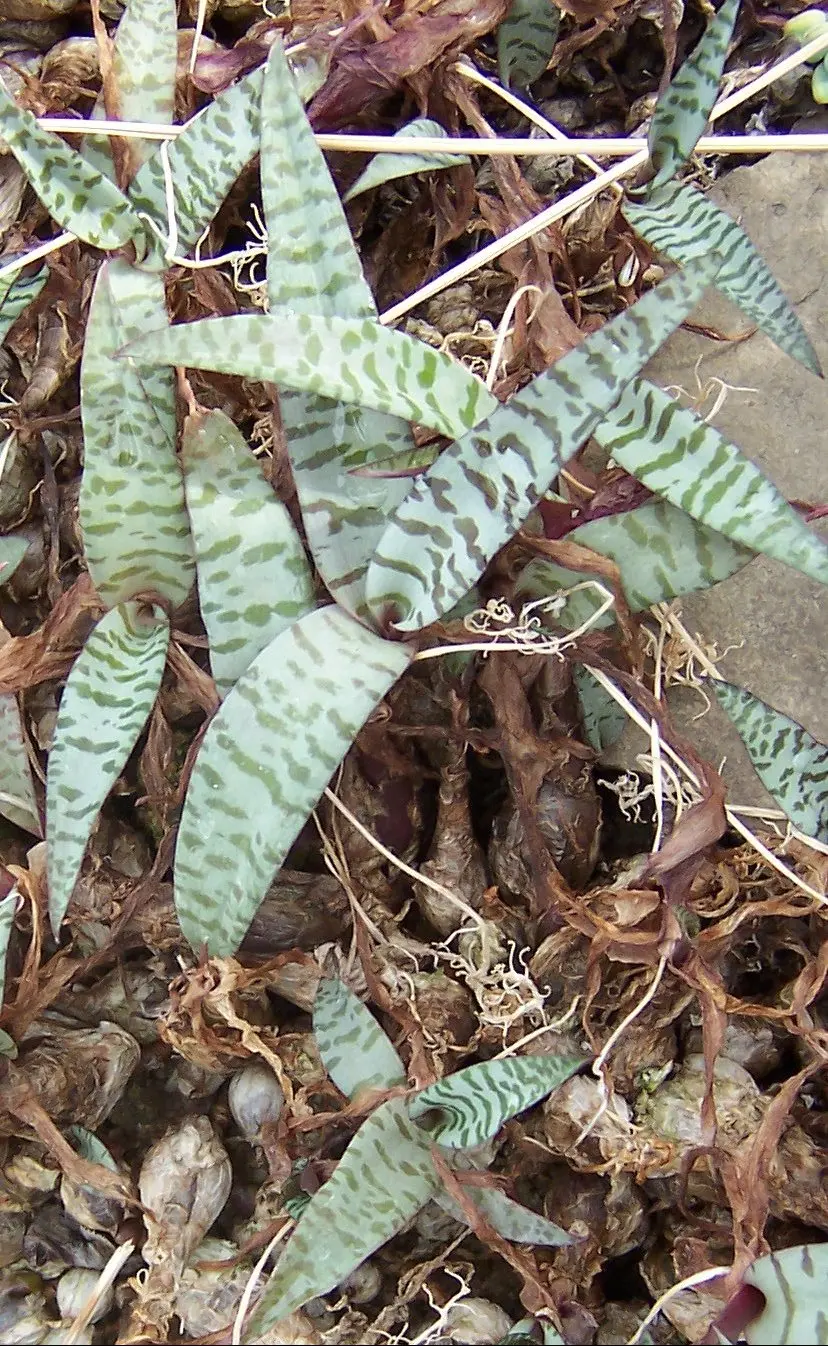
Ledebouria socialis, commonly known as Silver Squill, Leopard Lily, or Wood Hyacinth, is a striking succulent bulbous perennial belonging to the Asparagaceae family (formerly Hyacinthaceae). Native to the Eastern Cape Province of South Africa, it flourishes in arid to semi-arid regions. This captivating plant is characterized by its tear-drop shaped bulbs, often sitting partially above the soil surface, from which emerge lance-shaped leaves.
The foliage is highly ornamental, typically displaying a unique silver-green variegation with prominent dark green or purple spots, often complemented by a vibrant purple underside. These leaves usually grow 15-25 cm long, forming dense clumps that make it an excellent choice for groundcover in warmer climates (USDA zones 10-11), rock gardens, or container cultivation indoors. During spring and summer, slender flower stalks, reaching up to 28 cm tall, bear numerous small, delicate pinkish-green flowers, adding a subtle allure.
Taxonomically, it was first described as Scilla socialis in 1870 and later reclassified into the Ledebouria genus in 1970, reflecting its distinct morphological and genetic characteristics. Its compact, low-maintenance nature and attractive appearance contribute to its popularity among succulent enthusiasts and indoor plant collectors.
Trusted Scientific References
1. Authoritative external sources for Ledebouria Socialis
1.1 Wikipedia — Ledebouria Socialis
1.2 Kew POWO (Plants of the World Online)
1.3 PubMed — peer-reviewed research
1.4 NCBI Taxonomy Browser
1.5 GBIF — Global Biodiversity
1.6Ledebouria Socialis should be interpreted through verified botanical identity, practical care, and responsible safety language. This recovery note adds the missing context needed for a complete profile: match light to the plant's habit, use well-drained soil, water according to season, and avoid unsupported medicinal or edible claims. For publishing, the plant can be presented as a source-backed garden plant with clear care guidance, common problem diagnosis, and conservative safety wording.
1.1.Ledebouria Socialis — Key Features
- ✓ <strong>Striking Variegated Foliage</strong> — Silver-green leaves with dark spots and purple undersides.
- ✓ <strong>Bulbous Perennial</strong> — Grows from tear-drop shaped bulbs, often exposed above soil.
- ✓ <strong>Succulent Nature</strong> — Drought-tolerant and stores water in its leaves and bulbs.
- ✓ <strong>Low Maintenance</strong> — Requires minimal care, suitable for beginners.
- ✓ <strong>Compact Growth Habit</strong> — Forms dense clumps, ideal for small spaces or containers.
- ✓ <strong>Small Pinkish</strong> — Green Flowers — Delicate blooms appear on slender stalks in spring/summer.
- ✓ <strong>South African Native</strong> — Originates from the Eastern Cape Province.
- ✓ <strong>Ornamental Value</strong> — Primarily cultivated for aesthetic appeal.
- ✓ <strong>Easy Propagation</strong> — Readily divides from bulb offsets.
- ✓ <strong>Toxic Plant</strong> — Contains cardiac glycosides, poisonous if ingested.
1.2.Ledebouria Socialis — Quick Summary
- ✓ Ledebouria socialis is a popular ornamental succulent, toxic if ingested.
- ✓ Features striking silver-green spotted leaves and small pinkish-green flowers.
- ✓ Thrives in bright, indirect light and well-draining soil with minimal watering.
- ✓ Contains cardiac glycosides, making all parts poisonous to humans and pets.
- ✓ No recognized safe medicinal uses; strictly for aesthetic cultivation.
- ✓ Easy to grow and propagate, ideal for container gardening or groundcover in warm zones.
2.Ledebouria Socialis — Scientific Identity
3.Ledebouria Socialis — Quick Facts
4.Ledebouria Socialis — Appearance & Identification
5.Ledebouria Socialis — Native Habitat
6.Ledebouria Socialis — Water Requirements
- ✓ Light — Provide bright, indirect light; avoid direct, harsh sunlight to prevent leaf burn. Can tolerate some morning sun.
- ✓ Soil — Use a well-draining cactus or succulent potting mix to prevent root rot. Terra cotta pots are ideal.
- ✓ Watering — Water thoroughly when the top inch of soil is dry during spring/summer; reduce watering significantly in fall/winter.
- ✓ Temperature — Thrives in average room temperatures (18-24°C); protect from cold drafts and extreme heat sources.
- ✓ Fertilization — Fertilize monthly in spring and summer with a diluted liquid houseplant food; cease in fall/winter.
- ✓ Repotting — Repot every 3-4 years to divide overcrowded bulbs, ideally after flowering in late summer or autumn.
- ✓ Propagation — Easily propagated by dividing bulb clusters; plant bulbs with the top half to two-thirds exposed above soil.
- ✓ Pest Control — Monitor for aphids, mealybugs, and spider mites; treat with insecticidal soap if necessary.
Reviewed by the Flora Medical Global Botanical Review Panel
Multi-disciplinary editorial group · Botany · Ethnobotany · Herbal-medicine literature
Who reviewed this: This page was checked by the Flora Medical Global Botanical Review Panel — an in-house editorial group of botany graduates, ethnobotany researchers, and horticulture practitioners who collectively maintain our 7,000+ plant encyclopedia. Meet the team.
Our 4-step verification process
1. Taxonomic verification
Scientific names and synonyms cross-checked against Kew POWO, World Flora Online, and The Plant List.
2. Phytochemical & medicinal cross-reference
Active compounds, traditional uses, and reported activities are cross-referenced with PubMed, USDA Dr. Duke's database, and peer-reviewed ethnobotanical literature.
3. Conservation & distribution check
Distribution, ecology, and conservation status confirmed against GBIF occurrence records and the IUCN Red List.
4. Editorial & safety review
Every entry passes an editorial pass for clarity, originality, and safety notices (toxicity, contraindications, dosage caveats) before publication.
Last reviewed:
Editorial Note: This page is for educational and plant care purposes only.
Written by: Flora Medical Global Editorial Team
Reviewed by: Flora Medical Global Botanical Review Panel
Last Updated: June 15, 2026







Ledebouria Socialis — Comments & Community Reviews
Rate this plant