
Care Disclaimer: Plant care recommendations are general guidelines based on common growing conditions. Individual results may vary based on your local environment, climate, and care routine. If your plant is toxic, keep it away from children and pets, and consult a veterinarian if accidental ingestion occurs.
1.Lenten Rose — Overview
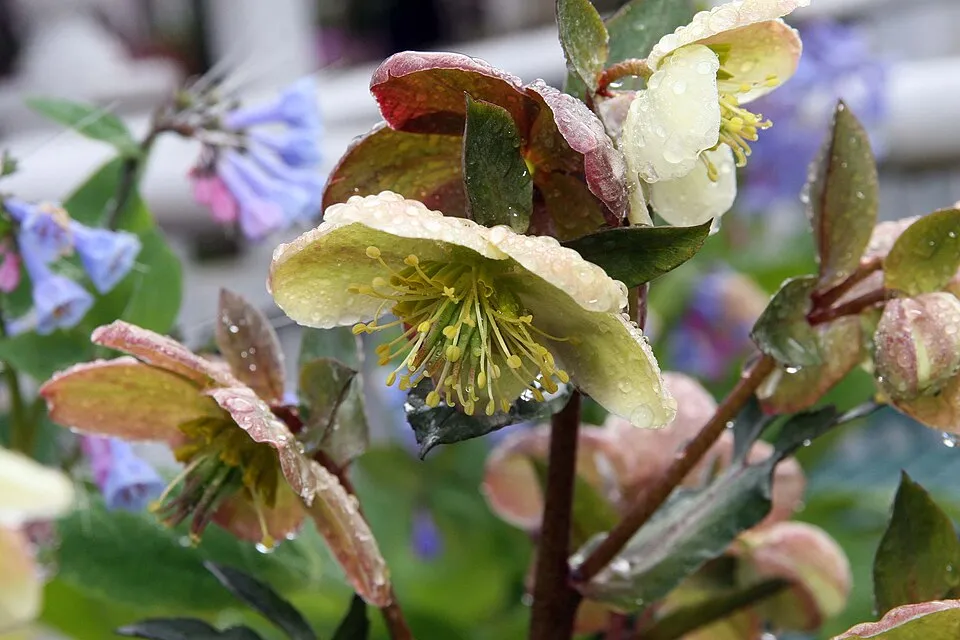
Helleborus hybridus, commonly known as Lenten Rose, is a captivating and resilient herbaceous perennial belonging to the Ranunculaceae family, distinct from true roses. This group encompasses numerous garden hybrids derived from several Hellebore species, primarily from the Balkan region and Asia Minor, exhibiting remarkable genetic diversity. Characterized by its deeply divided, leathery, dark green foliage, which is often evergreen or semi-evergreen, the plant provides year-round aesthetic appeal.
Its most striking feature is the early bloom, typically from late winter to early spring, presenting nodding, saucer-shaped flowers. These 'flowers' are, in fact, composed of five prominent, petal-like sepals that persist long after pollination, offering extended ornamental value. The color palette is exceptionally broad, ranging from pristine white, cream, and various shades of pink and rose to deep purple, near-black, and even green, often with intricate speckles, spots, or picotee edges.
Mature plants form substantial clumps, reaching 18 to 24 inches in height and 24 to 30 inches in width. Lenten Roses thrive in shaded to partial shade conditions, particularly in well-drained, organically rich soils, making them ideal for woodland gardens, shady borders, or under deciduous trees where they can capture early spring sunlight before the canopy leafs out. Their hardiness, generally within USDA Zones 5-9, combined with their low-maintenance nature and ability to flourish in challenging environments, solidifies their esteemed position in temperate landscape design.
Trusted Scientific References
1. Authoritative external sources for Helleborus hybridus
1.1 Wikipedia — Helleborus hybridus
1.2 Kew POWO (Plants of the World Online)
1.3 PubMed — peer-reviewed research
1.4 NCBI Taxonomy Browser
1.5 GBIF — Global Biodiversity
1.6Lenten Rose should be interpreted through verified botanical identity, practical care, and responsible safety language. This recovery note adds the missing context needed for a complete profile: match light to the plant's habit, use well-drained soil, water according to season, and avoid unsupported medicinal or edible claims. For publishing, the plant can be presented as a source-backed garden plant with clear care guidance, common problem diagnosis, and conservative safety wording.
1.1.Lenten Rose — Key Features
- ✓ <strong>Early Spring Bloomer</strong> — One of the first plants to flower, often in late winter.
- ✓ <strong>Evergreen Foliage</strong> — Leathery, dark green leaves provide year-round interest.
- ✓ <strong>Wide Color Range</strong> — Flowers in white, pink, purple, green, often speckled.
- ✓ <strong>Shade Tolerant</strong> — Thrives in partial to full shade conditions.
- ✓ <strong>Low Maintenance</strong> — Once established, requires minimal care.
- ✓ <strong>Deer and Rabbit Resistant</strong> — Alkaloids make it unpalatable to common garden pests.
- ✓ <strong>Long</strong> — Lasting Sepals — Petal-like sepals persist for months, extending ornamental value.
- ✓ <strong>Hardy Perennial</strong> — Resilient in USDA Zones 5-9.
- ✓ <strong>Toxic Plant</strong> — All parts are poisonous if ingested.
- ✓ <strong>Ranunculaceae Family</strong> — Related to buttercups, not true roses.
1.2.Lenten Rose — Quick Summary
- ✓ Highly toxic ornamental perennial, Helleborus hybridus.
- ✓ Blooms late winter/early spring with diverse flower colors.
- ✓ Contains potent cardiac glycosides and saponins.
- ✓ Historically used as purgative, emetic, cardiotonic, but extremely dangerous.
- ✓ NO safe internal medicinal use; strictly ornamental.
- ✓ Handle with gloves; keep away from children and pets.
2.Lenten Rose — Scientific Identity
3.Lenten Rose — Quick Facts
4.Lenten Rose — Appearance & Identification
5.Lenten Rose — Native Habitat
6.Lenten Rose — Water Requirements
- ✓ Site Selection — Choose a location with partial to full shade, especially protected from harsh afternoon sun in warmer climates.
- ✓ Soil Preparation — Ensure well-drained, fertile soil rich in organic matter; amend heavy clay soils with compost or grit.
- ✓ Planting — Plant in early spring or fall; dig a hole twice as wide as the root ball, ensuring the crown is at soil level.
- ✓ Watering — Water consistently during establishment; established plants are moderately drought-tolerant but prefer consistent moisture.
- ✓ Fertilization — Apply a balanced, slow-release fertilizer or compost in early spring as new growth emerges.
- ✓ Pruning — Remove old, tattered foliage from the previous season in late winter or early spring just before new growth appears.
- ✓ Winter Protection — In colder zones (USDA Zone 5), apply a layer of mulch (e.g., evergreen boughs, straw) for root insulation.
- ✓ Pest and Disease Management — Generally pest-resistant; watch for slugs (which may eat flowers) and occasional fungal spots.
Reviewed by the Flora Medical Global Botanical Review Panel
Multi-disciplinary editorial group · Botany · Ethnobotany · Herbal-medicine literature
Who reviewed this: This page was checked by the Flora Medical Global Botanical Review Panel — an in-house editorial group of botany graduates, ethnobotany researchers, and horticulture practitioners who collectively maintain our 7,000+ plant encyclopedia. Meet the team.
Our 4-step verification process
1. Taxonomic verification
Scientific names and synonyms cross-checked against Kew POWO, World Flora Online, and The Plant List.
2. Phytochemical & medicinal cross-reference
Active compounds, traditional uses, and reported activities are cross-referenced with PubMed, USDA Dr. Duke's database, and peer-reviewed ethnobotanical literature.
3. Conservation & distribution check
Distribution, ecology, and conservation status confirmed against GBIF occurrence records and the IUCN Red List.
4. Editorial & safety review
Every entry passes an editorial pass for clarity, originality, and safety notices (toxicity, contraindications, dosage caveats) before publication.
Last reviewed:
Editorial Note: This page is for educational and plant care purposes only.
Written by: Flora Medical Global Editorial Team
Reviewed by: Flora Medical Global Botanical Review Panel
Last Updated: June 15, 2026







Lenten Rose — Comments & Community Reviews
Rate this plant