


Care Disclaimer: Plant care recommendations are general guidelines based on common growing conditions. Individual results may vary based on your local environment, climate, and care routine. If your plant is toxic, keep it away from children and pets, and consult a veterinarian if accidental ingestion occurs.
1.Leptospermum — Overview
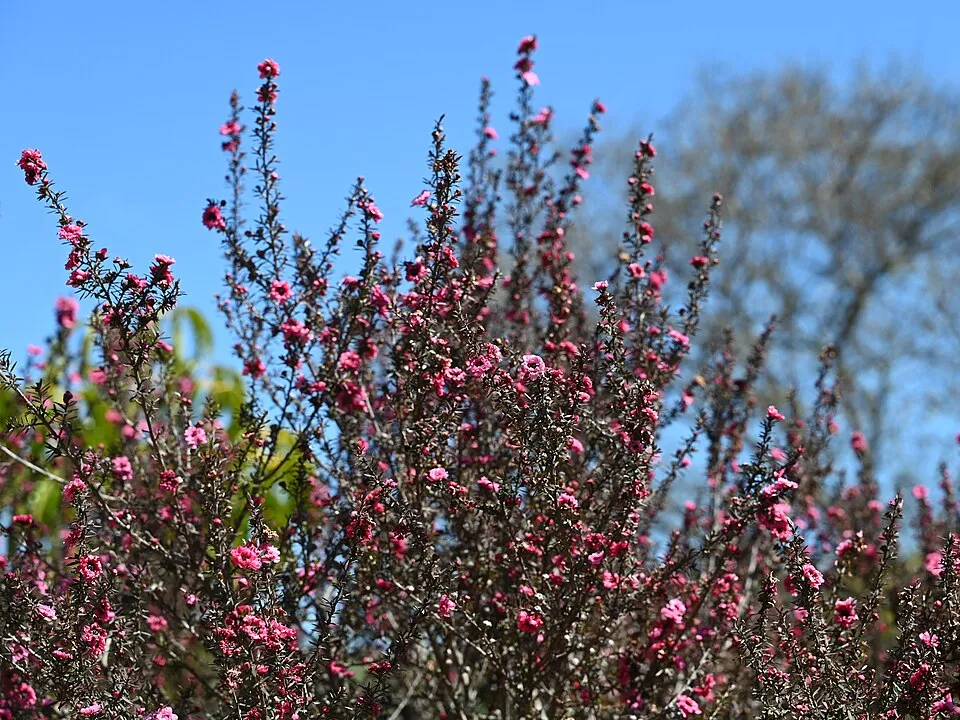
Leptospermum scoparium, commonly recognized as Manuka or New Zealand Tea Tree, is a robust evergreen shrub or small tree indigenous to New Zealand and southeastern Australia. This resilient member of the Myrtaceae family typically grows to heights of 2-5 meters, showcasing a dense canopy of small, often spiky, aromatic leaves. Its most distinctive feature is the profusion of delicate, five-petaled flowers, which bloom primarily in spring and early summer, presenting a spectrum of colors from pure white to various shades of pink and vibrant red.
The plant's woody stems and aromatic foliage contribute significantly to its unique character, making it a valuable ornamental plant and a critical component of its native ecosystems. It thrives in a wide range of habitats, from exposed coastal areas to sub-alpine zones, demonstrating remarkable adaptability. Beyond its aesthetic appeal, Leptospermum scoparium serves as a vital resource for pollinators, particularly bees, which collect nectar to produce the globally renowned Manuka honey, celebrated for its unique properties.
Its presence supports local wildlife and enriches the biodiversity of its natural environment, solidifying its importance both ecologically and economically.
Trusted Scientific References
1. Authoritative external sources for Leptospermum scoparium
1.1 Wikipedia — Leptospermum scoparium
1.2 Kew POWO (Plants of the World Online)
1.3 PubMed — peer-reviewed research
1.4 NCBI Taxonomy Browser
1.5 GBIF — Global Biodiversity
1.6Leptospermum should be interpreted through verified botanical identity, practical care, and responsible safety language. This recovery note adds the missing context needed for a complete profile: match light to the plant's habit, use well-drained soil, water according to season, and avoid unsupported medicinal or edible claims. For publishing, the plant can be presented as a source-backed garden plant with clear care guidance, common problem diagnosis, and conservative safety wording.
1.1.Leptospermum — Key Features
- ✓ <strong>Native to New Zealand and Australia</strong> — Endemic to specific regions, thriving in diverse climates.
- ✓ <strong>Source of Manuka Honey</strong> — Nectar produces uniquely potent medicinal honey.
- ✓ <strong>Potent Antimicrobial Properties</strong> — Effective against bacteria, fungi, and viruses.
- ✓ <strong>Rich in Triketones</strong> — Specific compounds in essential oil responsible for high bioactivity.
- ✓ <strong>Anti</strong> — inflammatory Action — Reduces swelling and pain in various conditions.
- ✓ <strong>Wound Healing Accelerator</strong> — Promotes tissue regeneration and infection control.
- ✓ <strong>Aromatic Foliage</strong> — Distinctive scent from essential oil components.
- ✓ <strong>Evergreen Shrub/Small Tree</strong> — Maintains foliage year-round, providing continuous appeal.
- ✓ <strong>Ornamental Value</strong> — Attractive flowers and form make it popular in gardens.
- ✓ <strong>Traditional Māori Medicine</strong> — Long history of use by indigenous peoples for various ailments.
1.2.Leptospermum — Quick Summary
- ✓ Manuka (Leptospermum scoparium) is a powerful medicinal plant from New Zealand/Australia.
- ✓ Renowned for its potent antimicrobial, anti-inflammatory, and wound-healing properties.
- ✓ Key active compounds include triketones, flavonoids, and Methylglyoxal (MGO) in its honey.
- ✓ Used traditionally for infections, pain, and digestive issues.
- ✓ Manuka honey is globally recognized for its unique antibacterial activity.
- ✓ Essential oil is valued for skin issues and respiratory relief.
2.Leptospermum — Scientific Identity
3.Leptospermum — Quick Facts
4.Leptospermum — Appearance & Identification
5.Leptospermum — Native Habitat
6.Leptospermum — Water Requirements
- ✓ Soil Preference — Plant in well-draining soil, ideally slightly acidic to neutral, with good organic content.
- ✓ Light Requirements — Prefers full sun exposure for optimal growth and flowering; tolerates partial shade but with reduced bloom.
- ✓ Watering — Water young plants regularly to maintain consistent moisture; established plants are drought-tolerant but benefit from moderate watering during dry spells.
- ✓ Temperature & Hardiness — Thrives in warm climates (USDA Zones 9-10); protect from temperatures below 40°F (4°C).
- ✓ Fertilization — Generally doesn't require heavy feeding; an annual application of compost or balanced fertilizer every 2-3 years is sufficient for outdoor plants.
- ✓ Pruning — Prune lightly after flowering to maintain shape, encourage bushier growth, and promote more blooms, removing no more than one-third of the plant.
- ✓ Propagation — Can be propagated from seeds for pure species or semi-hardwood cuttings for cultivars, preferably in early summer.
- ✓ Container Growing — Smaller varieties can be grown in large, well-draining pots, especially in cooler climates, moved indoors during winter.
Reviewed by the Flora Medical Global Botanical Review Panel
Multi-disciplinary editorial group · Botany · Ethnobotany · Herbal-medicine literature
Who reviewed this: This page was checked by the Flora Medical Global Botanical Review Panel — an in-house editorial group of botany graduates, ethnobotany researchers, and horticulture practitioners who collectively maintain our 7,000+ plant encyclopedia. Meet the team.
Our 4-step verification process
1. Taxonomic verification
Scientific names and synonyms cross-checked against Kew POWO, World Flora Online, and The Plant List.
2. Phytochemical & medicinal cross-reference
Active compounds, traditional uses, and reported activities are cross-referenced with PubMed, USDA Dr. Duke's database, and peer-reviewed ethnobotanical literature.
3. Conservation & distribution check
Distribution, ecology, and conservation status confirmed against GBIF occurrence records and the IUCN Red List.
4. Editorial & safety review
Every entry passes an editorial pass for clarity, originality, and safety notices (toxicity, contraindications, dosage caveats) before publication.
Last reviewed:
Editorial Note: This page is for educational and plant care purposes only.
Written by: Flora Medical Global Editorial Team
Reviewed by: Flora Medical Global Botanical Review Panel
Last Updated: June 15, 2026







Leptospermum — Comments & Community Reviews
Rate this plant