
Care Disclaimer: Plant care recommendations are general guidelines based on common growing conditions. Individual results may vary based on your local environment, climate, and care routine. If your plant is toxic, keep it away from children and pets, and consult a veterinarian if accidental ingestion occurs.
1.Lespedeza Thunbergii — Overview
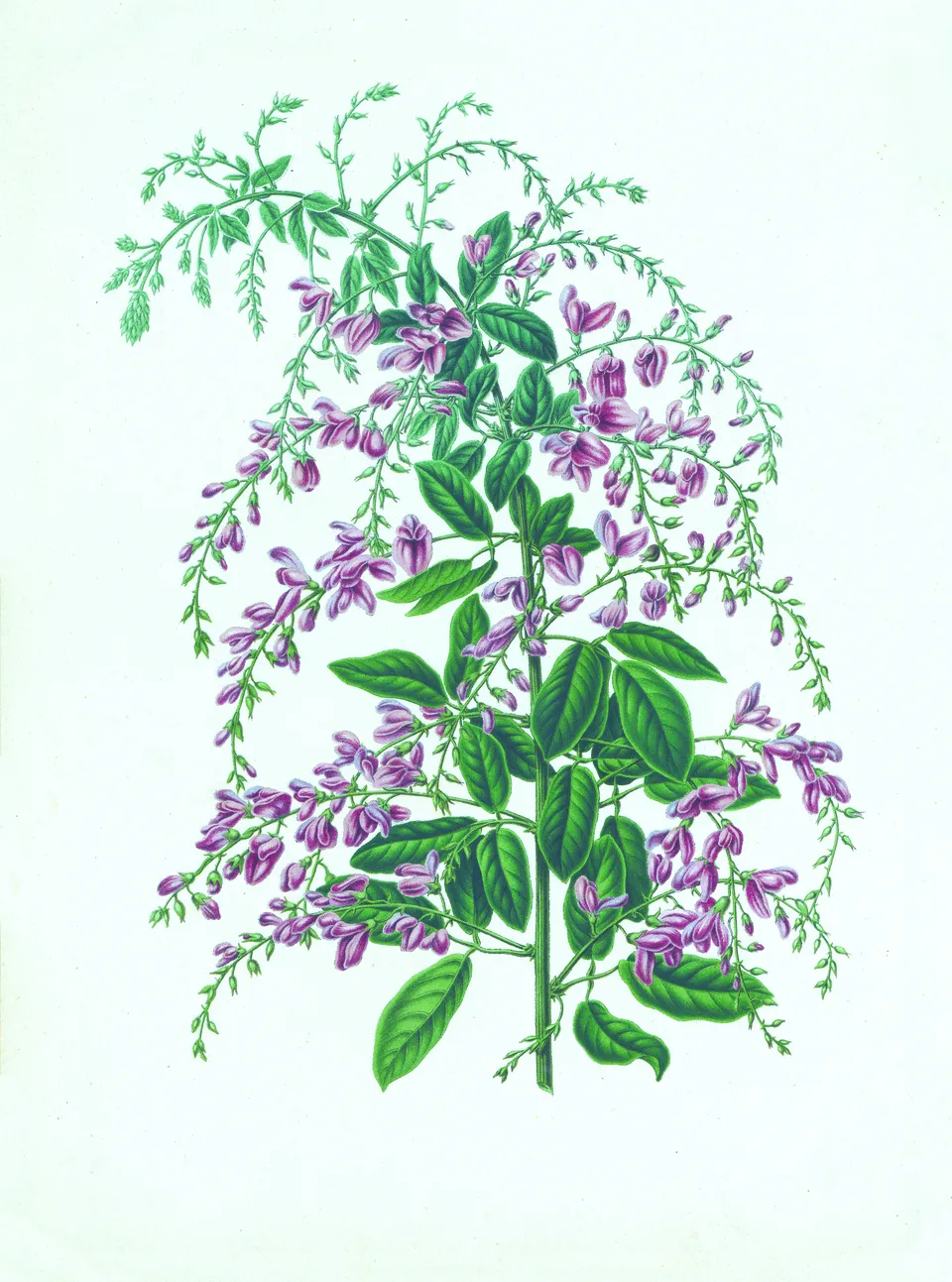
Lespedeza thunbergii, commonly known as Thunberg's lespedeza or bush clover, is an elegant, deciduous woody perennial within the Fabaceae family, native to the temperate regions of East Asia, particularly Japan and China. This species is characterized by its graceful, arching stems that can reach up to 3 meters (10 feet) in length and width, creating a distinctive fountain-like silhouette. The plant's foliage consists of trifoliate leaves, with each leaflet typically oval to elliptical, presenting a vibrant green hue throughout the growing season before transitioning to an attractive, albeit often subtle, yellow in autumn. The most striking horticultural feature is its profuse late-season flowering.
From late summer through fall, L. thunbergii produces abundant, pendulous racemes of pea-like flowers, typically in shades of magenta, purple, or deep pink. These cascades of blooms are highly attractive to various pollinators, including bees and butterflies, contributing significantly to garden biodiversity. The plant's woody stems are relatively slender, imparting a delicate appearance despite its robust and vigorous growth habit.
Ecologically, it thrives in well-drained soils and is remarkably drought-tolerant once established, making it a resilient choice for various landscape applications, including borders, slopes, or as a specimen plant where its cascading form can be fully appreciated. While primarily valued ornamentally, its close relatives in the Lespedeza genus have a documented history in traditional herbal medicine, primarily for renal and diuretic purposes, hinting at potential, though largely unexplored, medicinal properties within L. thunbergii itself.
Trusted Scientific References
1. Authoritative external sources for Lespedeza thunbergii
1.1 Wikipedia — Lespedeza thunbergii
1.2 Kew POWO (Plants of the World Online)
1.3 PubMed — peer-reviewed research
1.4 NCBI Taxonomy Browser
1.5 GBIF — Global Biodiversity
1.6Lespedeza Thunbergii should be interpreted through verified botanical identity, practical care, and responsible safety language. This recovery note adds the missing context needed for a complete profile: match light to the plant's habit, use well-drained soil, water according to season, and avoid unsupported medicinal or edible claims. For publishing, the plant can be presented as a source-backed garden plant with clear care guidance, common problem diagnosis, and conservative safety wording.
1.1.Lespedeza Thunbergii — Key Features
- ✓ <strong>Common Name</strong> — Thunberg's Lespedeza, Bush Clover.
- ✓ <strong>Scientific Name</strong> — Lespedeza thunbergii.
- ✓ <strong>Family</strong> — Fabaceae (Pea family).
- ✓ <strong>Native Region</strong> — East Asia (Japan, China).
- ✓ <strong>Growth Habit</strong> — Deciduous, arching shrub.
- ✓ <strong>Mature Size</strong> — 3-10 feet tall and wide.
- ✓ <strong>Flowering Time</strong> — Late summer to fall.
- ✓ <strong>Flower Color</strong> — Magenta, purple, deep pink.
- ✓ <strong>Foliage</strong> — Trifoliate, green leaves turning yellow in autumn.
- ✓ <strong>Drought Tolerance</strong> — High once established.
1.2.Lespedeza Thunbergii — Quick Summary
- ✓ Thunberg's Lespedeza is an ornamental shrub known for late-season purple flowers.
- ✓ Native to East Asia, it thrives in full sun and well-drained soil.
- ✓ Related Lespedeza species have traditional medicinal uses, especially for kidney support.
- ✓ Rich in flavonoids, phenolic acids, and tannins, contributing to antioxidant properties.
- ✓ Requires hard pruning in spring for best floral display and vigorous growth.
- ✓ Generally pest and disease resistant, making it a valuable garden plant.
2.Lespedeza Thunbergii — Scientific Identity
3.Lespedeza Thunbergii — Quick Facts
4.Lespedeza Thunbergii — Appearance & Identification
5.Lespedeza Thunbergii — Native Habitat
6.Lespedeza Thunbergii — Water Requirements
- ✓ Site Selection — Thrives in full sun to partial shade for optimal flowering and growth.
- ✓ Soil Requirements — Prefers well-drained, fertile soil but is adaptable to various soil types, including poor soils.
- ✓ Watering — Requires moderate watering initially; once established, it is drought-tolerant.
- ✓ Pruning — Prune back hard in late winter or early spring to promote vigorous new growth and abundant flowering.
- ✓ Fertilization — Generally not required; a light application of balanced fertilizer in spring if soil is very poor.
- ✓ Propagation — Can be propagated by softwood cuttings in early summer or by seed, though seed germination can be slow.
- ✓ Pests and Diseases — Generally pest and disease resistant, making it a low-maintenance plant.
- ✓ Hardiness — Hardy in USDA Zones 4-9, tolerating a wide range of temperatures.
Reviewed by the Flora Medical Global Botanical Review Panel
Multi-disciplinary editorial group · Botany · Ethnobotany · Herbal-medicine literature
Who reviewed this: This page was checked by the Flora Medical Global Botanical Review Panel — an in-house editorial group of botany graduates, ethnobotany researchers, and horticulture practitioners who collectively maintain our 7,000+ plant encyclopedia. Meet the team.
Our 4-step verification process
1. Taxonomic verification
Scientific names and synonyms cross-checked against Kew POWO, World Flora Online, and The Plant List.
2. Phytochemical & medicinal cross-reference
Active compounds, traditional uses, and reported activities are cross-referenced with PubMed, USDA Dr. Duke's database, and peer-reviewed ethnobotanical literature.
3. Conservation & distribution check
Distribution, ecology, and conservation status confirmed against GBIF occurrence records and the IUCN Red List.
4. Editorial & safety review
Every entry passes an editorial pass for clarity, originality, and safety notices (toxicity, contraindications, dosage caveats) before publication.
Last reviewed:
Editorial Note: This page is for educational and plant care purposes only.
Written by: Flora Medical Global Editorial Team
Reviewed by: Flora Medical Global Botanical Review Panel
Last Updated: June 15, 2026







Lespedeza Thunbergii — Comments & Community Reviews
Rate this plant