

Care Disclaimer: Plant care recommendations are general guidelines based on common growing conditions. Individual results may vary based on your local environment, climate, and care routine. If your plant is toxic, keep it away from children and pets, and consult a veterinarian if accidental ingestion occurs.
1.Leucanthemum Vulgare — Overview
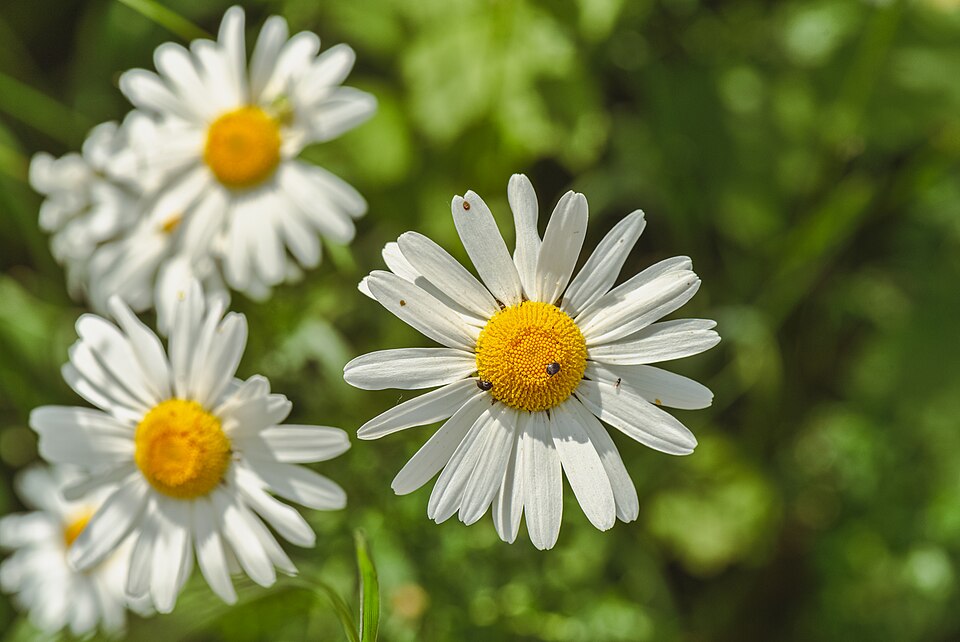
Leucanthemum vulgare, commonly known as the Oxeye Daisy, is a widespread perennial herbaceous flowering plant belonging to the Asteraceae family. This iconic wildflower is indigenous to Europe and parts of Asia, and has naturalized across North America, thriving in a diverse range of habitats including meadows, roadsides, and disturbed areas. Botanically, it is characterized by its upright, often solitary flowering stems that typically reach heights between 30 and 90 centimeters. The leaves are arranged alternately along the stem; basal leaves are spatulate to obovate with toothed or lobed margins and long stalks, while stem leaves become progressively smaller, sessile, and deeply divided into narrow, linear lobes higher up the stem.
The most striking feature of Leucanthemum vulgare is its solitary, daisy-like composite inflorescence, comprising numerous ray florets and disc florets. The 20 to 30 pure white, elongated, strap-shaped ray florets radiate outwards, resembling petals, each typically 1.5 to 2.5 centimeters long. The central disc florets are numerous, small, and typically yellowish, forming a dense, button-like center. The plant flowers profusely from late spring through summer, often extending into early autumn, attracting a wide array of pollinators like bees and butterflies.
Following pollination, the flower heads develop into small, dark, ribbed achenes. Leucanthemum vulgare is known for its resilience and adaptability, tolerating various soil types, from sandy to clayey, and preferring well-drained conditions. Despite its aesthetic appeal and widespread presence, it can be considered an agricultural weed due to its vigorous growth and ability to outcompete desirable crops, highlighting its robust ecological adaptability.
Trusted Scientific References
1. Authoritative external sources for Leucanthemum Vulgare
1.1 Wikipedia — Leucanthemum Vulgare
1.2 Kew POWO (Plants of the World Online)
1.3 PubMed — peer-reviewed research
1.4 NCBI Taxonomy Browser
1.5 GBIF — Global Biodiversity
1.1.Leucanthemum Vulgare — Key Features
- ✓ <strong>Botanical Name</strong> — Leucanthemum vulgare.
- ✓ <strong>Common Name</strong> — Oxeye Daisy, Moon Daisy, Marguerite.
- ✓ <strong>Family</strong> — Asteraceae (Daisy family).
- ✓ <strong>Appearance</strong> — White ray florets, yellow disc florets, on upright stems.
- ✓ <strong>Habitat</strong> — Meadows, roadsides, disturbed areas.
- ✓ <strong>Medicinal Actions</strong> — Anti-inflammatory, antispasmodic, astringent, diuretic.
- ✓ <strong>Key Constituents</strong> — Flavonoids, sesquiterpenes, tannins.
- ✓ <strong>Traditional Uses</strong> — Digestive aid, skin tonic, mild sedative.
- ✓ <strong>Growth Habit</strong> — Perennial, can be invasive.
- ✓ <strong>Pollinators</strong> — Attracts bees and butterflies.
1.2.Leucanthemum Vulgare — Quick Summary
- ✓ Oxeye Daisy: Leucanthemum vulgare, a perennial wildflower.
- ✓ Traditional Uses: Anti-inflammatory, antispasmodic, diuretic, wound healing.
- ✓ Key Compounds: Flavonoids, sesquiterpenes, tannins.
- ✓ Cultivation: Easy to grow, but can be invasive; deadhead to control spread.
- ✓ Safety: Avoid during pregnancy; potential for allergies in Asteraceae-sensitive individuals.
- ✓ Benefits: Supports digestion, calms nerves, aids skin health.
2.Leucanthemum Vulgare — Scientific Identity
3.Leucanthemum Vulgare — Quick Facts
4.Leucanthemum Vulgare — Appearance & Identification
5.Leucanthemum Vulgare — Native Habitat
6.Leucanthemum Vulgare — Water Requirements
- ✓ Site Selection — Prefers full sun to partial shade; ensure well-drained soil to prevent root rot.
- ✓ Soil Preparation — Thrives in average, well-drained soil; tolerates various pH levels from acidic to neutral.
- ✓ Planting — Direct sow seeds in spring after the last frost or in warmer climates, in the fall. Plant seeds about ¼ inch deep.
- ✓ Watering — Keep young plants consistently moist; established plants are drought-tolerant and require minimal watering.
- ✓ Fertilization — Generally does not require fertilization; excessive nitrogen can promote leaf growth over flowers.
- ✓ Pruning — Deadhead spent flowers regularly to encourage more blooms and prevent self-seeding, which can lead to invasiveness.
- ✓ Propagation — Propagates readily from seeds or by dividing clumps every 2-3 years in early spring to maintain vigor.
- ✓ Container Growing — Can be grown in large, heavy containers to manage its aggressive spread; requires more frequent watering than in-ground plants.
Reviewed by the Flora Medical Global Botanical Review Panel
Multi-disciplinary editorial group · Botany · Ethnobotany · Herbal-medicine literature
Who reviewed this: This page was checked by the Flora Medical Global Botanical Review Panel — an in-house editorial group of botany graduates, ethnobotany researchers, and horticulture practitioners who collectively maintain our 7,000+ plant encyclopedia. Meet the team.
Our 4-step verification process
1. Taxonomic verification
Scientific names and synonyms cross-checked against Kew POWO, World Flora Online, and The Plant List.
2. Phytochemical & medicinal cross-reference
Active compounds, traditional uses, and reported activities are cross-referenced with PubMed, USDA Dr. Duke's database, and peer-reviewed ethnobotanical literature.
3. Conservation & distribution check
Distribution, ecology, and conservation status confirmed against GBIF occurrence records and the IUCN Red List.
4. Editorial & safety review
Every entry passes an editorial pass for clarity, originality, and safety notices (toxicity, contraindications, dosage caveats) before publication.
Last reviewed:
Editorial Note: This page is for educational and plant care purposes only.
Written by: Flora Medical Global Editorial Team
Reviewed by: Flora Medical Global Botanical Review Panel
Last Updated: June 15, 2026







Leucanthemum Vulgare — Comments & Community Reviews
Rate this plant