
Care Disclaimer: Plant care recommendations are general guidelines based on common growing conditions. Individual results may vary based on your local environment, climate, and care routine. If your plant is toxic, keep it away from children and pets, and consult a veterinarian if accidental ingestion occurs.
1.Leucothoe — Overview
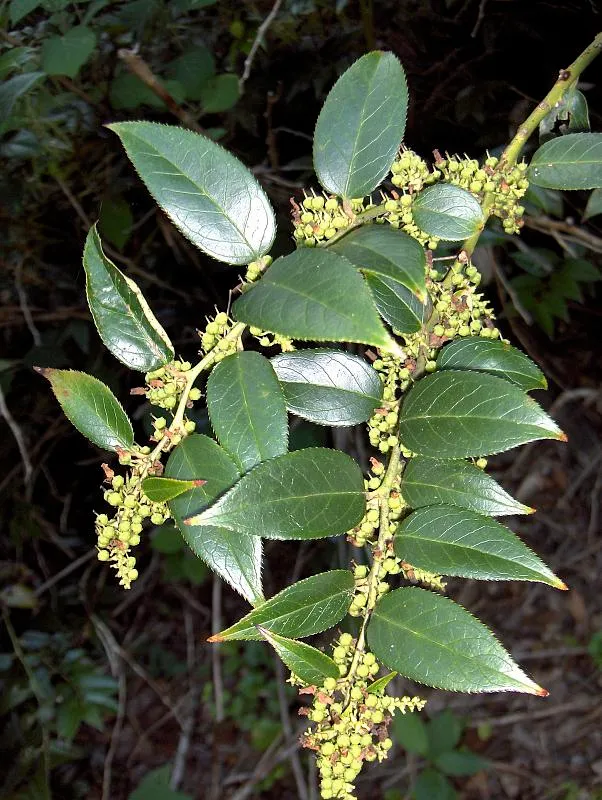
Leucothoe fontanesiana, commonly known as Drooping Leucothoe, Highland Doghobble, or Coastal Leucothoe, is an elegant evergreen shrub belonging to the Ericaceae family, native to the southeastern United States, particularly the Appalachian Mountains. Its taxonomic classification places it within a family renowned for acid-loving plants, including rhododendrons and azaleas. This species is characterized by a graceful, arching growth habit, typically reaching heights of 3 to 6 feet and a similar spread, forming dense, multi-stemmed colonies.
The foliage is a key ornamental feature, consisting of glossy, lance-shaped leaves, 3-6 inches long, with finely serrated margins. These leaves emerge with a bronze or reddish tint, mature to a deep, lustrous dark green, and often transition to striking purplish-bronze hues in colder months, providing year-round visual interest.
In late spring, usually from April to May, Leucothoe fontanesiana produces pendulous clusters of small, urn-shaped to bell-shaped white flowers. These delicate inflorescences, up to 3 inches long, hang gracefully from the leaf axils along the undersides of the branches, creating a subtle yet charming display. While not overtly showy, the flowers emit a faint, sweet fragrance and attract various pollinators, including bees and butterflies.
Following successful pollination, small, inconspicuous dry capsules develop, which are not considered ornamentally significant. The plant thrives in partial to full shade conditions, preferring consistently moist, well-drained, and acidic soils rich in organic matter. Its natural habitat includes stream banks, moist woodlands, and rocky slopes, where it often forms dense undergrowth, providing excellent cover for wildlife.
The common name 'Doghobble' is thought to derive from its dense, intertwining branches that could 'hobble' a dog or other small animal attempting to pass through.
Trusted Scientific References
1. Authoritative external sources for Leucothoe fontanesiana
1.1 Wikipedia — Leucothoe fontanesiana
1.2 Kew POWO (Plants of the World Online)
1.3 PubMed — peer-reviewed research
1.4 NCBI Taxonomy Browser
1.5 GBIF — Global Biodiversity
1.1.Leucothoe — Key Features
- ✓ <strong>Evergreen Foliage</strong> — Retains glossy, dark green leaves year-round, turning bronze/purple in winter.
- ✓ <strong>Arching Growth Habit</strong> — Graceful, fountain-like form with pendulous branches.
- ✓ <strong>Shade Tolerant</strong> — Thrives in partial to full shade, ideal for woodland settings.
- ✓ <strong>Acid</strong> — Loving Plant — Prefers acidic soil conditions.
- ✓ <strong>Fragrant White Flowers</strong> — Small, bell-shaped blooms in spring.
- ✓ <strong>Low Maintenance</strong> — Once established, requires minimal care.
- ✓ <strong>Deer Resistant</strong> — Generally not browsed by deer.
- ✓ <strong>Native to Southeastern US</strong> — Well-adapted to regional climates.
- ✓ <strong>Provides Wildlife Cover</strong> — Dense foliage offers shelter for small animals.
- ✓ <strong>Toxic Plant</strong> — All parts are poisonous if ingested, primarily due to grayanotoxins.
1.2.Leucothoe — Quick Summary
- ✓ Leucothoe fontanesiana is a toxic evergreen shrub, known for its ornamental value.
- ✓ Contains grayanotoxins, making all parts poisonous if ingested.
- ✓ Offers year-round beauty in shade gardens with glossy, colorful foliage and delicate spring flowers.
- ✓ Historically, some external uses by indigenous groups, but modern internal use is contraindicated.
- ✓ Requires moist, acidic, well-drained soil and partial to full shade for optimal growth.
- ✓ Primarily valued for landscape design and providing wildlife habitat.
2.Leucothoe — Scientific Identity
3.Leucothoe — Quick Facts
4.Leucothoe — Appearance & Identification
5.Leucothoe — Native Habitat
6.Leucothoe — Water Requirements
- ✓ Site Selection — Choose a location with partial to full shade; avoid harsh afternoon sun which can scorch leaves.
- ✓ Soil Preparation — Ensure soil is acidic (pH 4.5-6.0), rich in organic matter, consistently moist, and well-drained.
- ✓ Watering — Requires regular watering, especially during dry periods; do not allow the soil to dry out completely.
- ✓ Fertilization — Apply an acid-loving plant fertilizer in early spring, following manufacturer's instructions.
- ✓ Pruning — Minimal pruning is needed; remove dead, damaged, or crossing branches after flowering to maintain shape.
- ✓ Mulching — Apply a 2-4 inch layer of organic mulch (pine bark, compost) to retain moisture, suppress weeds, and regulate soil temperature.
- ✓ Pest and Disease Management — Generally resistant, but monitor for leaf spot in overly wet conditions and ensure good air circulation.
- ✓ Propagation — Can be propagated by semi-hardwood cuttings taken in summer or by seed, though seed germination can be slow and erratic.
Reviewed by the Flora Medical Global Botanical Review Panel
Multi-disciplinary editorial group · Botany · Ethnobotany · Herbal-medicine literature
Who reviewed this: This page was checked by the Flora Medical Global Botanical Review Panel — an in-house editorial group of botany graduates, ethnobotany researchers, and horticulture practitioners who collectively maintain our 7,000+ plant encyclopedia. Meet the team.
Our 4-step verification process
1. Taxonomic verification
Scientific names and synonyms cross-checked against Kew POWO, World Flora Online, and The Plant List.
2. Phytochemical & medicinal cross-reference
Active compounds, traditional uses, and reported activities are cross-referenced with PubMed, USDA Dr. Duke's database, and peer-reviewed ethnobotanical literature.
3. Conservation & distribution check
Distribution, ecology, and conservation status confirmed against GBIF occurrence records and the IUCN Red List.
4. Editorial & safety review
Every entry passes an editorial pass for clarity, originality, and safety notices (toxicity, contraindications, dosage caveats) before publication.
Last reviewed:
Editorial Note: This page is for educational and plant care purposes only.
Written by: Flora Medical Global Editorial Team
Reviewed by: Flora Medical Global Botanical Review Panel
Last Updated: June 15, 2026







Leucothoe — Comments & Community Reviews
Rate this plant