
Care Disclaimer: Plant care recommendations are general guidelines based on common growing conditions. Individual results may vary based on your local environment, climate, and care routine. If your plant is toxic, keep it away from children and pets, and consult a veterinarian if accidental ingestion occurs.
1.Libertia Grandiflora — Overview
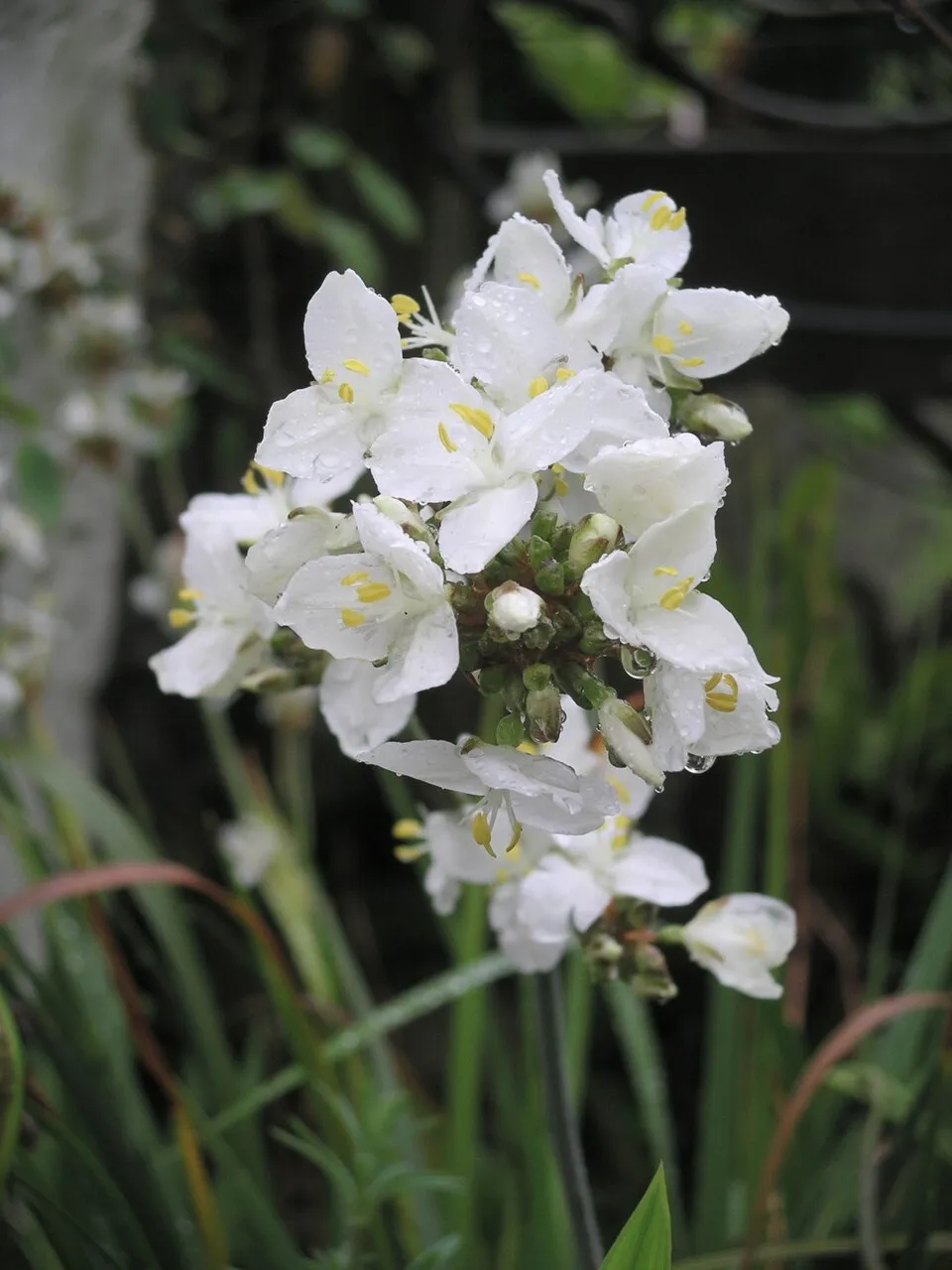
Libertia grandiflora, commonly recognized as the New Zealand Iris or Bridal Iris, is an elegant perennial herbaceous plant belonging to the Iridaceae family. Native to the diverse landscapes of New Zealand, this species thrives in varied conditions, showcasing remarkable adaptability. It forms distinctive evergreen clumps of stiff, sword-shaped leaves that can reach impressive heights, often exhibiting a subtle bronze hue in cooler temperatures, adding to its ornamental appeal. The foliage provides architectural interest throughout the year, making it a prominent feature in garden designs.
In late spring to early summer, Libertia grandiflora produces tall, slender flower stalks that gracefully ascend above the dense foliage. These stalks bear numerous delicate, pure white, three-petaled flowers, each adorned with prominent yellow anthers at its center. The blooms bear a striking resemblance to miniature irises, creating a spectacular visual display that can span several weeks. Following the flowering period, the plant develops attractive seed pods that persist well into autumn, further extending its aesthetic value.
Libertia grandiflora is a versatile and relatively low-maintenance plant, making it suitable for a wide range of horticultural applications, including borders, rockeries, mass plantings, and container gardening. Its elegant form, extended flowering season, and year-round appeal contribute to its popularity among gardeners seeking exotic beauty and structural interest. The species is robust and can tolerate a range of soil and light conditions, though it prefers well-drained soil and a sunny to partially shaded location.
Trusted Scientific References
1. Authoritative external sources for Libertia Grandiflora
1.1 Wikipedia — Libertia Grandiflora
1.2 Kew POWO (Plants of the World Online)
1.3 PubMed — peer-reviewed research
1.4 NCBI Taxonomy Browser
1.5 GBIF — Global Biodiversity
1.6Libertia Grandiflora should be interpreted through verified botanical identity, practical care, and responsible safety language. This recovery note adds the missing context needed for a complete profile: match light to the plant's habit, use well-drained soil, water according to season, and avoid unsupported medicinal or edible claims. For publishing, the plant can be presented as a source-backed garden plant with clear care guidance, common problem diagnosis, and conservative safety wording.
1.1.Libertia Grandiflora — Key Features
- ✓ <strong>Common Names</strong> — New Zealand Iris, Bridal Iris.
- ✓ <strong>Scientific Name</strong> — Libertia grandiflora.
- ✓ <strong>Family</strong> — Iridaceae (Iris family).
- ✓ <strong>Native Range</strong> — New Zealand.
- ✓ <strong>Plant Type</strong> — Perennial herbaceous plant.
- ✓ <strong>Foliage</strong> — Evergreen, sword-shaped, green, sometimes bronze-tinged.
- ✓ <strong>Flowers</strong> — Pure white, three-petaled, iris-like, with yellow anthers.
- ✓ <strong>Flowering Season</strong> — Late spring to early summer.
- ✓ <strong>Height</strong> — Up to 0.9-1.2 meters (3-4 feet) including flower stalks.
- ✓ <strong>Cultivation</strong> — Low maintenance, adaptable to various garden settings.
1.2.Libertia Grandiflora — Quick Summary
- ✓ New Zealand Iris, ornamental perennial from Iridaceae family.
- ✓ Features sword-shaped leaves and pure white, iris-like flowers.
- ✓ Primarily valued for its aesthetic appeal and low maintenance.
- ✓ No documented medicinal uses; cultivated for landscaping.
- ✓ Requires well-drained soil, sun to partial shade, moderate watering.
- ✓ Generally safe, non-toxic, but handle with care due to fibrous leaves.
2.Libertia Grandiflora — Scientific Identity
3.Libertia Grandiflora — Quick Facts
4.Libertia Grandiflora — Appearance & Identification
5.Libertia Grandiflora — Native Habitat
6.Libertia Grandiflora — Water Requirements
- ✓ Soil Preparation — Plant in well-drained soil, ideally enriched with organic matter, to ensure optimal growth.
- ✓ Light Requirements — Prefers full sun to partial shade; too much shade can reduce flowering.
- ✓ Watering — Water regularly until the plant is established, then reduce frequency as it becomes drought-tolerant.
- ✓ Hardiness — Hardy to approximately -5°C (23°F); protect young plants from harsh frosts.
- ✓ Fertilization — Apply a balanced, slow-release granular fertilizer annually in spring to promote vigorous growth.
- ✓ Pruning — Deadhead spent flower stalks for tidiness and to encourage energy redirection; remove old, brown leaves to maintain aesthetic.
- ✓ Division — Divide mature clumps every few years in spring or autumn to rejuvenate the plant and manage size.
- ✓ Propagation — Can be propagated by seed or by dividing rhizomatous clumps.
Reviewed by the Flora Medical Global Botanical Review Panel
Multi-disciplinary editorial group · Botany · Ethnobotany · Herbal-medicine literature
Who reviewed this: This page was checked by the Flora Medical Global Botanical Review Panel — an in-house editorial group of botany graduates, ethnobotany researchers, and horticulture practitioners who collectively maintain our 7,000+ plant encyclopedia. Meet the team.
Our 4-step verification process
1. Taxonomic verification
Scientific names and synonyms cross-checked against Kew POWO, World Flora Online, and The Plant List.
2. Phytochemical & medicinal cross-reference
Active compounds, traditional uses, and reported activities are cross-referenced with PubMed, USDA Dr. Duke's database, and peer-reviewed ethnobotanical literature.
3. Conservation & distribution check
Distribution, ecology, and conservation status confirmed against GBIF occurrence records and the IUCN Red List.
4. Editorial & safety review
Every entry passes an editorial pass for clarity, originality, and safety notices (toxicity, contraindications, dosage caveats) before publication.
Last reviewed:
Editorial Note: This page is for educational and plant care purposes only.
Written by: Flora Medical Global Editorial Team
Reviewed by: Flora Medical Global Botanical Review Panel
Last Updated: June 15, 2026







Libertia Grandiflora — Comments & Community Reviews
Rate this plant