
Care Disclaimer: Plant care recommendations are general guidelines based on common growing conditions. Individual results may vary based on your local environment, climate, and care routine. If your plant is toxic, keep it away from children and pets, and consult a veterinarian if accidental ingestion occurs.
1.Ligularia Dentata — Overview
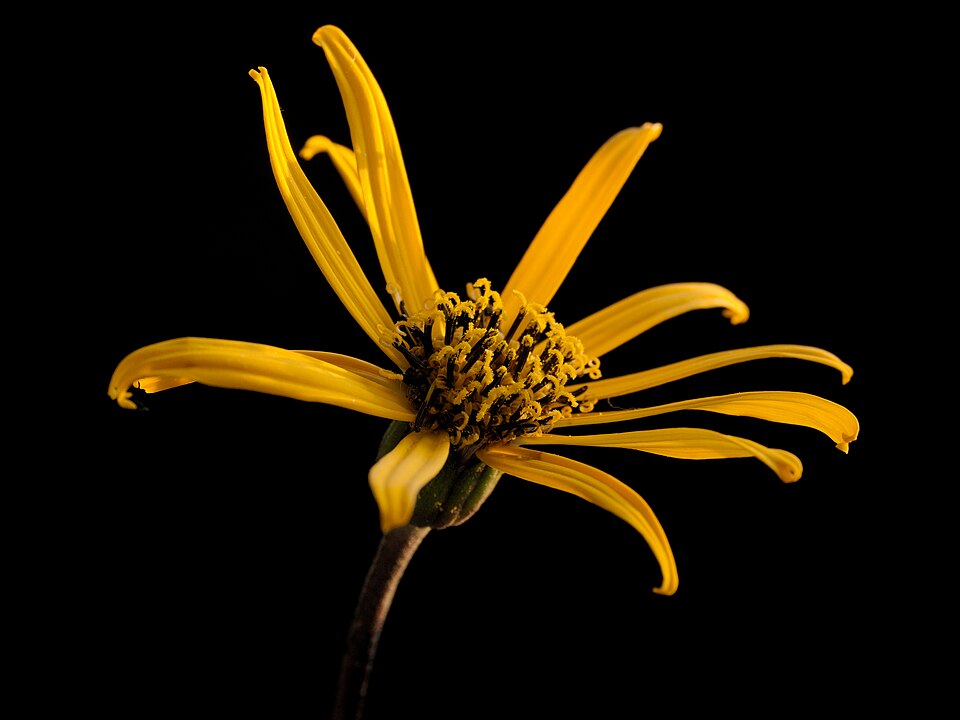
Ligularia dentata, universally known as Bigleaf Ligularia or Leopard Plant, is a striking herbaceous perennial belonging to the Asteraceae family. Native to the moist, forested regions of China and Japan, it is celebrated for its dramatic foliage and vibrant, daisy-like inflorescences. The plant typically forms robust clumps, reaching heights of 2 to 4 feet and spreading equally wide, making a bold statement in shaded garden settings. Its most distinguishing feature is the large, kidney-shaped to broadly ovate basal leaves, which can measure up to 12 inches across.
These leaves exhibit a range of colors, from deep green to rich purplish-bronze or even dark burgundy, depending on the cultivar, often with serrated or ruffled margins. In mid to late summer, tall, sturdy flower stalks emerge, rising well above the foliage, bearing terminal clusters of brilliant golden-orange to yellow ray and disc florets. These radiant blooms provide a spectacular contrast to the dark foliage, attracting pollinators like bees and butterflies. Ligularia dentata thrives in consistently moist, humus-rich soil and prefers partial to full shade, especially protection from intense afternoon sun, which can scorch its large leaves.
Its architectural form and exotic appearance make it a highly valued ornamental plant for woodland gardens, bog gardens, or along water features, where its moisture requirements can be naturally met. Despite its ornamental appeal, it is crucial to note its primary use is horticultural, with medicinal applications being highly cautioned due to the presence of toxic compounds.
Trusted Scientific References
1. Authoritative external sources for Ligularia dentata
1.1 Wikipedia — Ligularia dentata
1.2 Kew POWO (Plants of the World Online)
1.3 PubMed — peer-reviewed research
1.4 NCBI Taxonomy Browser
1.5 GBIF — Global Biodiversity
1.6Ligularia Dentata should be interpreted through verified botanical identity, practical care, and responsible safety language. This recovery note adds the missing context needed for a complete profile: match light to the plant's habit, use well-drained soil, water according to season, and avoid unsupported medicinal or edible claims. For publishing, the plant can be presented as a source-backed garden plant with clear care guidance, common problem diagnosis, and conservative safety wording.
1.1.Ligularia Dentata — Key Features
- ✓ <strong>Bold, kidney</strong> — shaped to ovate leaves up to 12 inches across.
- ✓ <strong>Foliage color ranges from green to purplish</strong> — bronze.
- ✓ <strong>Tall stalks bearing clusters of golden</strong> — orange to yellow daisy-like flowers.
- ✓ <strong>Blooms in mid</strong> — Blooms in mid to late summer, creating a dramatic visual.
- ✓ <strong>Prefers consistently moist, humus</strong> — rich soil.
- ✓ <strong>Thrives in partial</strong> — Thrives in partial to full shade, intolerant of dry conditions.
- ✓ <strong>Hardy in USDA Zones 4</strong> — 8.
- ✓ <strong>Contains toxic pyrrolizidine</strong> — Contains toxic pyrrolizidine alkaloids (PAs).
- ✓ <strong>Excellent for woodland</strong> — Excellent for woodland gardens, pond edges, or shady borders.
- ✓ <strong>Attracts bees and</strong> — Attracts bees and butterflies.
1.2.Ligularia Dentata — Quick Summary
- ✓ Highly ornamental perennial with bold foliage and vibrant flowers.
- ✓ Native to China and Japan, thrives in moist, shaded environments.
- ✓ Contains toxic pyrrolizidine alkaloids (PAs); strictly for ornamental use.
- ✓ Requires consistently moist soil and protection from afternoon sun.
- ✓ Attracts pollinators but is generally deer and rabbit resistant.
- ✓ Not recommended for any internal medicinal applications due to toxicity.
2.Ligularia Dentata — Scientific Identity
3.Ligularia Dentata — Quick Facts
4.Ligularia Dentata — Appearance & Identification
5.Ligularia Dentata — Native Habitat
6.Ligularia Dentata — Water Requirements
- ✓ Site Selection — Choose a location with partial to full shade, especially protected from harsh afternoon sun to prevent leaf scorch.
- ✓ Soil Requirements — Plant in consistently moist, rich, well-draining soil, ideally amended with organic matter to retain moisture.
- ✓ Watering — Requires frequent and consistent watering; soil should never be allowed to dry out completely. Suitable for bog gardens or near water features.
- ✓ Hardiness Zones — Thrives in USDA Hardiness Zones 4-8, with appropriate winter mulching in colder regions for root protection.
- ✓ Pruning — Deadhead spent flower spikes to encourage further blooming and remove any yellowing or damaged leaves to maintain plant vigor.
- ✓ Pest Management — Monitor for slugs and snails, which are attracted to the large leaves; use appropriate organic or chemical controls if infestations occur.
- ✓ Propagation — Primarily propagated by division in early spring or early autumn, as seeds may not come true to type and germination can be unreliable.
Reviewed by the Flora Medical Global Botanical Review Panel
Multi-disciplinary editorial group · Botany · Ethnobotany · Herbal-medicine literature
Who reviewed this: This page was checked by the Flora Medical Global Botanical Review Panel — an in-house editorial group of botany graduates, ethnobotany researchers, and horticulture practitioners who collectively maintain our 7,000+ plant encyclopedia. Meet the team.
Our 4-step verification process
1. Taxonomic verification
Scientific names and synonyms cross-checked against Kew POWO, World Flora Online, and The Plant List.
2. Phytochemical & medicinal cross-reference
Active compounds, traditional uses, and reported activities are cross-referenced with PubMed, USDA Dr. Duke's database, and peer-reviewed ethnobotanical literature.
3. Conservation & distribution check
Distribution, ecology, and conservation status confirmed against GBIF occurrence records and the IUCN Red List.
4. Editorial & safety review
Every entry passes an editorial pass for clarity, originality, and safety notices (toxicity, contraindications, dosage caveats) before publication.
Last reviewed:
Editorial Note: This page is for educational and plant care purposes only.
Written by: Flora Medical Global Editorial Team
Reviewed by: Flora Medical Global Botanical Review Panel
Last Updated: June 15, 2026







Ligularia Dentata — Comments & Community Reviews
Rate this plant