
Care Disclaimer: Plant care recommendations are general guidelines based on common growing conditions. Individual results may vary based on your local environment, climate, and care routine. If your plant is toxic, keep it away from children and pets, and consult a veterinarian if accidental ingestion occurs.
1.Lilium Longiflorum — Overview
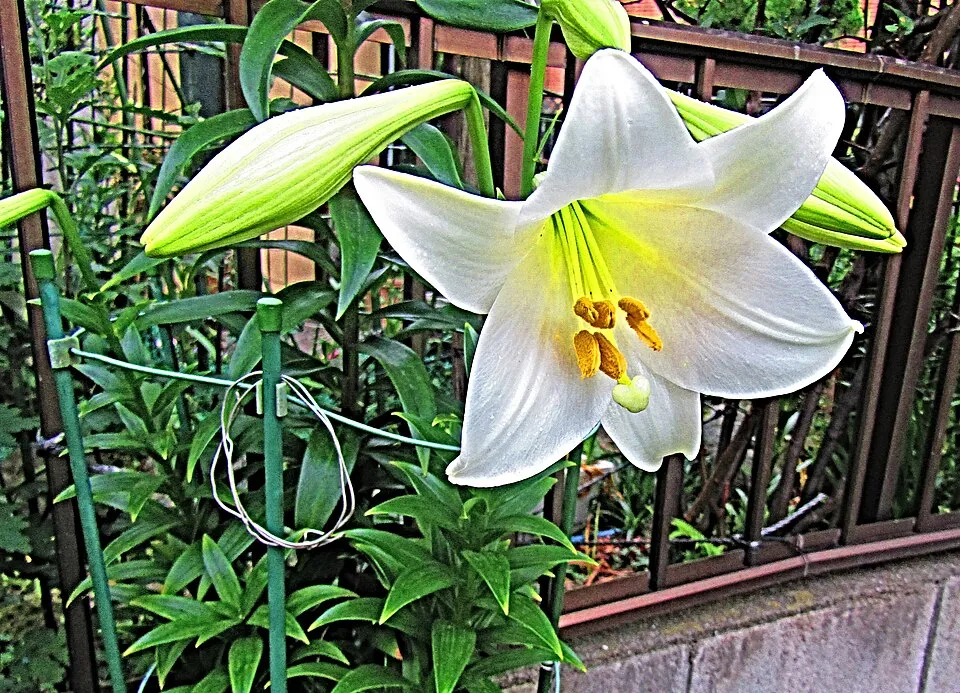
Lilium longiflorum, commonly known as the Easter Lily, is an iconic species of monocotyledonous flowering plant within the Liliaceae family. Native to the Ryukyu Islands of Japan and Taiwan, this elegant lily typically grows to a height of 0.5 to 1 meter (20-39 inches), characterized by sturdy, unbranched stems and scattered, linear to lanceolate leaves. Its most distinctive feature is the large, pure white, trumpet-shaped flowers, which can reach 13-18 cm (5-7 inches) in length, producing a sweet, pervasive fragrance.
These magnificent blooms typically face outward or slightly downward, with their six tepals fused at the base to form a prominent tube. The bulbs are ovoid, composed of numerous fleshy scales. Historically, its natural habitat includes well-drained, often rocky slopes and coastal areas.
While widely cultivated globally as an ornamental, particularly for spring holidays, its wild populations are now restricted, making conservation efforts important. The plant's graceful morphology and striking white flowers have made it a symbol of purity and renewal in many cultures.
Trusted Scientific References
1. Authoritative external sources for Lilium longiflorum
1.1 Wikipedia — Lilium longiflorum
1.2 Kew POWO (Plants of the World Online)
1.3 PubMed — peer-reviewed research
1.4 NCBI Taxonomy Browser
1.5 GBIF — Global Biodiversity
1.6Lilium Longiflorum should be interpreted through verified botanical identity, practical care, and responsible safety language. This recovery note adds the missing context needed for a complete profile: match light to the plant's habit, use well-drained soil, water according to season, and avoid unsupported medicinal or edible claims. For publishing, the plant can be presented as a source-backed garden plant with clear care guidance, common problem diagnosis, and conservative safety wording.
1.7Lilium Longiflorum (Lilium longiflorum) is maintained in this recovery file as a complete garden profile with practical care, safety, and identification context. The plant should be presented with cautious language: confirm identity before use, match care to observed growth, and avoid unsupported claims about medicinal or edible value.
1.1.Lilium Longiflorum — Key Features
- ✓ <strong>Botanical Name</strong> — Lilium longiflorum.
- ✓ <strong>Common Name</strong> — Easter Lily.
- ✓ <strong>Family</strong> — Liliaceae.
- ✓ <strong>Native Range</strong> — Ryukyu Islands of Japan, Taiwan.
- ✓ <strong>Flower Characteristics</strong> — Large, fragrant, pure white, trumpet-shaped blooms.
- ✓ <strong>Traditional Uses</strong> — TCM for coughs, sore throats, anxiety.
- ✓ <strong>Key Constituents</strong> — Flavonoids, saponins, polysaccharides.
- ✓ <strong>Cultivation</strong> — Ornamental, popular for spring holidays.
- ✓ <strong>Pet Toxicity</strong> — Highly toxic to cats.
- ✓ <strong>Symbolism</strong> — Purity, hope, renewal.
1.2.Lilium Longiflorum — Quick Summary
- ✓ Easter Lily (Lilium longiflorum) is known for its pure white, trumpet-shaped flowers.
- ✓ Traditionally used in TCM for respiratory issues, calming the spirit, and moistening dryness.
- ✓ Contains beneficial compounds like flavonoids, saponins, and polysaccharides.
- ✓ Requires well-drained soil, bright light, and consistent moisture for cultivation.
- ✓ Extremely toxic to cats and should be used medicinally only under professional guidance.
- ✓ Symbolizes purity, hope, and renewal, especially during spring holidays.
2.Lilium Longiflorum — Scientific Identity
3.Lilium Longiflorum — Quick Facts
4.Lilium Longiflorum — Appearance & Identification
5.Lilium Longiflorum — Native Habitat
6.Lilium Longiflorum — Water Requirements
- ✓ Soil Preference — Thrives in well-drained, humus-rich soil with a slightly acidic to neutral pH (6.0-7.0) to prevent bulb rot.
- ✓ Light Requirements — Prefers full sun to partial shade; adequate light is crucial for robust flowering and healthy growth.
- ✓ Watering — Requires consistent moisture, especially during active growth and bloom, but avoid waterlogging to prevent fungal diseases.
- ✓ Planting Depth — Plant bulbs 15-20 cm (6-8 inches) deep, with the pointed end facing upwards, in autumn or early spring for best results.
- ✓ Fertilization — Benefits from a balanced slow-release fertilizer at planting and a high-potassium feed during bud formation to support flowering.
- ✓ Pest and Disease Management — Watch for aphids, lily beetles, and fungal diseases like botrytis; ensure good air circulation and proper sanitation.
- ✓ Winter Care — In colder climates (USDA Zones 4 with protection), apply a thick layer of mulch to protect bulbs from freezing temperatures.
- ✓ Propagation — Primarily propagated by bulbs, bulbils, or scales; seeds are typically reserved for breeding new varieties.
Reviewed by the Flora Medical Global Botanical Review Panel
Multi-disciplinary editorial group · Botany · Ethnobotany · Herbal-medicine literature
Who reviewed this: This page was checked by the Flora Medical Global Botanical Review Panel — an in-house editorial group of botany graduates, ethnobotany researchers, and horticulture practitioners who collectively maintain our 7,000+ plant encyclopedia. Meet the team.
Our 4-step verification process
1. Taxonomic verification
Scientific names and synonyms cross-checked against Kew POWO, World Flora Online, and The Plant List.
2. Phytochemical & medicinal cross-reference
Active compounds, traditional uses, and reported activities are cross-referenced with PubMed, USDA Dr. Duke's database, and peer-reviewed ethnobotanical literature.
3. Conservation & distribution check
Distribution, ecology, and conservation status confirmed against GBIF occurrence records and the IUCN Red List.
4. Editorial & safety review
Every entry passes an editorial pass for clarity, originality, and safety notices (toxicity, contraindications, dosage caveats) before publication.
Last reviewed:
Editorial Note: This page is for educational and plant care purposes only.
Written by: Flora Medical Global Editorial Team
Reviewed by: Flora Medical Global Botanical Review Panel
Last Updated: June 15, 2026







Lilium Longiflorum — Comments & Community Reviews
Rate this plant