

Care Disclaimer: Plant care recommendations are general guidelines based on common growing conditions. Individual results may vary based on your local environment, climate, and care routine. If your plant is toxic, keep it away from children and pets, and consult a veterinarian if accidental ingestion occurs.
1.Lisianthus — Overview
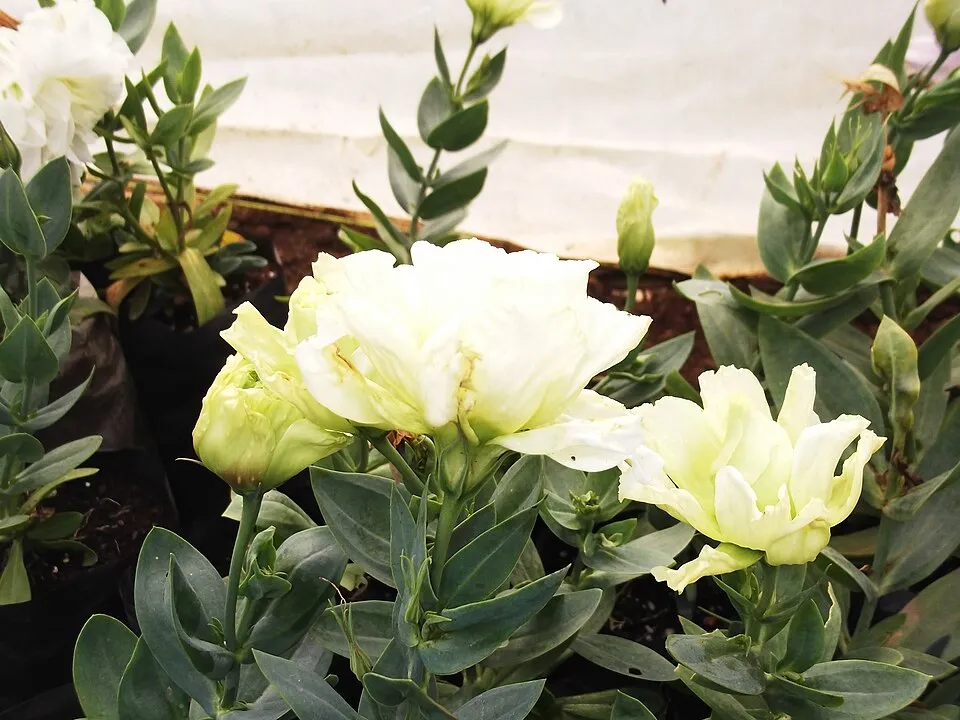
Lisianthus, scientifically designated as Eustoma grandiflorum, is a captivating herbaceous plant renowned for its exquisite, rose-like blossoms and exceptional vase life, making it a highly prized botanical in floriculture. Native to the warm regions spanning the southern United States, Mexico, the Caribbean, and northern South America, it flourishes as a perennial in its indigenous habitats but is frequently cultivated as an annual in cooler climates. This species belongs to the Gentianaceae family, a group often characterized by bitter-tasting plants and strikingly vibrant floral displays. The common name 'Lisianthus' originates from the Greek words 'lysis' (dissolution) and 'anthos' (flower), although it is more commonly believed to be derived from 'lis' (smooth) and 'anthos' (flower), referring to its delicate petals. It is also affectionately known as 'Texas Bluebell' due to its geographical origins and a superficial resemblance to traditional bluebells.
Eustoma grandiflorum typically achieves a height of 1 to 2 feet (30-60 cm), showcasing an elegant, upright growth habit. Its foliage consists of smooth, glaucous (grayish-green), lance-shaped leaves arranged oppositely along the stems, forming a subtle yet attractive backdrop for the prominent flowers. The blooms are the plant's most defining feature, celebrated for their delicate, almost papery petals that unfurl into a stunning spectrum of colors. While wild forms often display shades of lavender and purple, cultivated varieties boast an astonishing array including pure white, various pinks, deep rose, vibrant fuchsia, apricot, yellow, and even intricate bi-colored or picoteed patterns. Flowers can be single or double, with double forms often presenting a ruffled, multi-layered appearance strikingly similar to a classic rose, often accompanied by a subtle, sweet fragrance that varies in intensity among different cultivars.
The blooming period extends from early summer through autumn, ensuring a prolonged display of beauty. The plant's architecture is optimized for producing multiple blooms per stem, with buds opening sequentially, thereby extending the overall flowering season. Each fully opened flower can measure several inches across, contributing significantly to its ornamental appeal. Trusted Scientific References Authoritative external sources for Eustoma grandiflorum : Wikipedia — Eustoma grandiflorum Kew POWO (Plants of the World Online) PubMed — peer-reviewed research NCBI Taxonomy Browser G ...[CURRENT TEXT EXISTS: 2525 chars]
1.1.Lisianthus — Key Features
- ✓ <strong>Rose</strong> — like Blooms — Large, delicate flowers resembling roses or peonies.
- ✓ <strong>Long Vase Life</strong> — Highly valued as a cut flower for its extended freshness.
- ✓ <strong>Diverse Color Palette</strong> — Available in white, pink, purple, yellow, and bi-colors.
- ✓ <strong>Gentianaceae Family</strong> — Belongs to a family known for bitter compounds.
- ✓ <strong>Ornamental Value</strong> — Prized for its aesthetic appeal in gardens and arrangements.
- ✓ <strong>Herbaceous Perennial/Annual</strong> — Perennial in warm zones, often annual elsewhere.
- ✓ <strong>Native to Warm Climates</strong> — Thrives in sunny, well-draining conditions.
- ✓ <strong>Distinct Foliage</strong> — Glaucous, lance-shaped leaves provide textural contrast.
- ✓ <strong>Extended Bloom Period</strong> — Flowers from early summer through fall.
- ✓ <strong>Moderate Height</strong> — Typically grows 1-2 feet tall, suitable for borders or containers.
1.2.Lisianthus — Quick Summary
- ✓ Exquisite rose-like blooms, popular in floristry.
- ✓ Native to southern North and Central America.
- ✓ Contains iridoid glycosides and flavonoids.
- ✓ Traditional uses include digestive and anti-inflammatory support.
- ✓ Grown as an annual in most temperate climates.
- ✓ Requires full sun, well-drained soil, and consistent moisture.
2.Lisianthus — Scientific Identity
3.Lisianthus — Quick Facts
4.Lisianthus — Appearance & Identification
5.Lisianthus — Native Habitat
6.Lisianthus — Water Requirements
- ✓ Seed Starting — Start seeds indoors 10-12 weeks before the last frost, as they are slow to germinate and mature.
- ✓ Light Requirements — Prefers full sun (6-8 hours daily) but benefits from afternoon shade in very hot climates.
- ✓ Soil Preference — Thrives in rich, well-draining soil with a neutral pH (6.5-7.0); avoid waterlogged conditions.
- ✓ Watering — Keep soil consistently moist but not soggy; about 1 inch of water per week, allowing slight drying between waterings.
- ✓ Fertilization — Feed regularly with a high-phosphorus flower fertilizer throughout the growing season to encourage abundant blooms.
- ✓ Temperature & Humidity — Prefers warm environments (60-75°F) and low humidity; hardy in USDA zones 8-10, often grown as an annual elsewhere.
- ✓ Pinching & Deadheading — Pinch back young plants to encourage branching; deadhead spent blooms to promote continuous flowering.
- ✓ Pest & Disease Management — Generally robust, but watch for fungal diseases in humid conditions and common garden pests.
Reviewed by the Flora Medical Global Botanical Review Panel
Multi-disciplinary editorial group · Botany · Ethnobotany · Herbal-medicine literature
Who reviewed this: This page was checked by the Flora Medical Global Botanical Review Panel — an in-house editorial group of botany graduates, ethnobotany researchers, and horticulture practitioners who collectively maintain our 7,000+ plant encyclopedia. Meet the team.
Our 4-step verification process
1. Taxonomic verification
Scientific names and synonyms cross-checked against Kew POWO, World Flora Online, and The Plant List.
2. Phytochemical & medicinal cross-reference
Active compounds, traditional uses, and reported activities are cross-referenced with PubMed, USDA Dr. Duke's database, and peer-reviewed ethnobotanical literature.
3. Conservation & distribution check
Distribution, ecology, and conservation status confirmed against GBIF occurrence records and the IUCN Red List.
4. Editorial & safety review
Every entry passes an editorial pass for clarity, originality, and safety notices (toxicity, contraindications, dosage caveats) before publication.
Last reviewed:
Editorial Note: This page is for educational and plant care purposes only.
Written by: Flora Medical Global Editorial Team
Reviewed by: Flora Medical Global Botanical Review Panel
Last Updated: June 15, 2026







Lisianthus — Comments & Community Reviews
Rate this plant