

Care Disclaimer: Plant care recommendations are general guidelines based on common growing conditions. Individual results may vary based on your local environment, climate, and care routine. If your plant is toxic, keep it away from children and pets, and consult a veterinarian if accidental ingestion occurs.
1.Litchi Tree — Overview
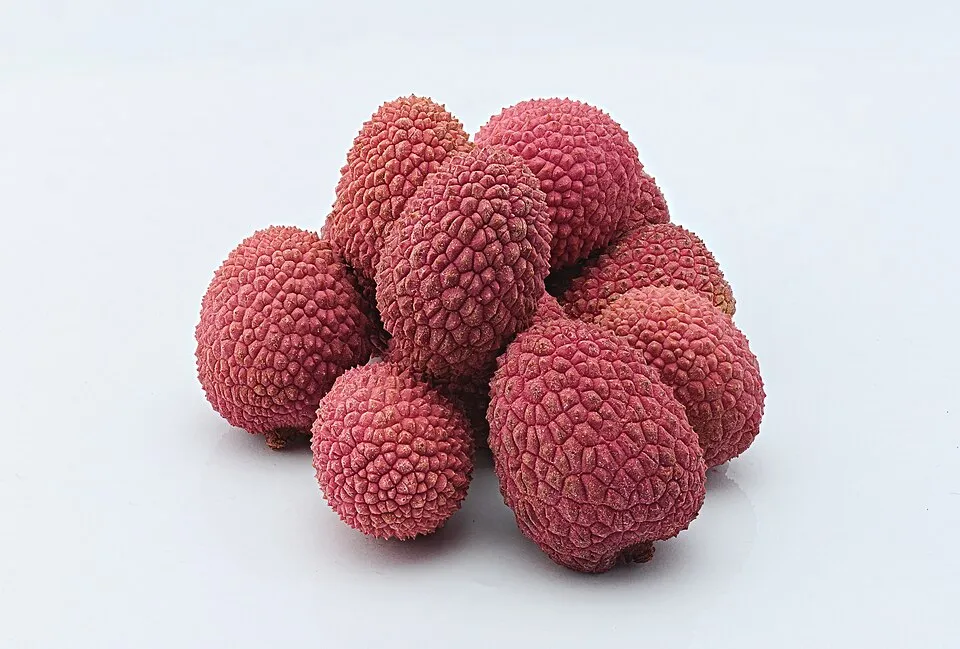
The Litchi Tree, botanically known as Litchi chinensis, is a magnificent tropical evergreen tree belonging to the Sapindaceae family. Indigenous to the warm, humid regions of southeastern China, specifically the Guangdong and Fujian provinces, it is a medium-sized arboreal species typically reaching heights of 15 to 20 meters. Its morphology is characterized by a dense, rounded canopy adorned with glossy, pinnately compound leaves that maintain their vibrant green hue year-round.
In spring, the tree produces numerous small, inconspicuous yet fragrant flowers, clustered in large, terminal panicles, which are critical for fruit development. These flowers give way to the tree's most celebrated feature: the litchi fruit. Each fruit is a drupe, roughly ovoid to heart-shaped, encased in a distinctive rough, leathery, reddish-pink pericarp that is easily peeled.
Beneath this skin lies a translucent, succulent white aril, offering a sweet and subtly tart flavor profile, enveloping a single, glossy dark brown seed. Cultivation of Litchi chinensis dates back millennia, deeply embedded in East Asian agriculture and culture, revered globally for its unique taste and aromatic qualities, making it a highly prized fruit in both culinary and traditional medicinal contexts. Its adaptability to subtropical climates has led to its spread and cultivation in various warm regions worldwide.
Trusted Scientific References
1. Authoritative external sources for Litchi chinensis
1.1 Wikipedia — Litchi chinensis
1.2 Kew POWO (Plants of the World Online)
1.3 PubMed — peer-reviewed research
1.4 NCBI Taxonomy Browser
1.5 GBIF — Global Biodiversity
1.6Litchi Tree should be interpreted through verified botanical identity, practical care, and responsible safety language. This recovery note adds the missing context needed for a complete profile: match light to the plant's habit, use well-drained soil, water according to season, and avoid unsupported medicinal or edible claims. For publishing, the plant can be presented as a source-backed garden plant with clear care guidance, common problem diagnosis, and conservative safety wording.
1.1.Litchi Tree — Key Features
- ✓ <strong>Native to Southeast</strong> — Native to Southeast China, subtropical evergreen tree.
- ✓ <strong>Produces small, fragrant</strong> — Produces small, fragrant flowers in panicles.
- ✓ <strong>Prized for its sweet, translucent, white</strong> — fleshed fruit.
- ✓ <strong>Fruit encased in rough, reddish</strong> — pink, easily peelable skin.
- ✓ <strong>Excellent source of</strong> — Excellent source of Vitamin C and diverse polyphenols.
- ✓ <strong>Possesses strong antioxidant and anti</strong> — inflammatory properties.
- ✓ <strong>Traditional uses include</strong> — Traditional uses include treating coughs and gastric ulcers.
- ✓ <strong>Requires warm, humid</strong> — Requires warm, humid climate with distinct chill hours.
- ✓ <strong>Seeds contain saponins</strong> — Seeds contain saponins and other bioactive compounds.
- ✓ <strong>Globally appreciated for</strong> — Globally appreciated for its unique flavor and health benefits.
1.2.Litchi Tree — Quick Summary
- ✓ Litchi chinensis is a tropical evergreen tree native to China, prized for its sweet, aromatic fruit.
- ✓ Rich in Vitamin C, polyphenols (quercetin, proanthocyanidins), and minerals, offering significant antioxidant and anti-inflammatory benefits.
- ✓ Supports cardiovascular health, boosts immunity, aids digestion, and may have anti-cancer properties.
- ✓ Unripe fruit contains toxins (hypoglycin A, MCPG) that can cause severe hypoglycemia, particularly in children.
- ✓ Consume only ripe fruit in moderation and avoid on an empty stomach to ensure safety.
- ✓ Cultivated globally in subtropical regions, requiring specific climate conditions for optimal growth.
2.Litchi Tree — Scientific Identity
3.Litchi Tree — Quick Facts
4.Litchi Tree — Appearance & Identification
5.Litchi Tree — Native Habitat
6.Litchi Tree — Water Requirements
- ✓ Climate — Thrives in subtropical climates with warm, humid conditions and requires a minimum of 100 chill hours (0-7°C) for optimal flowering and fruiting.
- ✓ Soil — Prefers well-drained, slightly acidic soil (pH 5.0-6.5); amending with organic matter like pine bark or needles is beneficial.
- ✓ Light — Requires full sun exposure for best fruit production, though young plants need acclimation to direct sunlight.
- ✓ Watering — Needs consistent, ample watering, especially during dry periods; young trees require frequent watering, while mature trees need weekly watering.
- ✓ Fertilization — Feed with a balanced, weak liquid fertilizer during growing seasons (spring/summer) or use well-rotted compost around the drip line.
- ✓ Pruning — Prune immediately after harvest to encourage new growth and subsequent fruiting; aggressive pruning can maintain a smaller, more manageable size.
- ✓ Propagation — Primarily propagated commercially via air-layering for consistent fruit quality; growing from seed is possible but takes longer to fruit and may not be true to type.
- ✓ Pest & Disease Management — Monitor for common pests like scale insects and mites, and fungal diseases; ensure good air circulation and proper sanitation.
Reviewed by the Flora Medical Global Botanical Review Panel
Multi-disciplinary editorial group · Botany · Ethnobotany · Herbal-medicine literature
Who reviewed this: This page was checked by the Flora Medical Global Botanical Review Panel — an in-house editorial group of botany graduates, ethnobotany researchers, and horticulture practitioners who collectively maintain our 7,000+ plant encyclopedia. Meet the team.
Our 4-step verification process
1. Taxonomic verification
Scientific names and synonyms cross-checked against Kew POWO, World Flora Online, and The Plant List.
2. Phytochemical & medicinal cross-reference
Active compounds, traditional uses, and reported activities are cross-referenced with PubMed, USDA Dr. Duke's database, and peer-reviewed ethnobotanical literature.
3. Conservation & distribution check
Distribution, ecology, and conservation status confirmed against GBIF occurrence records and the IUCN Red List.
4. Editorial & safety review
Every entry passes an editorial pass for clarity, originality, and safety notices (toxicity, contraindications, dosage caveats) before publication.
Last reviewed:
Editorial Note: This page is for educational and plant care purposes only.
Written by: Flora Medical Global Editorial Team
Reviewed by: Flora Medical Global Botanical Review Panel
Last Updated: June 15, 2026







Litchi Tree — Comments & Community Reviews
Rate this plant