
Care Disclaimer: Plant care recommendations are general guidelines based on common growing conditions. Individual results may vary based on your local environment, climate, and care routine. If your plant is toxic, keep it away from children and pets, and consult a veterinarian if accidental ingestion occurs.
1.Lithodora — Overview
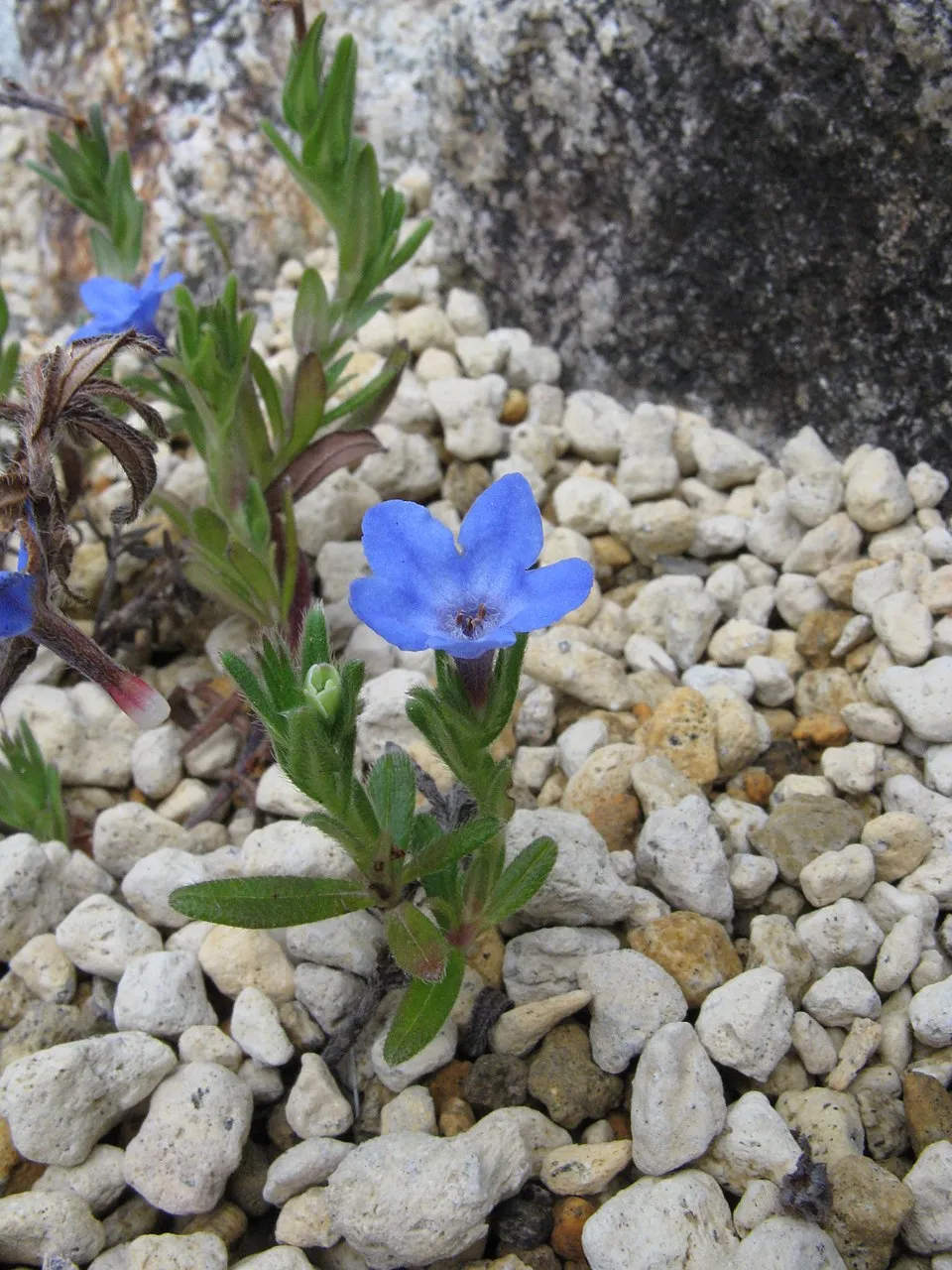
Lithodora diffusa, commonly known as Lithodora or Glandora, is a captivating evergreen perennial belonging to the Boraginaceae family. Native to the rocky, acidic soils of southwestern Europe, particularly the Iberian Peninsula, this species forms a dense, mat-forming groundcover, typically reaching heights of 6-10 inches and spreading up to 2-3 feet wide. Its morphology is characterized by small, lance-shaped, dark green leaves that are often slightly hairy, providing a rich, textural backdrop.
The plant is most celebrated for its profusion of intensely vibrant, gentian-blue, star-shaped flowers, which emerge from late spring through early summer, frequently reblooming sporadically into autumn. These striking blooms are borne in terminal clusters, creating a brilliant carpet of color. Lithodora diffusa thrives in full sun to partial shade, requiring consistently moist, well-drained, and distinctly acidic soil to flourish.
Its natural habitat suggests a preference for conditions mimicking Mediterranean scrublands. While primarily valued ornamentally for its aesthetic appeal in rock gardens, borders, and containers, its botanical characteristics align with many other Boraginaceae members known for various traditional uses, although specific medicinal applications for Lithodora diffusa itself are not widely documented.
Trusted Scientific References
1. Authoritative external sources for Lithodora diffusa
1.1 Wikipedia — Lithodora diffusa
1.2 Kew POWO (Plants of the World Online)
1.3 PubMed — peer-reviewed research
1.4 NCBI Taxonomy Browser
1.5 GBIF — Global Biodiversity
1.6Lithodora should be interpreted through verified botanical identity, practical care, and responsible safety language. This recovery note adds the missing context needed for a complete profile: match light to the plant's habit, use well-drained soil, water according to season, and avoid unsupported medicinal or edible claims. For publishing, the plant can be presented as a source-backed garden plant with clear care guidance, common problem diagnosis, and conservative safety wording.
1.1.Lithodora — Key Features
- ✓ <strong>Intense Gentian</strong> — Blue Flowers — The most striking feature, providing vivid color.
- ✓ <strong>Evergreen Foliage</strong> — Dark green, lance-shaped leaves maintain interest year-round.
- ✓ <strong>Mat</strong> — Forming Groundcover — Spreading habit ideal for low-maintenance landscaping.
- ✓ <strong>Acid</strong> — Loving Plant — Requires specific soil pH for optimal growth.
- ✓ <strong>Native to Southwestern Europe</strong> — Indicates preference for Mediterranean-like climates.
- ✓ <strong>Attracts Pollinators</strong> — Supports local ecosystems by drawing bees and butterflies.
- ✓ <strong>Low Growing</strong> — Reaches modest heights, suitable for front borders or rockeries.
- ✓ <strong>Drought Tolerant (once established)</strong> — Resilient in drier conditions after initial growth.
- ✓ <strong>Deer Resistant (generally)</strong> — Not typically favored by deer.
- ✓ <strong>Easy to Grow (with proper soil)</strong> — Relatively low maintenance once its specific needs are met.
1.2.Lithodora — Quick Summary
- ✓ Vibrant blue-flowered evergreen perennial, native to SW Europe.
- ✓ Primarily an ornamental plant, excellent for groundcover and rock gardens.
- ✓ Thrives in acidic, well-drained soil and full sun to partial shade.
- ✓ Attracts pollinators like bees and butterflies.
- ✓ No significant documented medicinal uses or traditional herbal applications.
- ✓ Contains common plant compounds like anthocyanins and flavonoids.
2.Lithodora — Scientific Identity
3.Lithodora — Quick Facts
4.Lithodora — Appearance & Identification
5.Lithodora — Native Habitat
6.Lithodora — Water Requirements
- ✓ Soil Preparation — Requires well-drained, acidic soil (pH 4.5-6.0); amend with peat moss or pine bark.
- ✓ Light Exposure — Prefers full sun to partial shade; provide afternoon shade in hotter climates.
- ✓ Watering — Keep soil consistently moist, especially during establishment; avoid waterlogging.
- ✓ Fertilization — Generally not required unless nutrient deficiency is observed; use acid-loving plant fertilizer sparingly.
- ✓ Pruning — Prune lightly after flowering to maintain shape and encourage bushier growth; remove dead or leggy stems in early spring.
- ✓ Propagation — Best propagated by semi-hardwood cuttings in late summer; division in early spring is also possible.
- ✓ Hardiness — Hardy in USDA Zones 6-8; mulch heavily in winter in colder regions for root protection.
- ✓ Pests and Diseases — Generally resistant; watch for aphids, spider mites, and root rot in poorly drained conditions.
Reviewed by the Flora Medical Global Botanical Review Panel
Multi-disciplinary editorial group · Botany · Ethnobotany · Herbal-medicine literature
Who reviewed this: This page was checked by the Flora Medical Global Botanical Review Panel — an in-house editorial group of botany graduates, ethnobotany researchers, and horticulture practitioners who collectively maintain our 7,000+ plant encyclopedia. Meet the team.
Our 4-step verification process
1. Taxonomic verification
Scientific names and synonyms cross-checked against Kew POWO, World Flora Online, and The Plant List.
2. Phytochemical & medicinal cross-reference
Active compounds, traditional uses, and reported activities are cross-referenced with PubMed, USDA Dr. Duke's database, and peer-reviewed ethnobotanical literature.
3. Conservation & distribution check
Distribution, ecology, and conservation status confirmed against GBIF occurrence records and the IUCN Red List.
4. Editorial & safety review
Every entry passes an editorial pass for clarity, originality, and safety notices (toxicity, contraindications, dosage caveats) before publication.
Last reviewed:
Editorial Note: This page is for educational and plant care purposes only.
Written by: Flora Medical Global Editorial Team
Reviewed by: Flora Medical Global Botanical Review Panel
Last Updated: June 15, 2026







Lithodora — Comments & Community Reviews
Rate this plant