
Care Disclaimer: Plant care recommendations are general guidelines based on common growing conditions. Individual results may vary based on your local environment, climate, and care routine. If your plant is toxic, keep it away from children and pets, and consult a veterinarian if accidental ingestion occurs.
1.Lupinus Perennis — Overview
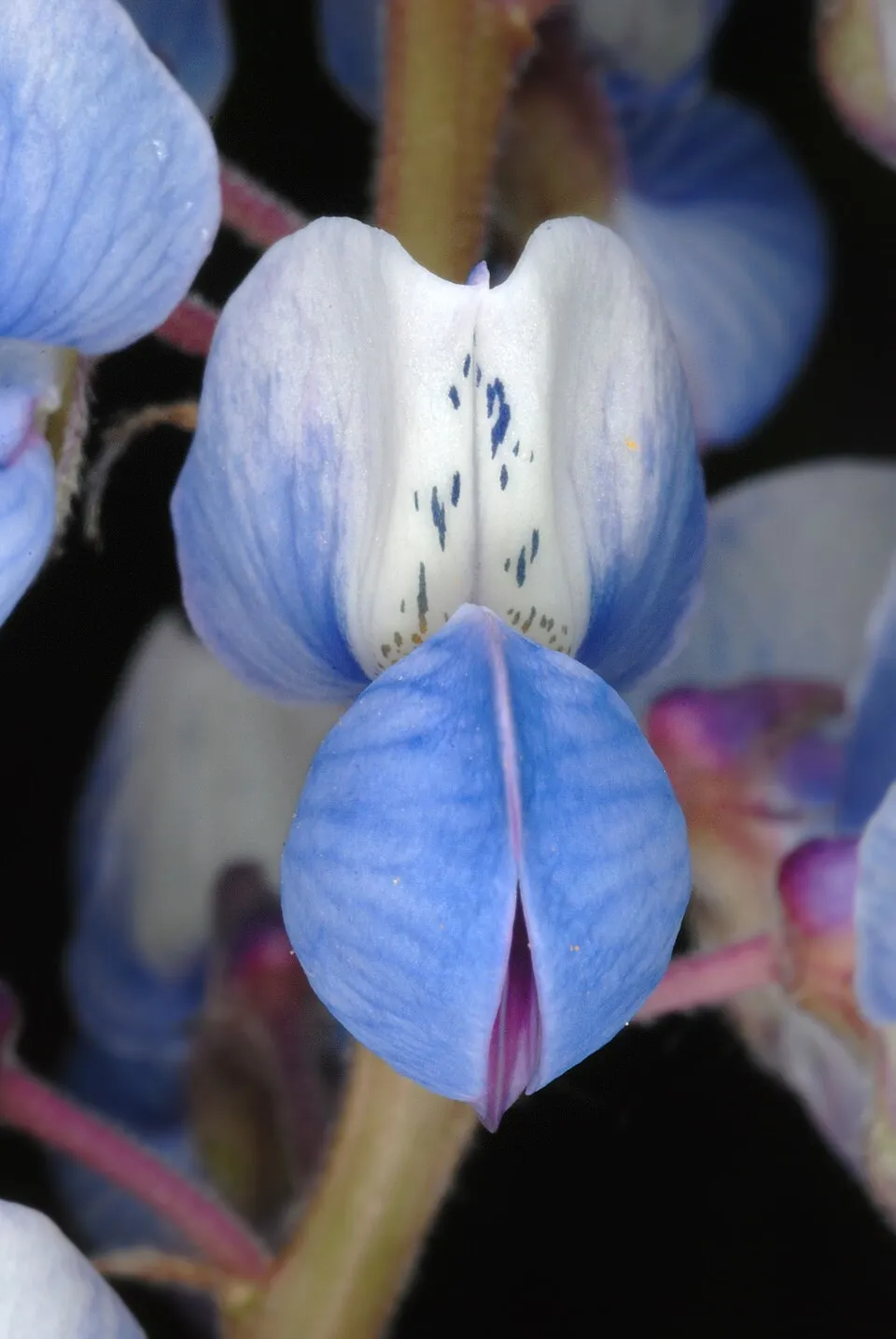
Lupinus perennis, commonly known as perennial lupine, blue lupine, wild lupine, or Indian bean, is an iconic herbaceous perennial belonging to the Fabaceae family. Native to the eastern and central regions of North America, this species flourishes in well-drained, sandy, and acidic soils characteristic of open woodlands, prairies, and roadside verges. It typically exhibits an upright growth habit, reaching heights between 0.5 to 1.5 meters (1.5 to 5 feet). The plant's most distinguishing feature is its striking inflorescence—dense, terminal spikes adorned with vibrant blue to violet-blue, pea-like flowers that bloom from late spring through early summer.
Each flower comprises a standard, two wings, and a keel, arranged spirally along the raceme. Its foliage is palmately compound, typically featuring 7 to 11 oblanceolate to elliptic leaflets radiating from a central point, often with a sparse to dense covering of hairs. A robust taproot system anchors the plant, enabling it to access deeper water reserves and contributing to its perennial nature and drought tolerance. Following successful pollination, the flowers give way to flattened, hairy pods, each containing several seeds.
Lupinus perennis is ecologically significant, serving as a vital host plant for the Karner blue butterfly larvae and contributing to soil enrichment through its nitrogen-fixing capabilities, a common trait among legumes. While primarily valued for its ornamental appeal in native plant gardens and ecological restoration projects, it's crucial to acknowledge the presence of quinolizidine alkaloids throughout the plant, necessitating caution regarding ingestion.
Trusted Scientific References
1. Authoritative external sources for Lupinus Perennis
1.1 Wikipedia — Lupinus Perennis
1.2 Kew POWO (Plants of the World Online)
1.3 PubMed — peer-reviewed research
1.4 NCBI Taxonomy Browser
1.5 GBIF — Global Biodiversity
1.6Lupinus Perennis should be interpreted through verified botanical identity, practical care, and responsible safety language. This recovery note adds the missing context needed for a complete profile: match light to the plant's habit, use well-drained soil, water according to season, and avoid unsupported medicinal or edible claims. For publishing, the plant can be presented as a source-backed garden plant with clear care guidance, common problem diagnosis, and conservative safety wording.
1.1.Lupinus Perennis — Key Features
- ✓ <strong>Native to Eastern</strong> — Native to Eastern and Central North America.
- ✓ <strong>Showy spikes of blue to violet</strong> — blue flowers.
- ✓ <strong>Palmately compound leaves with 7</strong> — 11 leaflets.
- ✓ <strong>Deep taproot system</strong> — Deep taproot system for drought tolerance.
- ✓ <strong>Nitrogen</strong> — fixing legume, enriching soil.
- ✓ <strong>Host plant for</strong> — Host plant for Karner blue butterfly larvae.
- ✓ <strong>Contains toxic quinolizidine</strong> — Contains toxic quinolizidine alkaloids.
- ✓ <strong>Prefers sandy, acidic, well</strong> — drained soils.
- ✓ <strong>Blooms late spring</strong> — Blooms late spring to early summer.
- ✓ <strong>Attracts various pollinators.</strong> — Attracts various pollinators.
1.2.Lupinus Perennis — Quick Summary
- ✓ Iconic North American native perennial with vibrant blue-violet flowers.
- ✓ Important for nitrogen fixation and supporting specific wildlife, like the Karner blue butterfly.
- ✓ Contains toxic quinolizidine alkaloids; ingestion is dangerous.
- ✓ Thrives in sandy, acidic soils and full sun; drought-tolerant once established.
- ✓ Valued for ornamental beauty and ecological restoration efforts.
- ✓ Seeds require scarification for successful germination.
2.Lupinus Perennis — Scientific Identity
3.Lupinus Perennis — Quick Facts
4.Lupinus Perennis — Appearance & Identification
5.Lupinus Perennis — Native Habitat
6.Lupinus Perennis — Water Requirements
- ✓ Soil Preference — Thrives in well-drained, sandy, acidic soils (pH 6.0-7.0) with low fertility.
- ✓ Sunlight Exposure — Requires full sun (at least 6 hours daily) for optimal growth and flowering.
- ✓ Watering Regimen — Drought-tolerant once established, but benefits from regular watering during dry spells.
- ✓ Seed Scarification — Seeds require scarification (e.g., sandpaper or hot water soak) to break dormancy.
- ✓ Planting Depth — Sow seeds shallowly, about 1/4 inch deep, or transplant seedlings carefully to avoid taproot disturbance.
- ✓ Spacing — Space plants 1-3 feet apart to allow for mature size and air circulation.
- ✓ Fertilization — Generally does not require fertilization due to its nitrogen-fixing ability; avoids high-nitrogen fertilizers.
- ✓ Deadheading — Deadhead spent flowers to encourage a second bloom and prevent excessive self-seeding.
Reviewed by the Flora Medical Global Botanical Review Panel
Multi-disciplinary editorial group · Botany · Ethnobotany · Herbal-medicine literature
Who reviewed this: This page was checked by the Flora Medical Global Botanical Review Panel — an in-house editorial group of botany graduates, ethnobotany researchers, and horticulture practitioners who collectively maintain our 7,000+ plant encyclopedia. Meet the team.
Our 4-step verification process
1. Taxonomic verification
Scientific names and synonyms cross-checked against Kew POWO, World Flora Online, and The Plant List.
2. Phytochemical & medicinal cross-reference
Active compounds, traditional uses, and reported activities are cross-referenced with PubMed, USDA Dr. Duke's database, and peer-reviewed ethnobotanical literature.
3. Conservation & distribution check
Distribution, ecology, and conservation status confirmed against GBIF occurrence records and the IUCN Red List.
4. Editorial & safety review
Every entry passes an editorial pass for clarity, originality, and safety notices (toxicity, contraindications, dosage caveats) before publication.
Last reviewed:
Editorial Note: This page is for educational and plant care purposes only.
Written by: Flora Medical Global Editorial Team
Reviewed by: Flora Medical Global Botanical Review Panel
Last Updated: June 15, 2026







Lupinus Perennis — Comments & Community Reviews
Rate this plant