


Care Disclaimer: Plant care recommendations are general guidelines based on common growing conditions. Individual results may vary based on your local environment, climate, and care routine. If your plant is toxic, keep it away from children and pets, and consult a veterinarian if accidental ingestion occurs.
1.Lychnis Coronaria — Overview
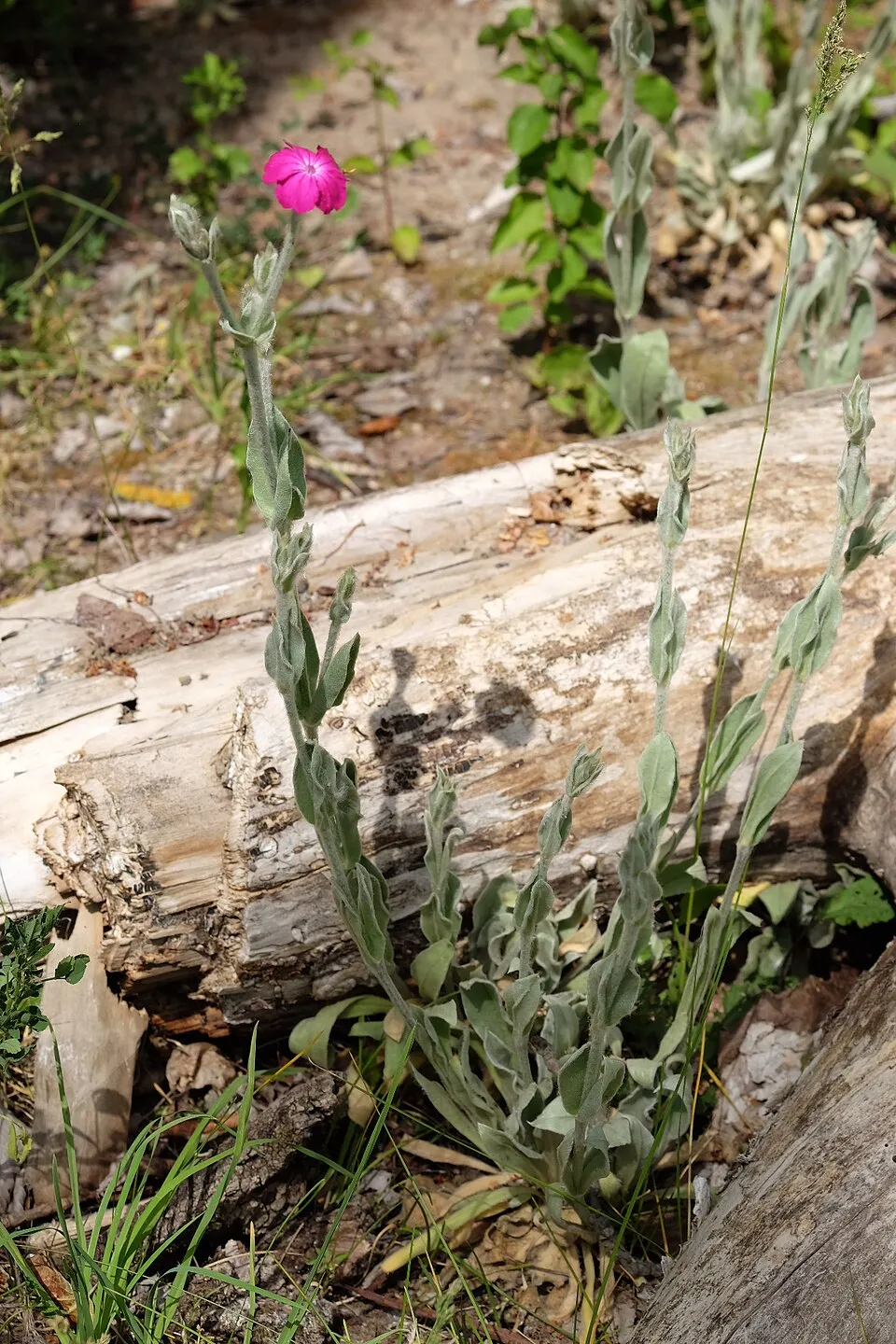
Lychnis coronaria, commonly known as Rose Campion, Crown Pink, or Dusty Miller (though this name is also applied to other plants like Centaurea cineraria), is a captivating short-lived perennial or biennial belonging to the Caryophyllaceae family. Native to southeastern Europe and parts of Asia, this species has naturalized across many temperate regions, thriving in disturbed soils, rocky outcrops, and open woodlands. Its distinctive appearance features upright, branching stems typically reaching 60-90 cm (24-36 inches) in height, adorned with striking, vibrant magenta-pink flowers.
The most notable characteristic is its foliage: ovate to lanceolate leaves densely covered in soft, silvery-white hairs, creating a velvety, almost felt-like texture and a luminous, dusty appearance that provides a beautiful contrast to the intense floral color. Flowers are solitary or form loose cymes, each measuring 2.5-4 cm (1-1.5 inches) in diameter, with five unfused petals that often have a slightly ruffled margin. While magenta is classic, cultivars also present white ('Alba') or bi-colored blooms.
Rose Campion blooms profusely from late spring through summer, attracting pollinators. Its robust nature, drought tolerance once established, and ability to prosper in poor, well-drained soils make it a favored ornamental in cottage gardens, borders, and xeriscaping. The plant's open, airy architecture contributes to its graceful habit, and it readily self-seeds, forming charming naturalized drifts over time if allowed.
Trusted Scientific References
1. Authoritative external sources for Lychnis coronaria
1.1 Wikipedia — Lychnis coronaria
1.2 Kew POWO (Plants of the World Online)
1.3 PubMed — peer-reviewed research
1.4 NCBI Taxonomy Browser
1.5 GBIF — Global Biodiversity
1.6Lychnis Coronaria should be interpreted through verified botanical identity, practical care, and responsible safety language. This recovery note adds the missing context needed for a complete profile: match light to the plant's habit, use well-drained soil, water according to season, and avoid unsupported medicinal or edible claims. For publishing, the plant can be presented as a source-backed garden plant with clear care guidance, common problem diagnosis, and conservative safety wording.
1.1.Lychnis Coronaria — Key Features
- ✓ <strong>Striking silvery</strong> — grey, woolly foliage.
- ✓ <strong>Vibrant magenta</strong> — pink flowers (also white and bicolored cultivars).
- ✓ <strong>Short</strong> — lived perennial or biennial.
- ✓ <strong>Drought</strong> — tolerant and low-maintenance.
- ✓ <strong>Attracts pollinators (bees,</strong> — Attracts pollinators (bees, butterflies).
- ✓ <strong>Readily self</strong> — seeds, creating naturalized drifts.
- ✓ <strong>Deer and rabbit</strong> — Deer and rabbit resistant.
- ✓ <strong>Native to Europe</strong> — Native to Europe and Asia.
- ✓ <strong>Member of the</strong> — Member of the Caryophyllaceae family.
- ✓ <strong>Primarily valued as</strong> — Primarily valued as an ornamental plant.
1.2.Lychnis Coronaria — Quick Summary
- ✓ Lychnis coronaria is a striking perennial with silvery foliage and magenta flowers.
- ✓ Contains triterpenoid saponins and flavonoids, offering traditional expectorant and diuretic uses.
- ✓ Primarily an ornamental plant; medicinal uses are largely folk-based and lack strong scientific validation.
- ✓ Requires well-drained soil and full sun; drought-tolerant and easy to grow.
- ✓ Not recommended for internal medicinal use without professional guidance due to saponin content.
- ✓ Important to note its potential toxicity and exercise caution, especially for internal consumption.
2.Lychnis Coronaria — Scientific Identity
3.Lychnis Coronaria — Quick Facts
4.Lychnis Coronaria — Appearance & Identification
5.Lychnis Coronaria — Native Habitat
6.Lychnis Coronaria — Water Requirements
- ✓ Sun Exposure — Thrives in full sun to partial shade; ensure morning sun if possible in hot climates.
- ✓ Soil Type — Prefers well-drained soil; tolerant of most soil types, including poor or rocky conditions.
- ✓ Watering — Drought-tolerant once established; water moderately, avoiding soggy conditions to prevent root rot.
- ✓ Hardiness Zones — Hardy in USDA Zones 5-8; may act as a biennial or short-lived perennial.
- ✓ Propagation — Easily grown from seed (requires cold stratification) or by dividing established clumps.
- ✓ Fertilization — Generally does not require fertilizer; adding compost to poor soil can enhance vigor.
- ✓ Pruning — Deadhead spent blooms to prevent excessive self-seeding and encourage re-bloom.
- ✓ Pests and Diseases — Highly resistant to most common pests and diseases, and typically deer-resistant.
Reviewed by the Flora Medical Global Botanical Review Panel
Multi-disciplinary editorial group · Botany · Ethnobotany · Herbal-medicine literature
Who reviewed this: This page was checked by the Flora Medical Global Botanical Review Panel — an in-house editorial group of botany graduates, ethnobotany researchers, and horticulture practitioners who collectively maintain our 7,000+ plant encyclopedia. Meet the team.
Our 4-step verification process
1. Taxonomic verification
Scientific names and synonyms cross-checked against Kew POWO, World Flora Online, and The Plant List.
2. Phytochemical & medicinal cross-reference
Active compounds, traditional uses, and reported activities are cross-referenced with PubMed, USDA Dr. Duke's database, and peer-reviewed ethnobotanical literature.
3. Conservation & distribution check
Distribution, ecology, and conservation status confirmed against GBIF occurrence records and the IUCN Red List.
4. Editorial & safety review
Every entry passes an editorial pass for clarity, originality, and safety notices (toxicity, contraindications, dosage caveats) before publication.
Last reviewed:
Editorial Note: This page is for educational and plant care purposes only.
Written by: Flora Medical Global Editorial Team
Reviewed by: Flora Medical Global Botanical Review Panel
Last Updated: June 15, 2026







Lychnis Coronaria — Comments & Community Reviews
Rate this plant