
Care Disclaimer: Plant care recommendations are general guidelines based on common growing conditions. Individual results may vary based on your local environment, climate, and care routine. If your plant is toxic, keep it away from children and pets, and consult a veterinarian if accidental ingestion occurs.
1.Macleaya Cordata — Overview
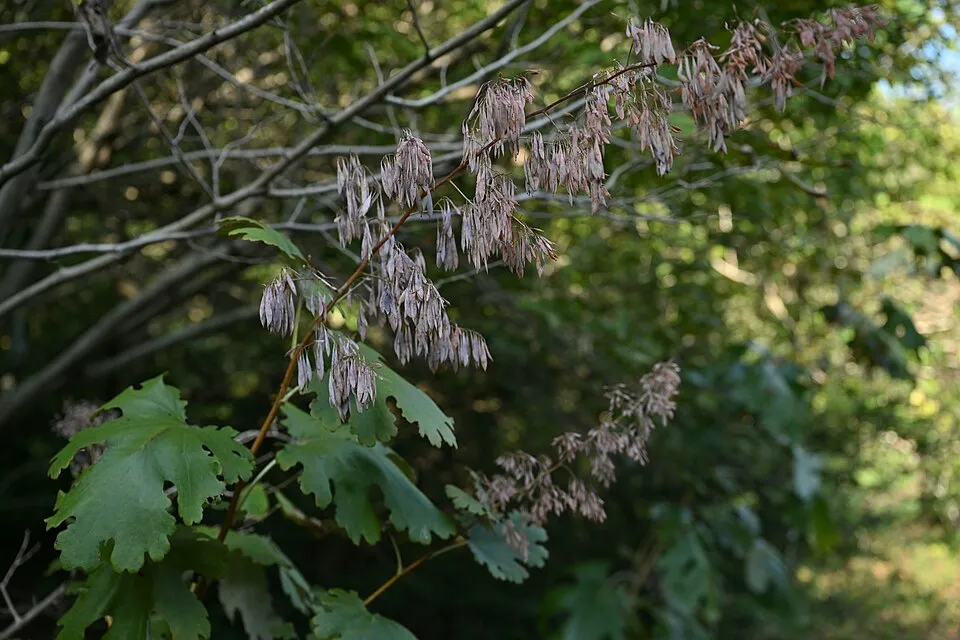
Macleaya cordata, commonly known as plume poppy or tree poppy, is a majestic herbaceous perennial belonging to the Papaveraceae family, which also includes the familiar garden poppies. Native to East Asia, specifically China and Japan, it thrives in open woodlands, along stream banks, and on disturbed ground, showcasing its adaptability and vigorous growth. This plant is characterized by its large, deeply lobed, glaucous or bluish-green leaves, which can measure up to two feet across, providing a dramatic architectural element to any landscape. The foliage often features a silvery underside, adding to its visual appeal.
Macleaya cordata typically reaches an impressive height of 6 to 8 feet, though it can soar up to 12 feet under optimal growing conditions, forming a substantial, upright clump. From mid-summer through early autumn, it produces airy, plume-like inflorescences that rise well above the foliage. These delicate flower stalks are composed of numerous small, creamy white to pale pink flowers that lack true petals but create a spectacular, ethereal display. Following this floral show, small, capsule-like fruits develop, containing tiny seeds.
The plant's vigorous rhizomatous root system allows it to spread readily, necessitating careful placement in gardens. Its sap contains alkaloids and is known to be a skin irritant, requiring caution during handling. Despite its aggressive growth habit and sap irritation, Macleaya cordata is highly valued as an ornamental plant for its bold foliage, imposing stature, and graceful floral plumes, making it a standout in large gardens, naturalistic plantings, and as a seasonal screen.
Trusted Scientific References
1. Authoritative external sources for Macleaya Cordata
1.1 Wikipedia — Macleaya Cordata
1.2 Kew POWO (Plants of the World Online)
1.3 PubMed — peer-reviewed research
1.4 NCBI Taxonomy Browser
1.5 GBIF — Global Biodiversity
1.6Macleaya Cordata should be interpreted through verified botanical identity, practical care, and responsible safety language. This recovery note adds the missing context needed for a complete profile: match light to the plant's habit, use well-drained soil, water according to season, and avoid unsupported medicinal or edible claims. For publishing, the plant can be presented as a source-backed garden plant with clear care guidance, common problem diagnosis, and conservative safety wording.
1.1.Macleaya Cordata — Key Features
- ✓ <strong>Botanical Name</strong> — Macleaya cordata
- ✓ <strong>Common Names</strong> — Plume Poppy, Tree Poppy
- ✓ <strong>Plant Family</strong> — Papaveraceae (Poppy family)
- ✓ <strong>Native Region</strong> — East Asia (China, Japan)
- ✓ <strong>Key Constituents</strong> — Sanguinarine, Chelerythrine alkaloids
- ✓ <strong>Primary Actions</strong> — Anti-inflammatory, Antibacterial, Antiviral
- ✓ <strong>Growth Habit</strong> — Tall, rhizomatous perennial (6-12 ft)
- ✓ <strong>Ornamental Value</strong> — Architectural foliage, airy white/pink flower plumes
- ✓ <strong>Caution</strong> — Sap is a skin irritant; toxic if ingested
- ✓ <strong>Traditional Use</strong> — Pain relief, infection treatment, inflammation reduction
1.2.Macleaya Cordata — Quick Summary
- ✓ Potent anti-inflammatory and antimicrobial properties.
- ✓ Contains isoquinoline alkaloids like sanguinarine and chelerythrine.
- ✓ Used traditionally for pain, inflammation, and infections.
- ✓ Vigorous perennial, requires careful garden placement.
- ✓ Sap is a known skin irritant; handle with caution.
- ✓ Not for internal self-medication; consult experts.
2.Macleaya Cordata — Scientific Identity
3.Macleaya Cordata — Quick Facts
4.Macleaya Cordata — Appearance & Identification
5.Macleaya Cordata — Native Habitat
6.Macleaya Cordata — Water Requirements
- ✓ Soil Preference — Thrives in moist, well-drained soil; tolerates a range from sandy to clay, but prefers humus-rich loam.
- ✓ Light Requirements — Prefers partial shade, especially in hot climates, but can tolerate full sun if kept consistently moist.
- ✓ Watering — Requires regular watering, especially during dry spells and in full sun; avoid waterlogging.
- ✓ Propagation — Primarily propagated by division of rhizomes in spring or autumn, and also by seed, though seeds can be slow to germinate.
- ✓ Spacing — Due to its vigorous spread, plant at least 3-5 feet apart from other plants to allow for ample growth.
- ✓ Maintenance — Deadhead spent flowers to prevent self-seeding and limit spread; cut back foliage in late autumn after frost.
- ✓ Pest and Disease — Generally pest and disease resistant, though occasionally susceptible to powdery mildew in humid conditions.
- ✓ Rhizome Control — To manage its invasive nature, consider planting in a contained area or regularly removing unwanted shoots.
Reviewed by the Flora Medical Global Botanical Review Panel
Multi-disciplinary editorial group · Botany · Ethnobotany · Herbal-medicine literature
Who reviewed this: This page was checked by the Flora Medical Global Botanical Review Panel — an in-house editorial group of botany graduates, ethnobotany researchers, and horticulture practitioners who collectively maintain our 7,000+ plant encyclopedia. Meet the team.
Our 4-step verification process
1. Taxonomic verification
Scientific names and synonyms cross-checked against Kew POWO, World Flora Online, and The Plant List.
2. Phytochemical & medicinal cross-reference
Active compounds, traditional uses, and reported activities are cross-referenced with PubMed, USDA Dr. Duke's database, and peer-reviewed ethnobotanical literature.
3. Conservation & distribution check
Distribution, ecology, and conservation status confirmed against GBIF occurrence records and the IUCN Red List.
4. Editorial & safety review
Every entry passes an editorial pass for clarity, originality, and safety notices (toxicity, contraindications, dosage caveats) before publication.
Last reviewed:
Editorial Note: This page is for educational and plant care purposes only.
Written by: Flora Medical Global Editorial Team
Reviewed by: Flora Medical Global Botanical Review Panel
Last Updated: June 15, 2026







Macleaya Cordata — Comments & Community Reviews
Rate this plant