

Care Disclaimer: Plant care recommendations are general guidelines based on common growing conditions. Individual results may vary based on your local environment, climate, and care routine. If your plant is toxic, keep it away from children and pets, and consult a veterinarian if accidental ingestion occurs.
1.Meconopsis — Overview
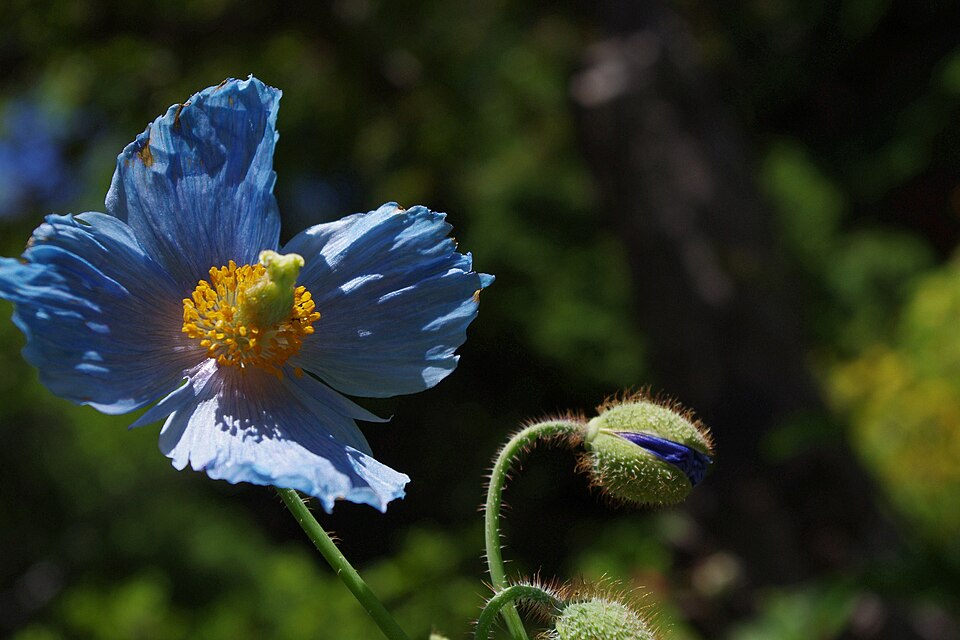
Meconopsis betonicifolia, commonly known as the Himalayan blue poppy, is a truly captivating biennial or short-lived perennial herbaceous plant indigenous to the high-altitude alpine zones of the Himalayas. Its natural distribution spans across Tibet, Bhutan, Nepal, and the northern mountainous regions of India, where it thrives in cool, moist, and well-drained environments, typically found in forest clearings, meadows, and rocky slopes. Belonging to the Papaveraceae family, it is easily distinguished from the opium poppy (Papaver somniferum) by its distinct morphology and chemical profile, lacking the potent psychoactive alkaloids.
The plant typically reaches a height of 60-90 cm (2-3 feet), presenting a basal rosette of ovate to oblong leaves that are often hairy and subtly lobed. Its most striking feature is the large, ethereal sky-blue flowers, often measuring 10-15 cm (4-6 inches) across, which emerge solitarily atop sturdy, erect stems. These delicate, paper-thin petals, sometimes crinkled, encircle a prominent cluster of bright yellow stamens, creating a vivid contrast.
While predominantly blue, flower coloration can vary from deep indigo to pale azure. As a monocarpic perennial or robust biennial, it typically flowers in its second year of growth before setting tiny black seeds and often perishing. The Himalayan blue poppy's exquisite beauty has made it a highly prized ornamental species, symbolizing the unique floral diversity and rugged charm of its native high-altitude habitat.
Trusted Scientific References
1. Authoritative external sources for Meconopsis betonicifolia
1.1 Wikipedia — Meconopsis betonicifolia
1.2 Kew POWO (Plants of the World Online)
1.3 PubMed — peer-reviewed research
1.4 NCBI Taxonomy Browser
1.5 GBIF — Global Biodiversity
1.6Meconopsis should be interpreted through verified botanical identity, practical care, and responsible safety language. This recovery note adds the missing context needed for a complete profile: match light to the plant's habit, use well-drained soil, water according to season, and avoid unsupported medicinal or edible claims. For publishing, the plant can be presented as a source-backed garden plant with clear care guidance, common problem diagnosis, and conservative safety wording.
1.1.Meconopsis — Key Features
- ✓ <strong>Species Name</strong> — Meconopsis betonicifolia.
- ✓ <strong>Common Name</strong> — Himalayan blue poppy.
- ✓ <strong>Family</strong> — Papaveraceae (Poppy Family).
- ✓ <strong>Habitat</strong> — Alpine regions of the Himalayas (Tibet, Bhutan, Nepal, India).
- ✓ <strong>Flower Color</strong> — Vibrant sky blue, occasionally indigo or pale azure.
- ✓ <strong>Medicinal Use</strong> — Traditional Tibetan medicine for inflammation and pain.
- ✓ <strong>Key Compounds</strong> — Alkaloids, flavonoids, phenolic compounds.
- ✓ <strong>Growth Habit</strong> — Biennial or short-lived perennial herb.
- ✓ <strong>Height</strong> — Typically 60-90 cm (2-3 feet).
- ✓ <strong>Distinctive Feature</strong> — Large, delicate, cup-shaped blue flowers.
1.2.Meconopsis — Quick Summary
- ✓ Himalayan blue poppy (Meconopsis betonicifolia) is a stunning alpine plant with emerging medicinal interest.
- ✓ Traditionally used in Tibetan medicine for anti-inflammatory and pain-relieving properties.
- ✓ Contains alkaloids, flavonoids, and phenolic compounds contributing to its pharmacological effects.
- ✓ Research supports its anti-inflammatory and antioxidative potential.
- ✓ Primarily ornamental, but traditional uses are gaining scientific validation.
- ✓ Requires cool, moist conditions for cultivation; sensitive to heat.
2.Meconopsis — Scientific Identity
3.Meconopsis — Quick Facts
4.Meconopsis — Appearance & Identification
5.Meconopsis — Native Habitat
6.Meconopsis — Water Requirements
- ✓ Site Selection — Choose a cool, partially shaded location with protection from strong winds and direct afternoon sun.
- ✓ Soil Requirements — Requires well-drained, humus-rich, slightly acidic to neutral soil (pH 6.0-7.0) that remains consistently moist.
- ✓ Watering — Maintain consistent moisture; never allow the soil to dry out, especially during active growth and flowering.
- ✓ Propagation — Primarily propagated by fresh seeds, which require a period of cold stratification to germinate effectively.
- ✓ Planting — Sow seeds in late winter or early spring in trays; transplant seedlings carefully once established, avoiding root disturbance.
- ✓ Climate — Thrives in cool, humid climates, typical of its alpine origins; struggles in hot, dry conditions.
- ✓ Fertilization — Apply a balanced, slow-release organic fertilizer in spring, or a liquid feed during the growing season.
- ✓ Mulching — Mulch around the base of plants to retain soil moisture and keep roots cool.
Reviewed by the Flora Medical Global Botanical Review Panel
Multi-disciplinary editorial group · Botany · Ethnobotany · Herbal-medicine literature
Who reviewed this: This page was checked by the Flora Medical Global Botanical Review Panel — an in-house editorial group of botany graduates, ethnobotany researchers, and horticulture practitioners who collectively maintain our 7,000+ plant encyclopedia. Meet the team.
Our 4-step verification process
1. Taxonomic verification
Scientific names and synonyms cross-checked against Kew POWO, World Flora Online, and The Plant List.
2. Phytochemical & medicinal cross-reference
Active compounds, traditional uses, and reported activities are cross-referenced with PubMed, USDA Dr. Duke's database, and peer-reviewed ethnobotanical literature.
3. Conservation & distribution check
Distribution, ecology, and conservation status confirmed against GBIF occurrence records and the IUCN Red List.
4. Editorial & safety review
Every entry passes an editorial pass for clarity, originality, and safety notices (toxicity, contraindications, dosage caveats) before publication.
Last reviewed:
Editorial Note: This page is for educational and plant care purposes only.
Written by: Flora Medical Global Editorial Team
Reviewed by: Flora Medical Global Botanical Review Panel
Last Updated: June 15, 2026







Meconopsis — Comments & Community Reviews
Rate this plant