

Care Disclaimer: Plant care recommendations are general guidelines based on common growing conditions. Individual results may vary based on your local environment, climate, and care routine. If your plant is toxic, keep it away from children and pets, and consult a veterinarian if accidental ingestion occurs.
1.Meconopsis Betonicifolia — Overview
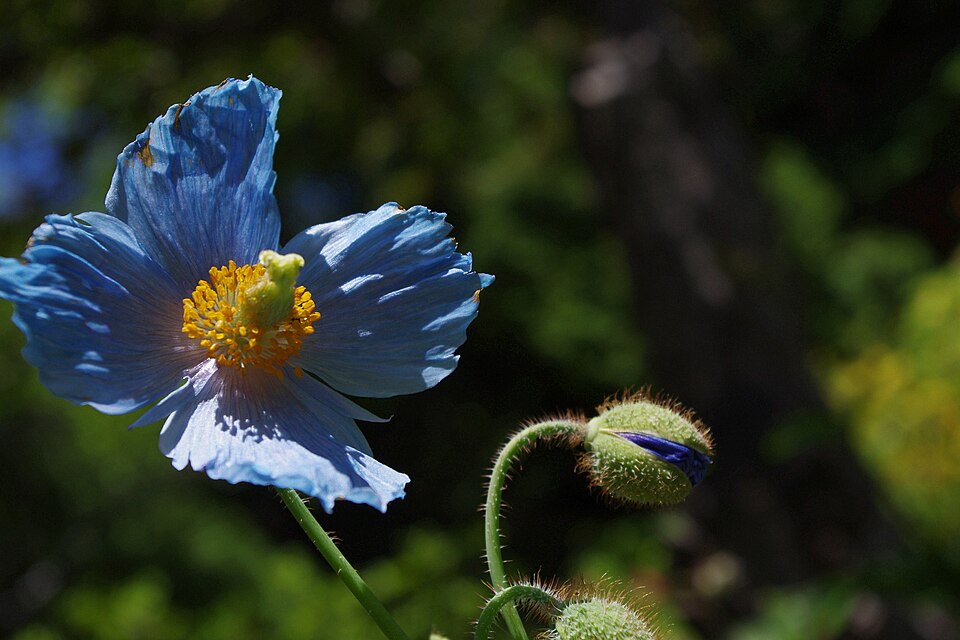
Meconopsis betonicifolia, commonly known as the Himalayan blue poppy, is a truly captivating perennial herb celebrated for its strikingly vibrant, sky-blue flowers. Native to the harsh yet beautiful alpine and subalpine regions of the Himalayas, including Tibet, Bhutan, and parts of China, it thrives at elevations typically between 3,000 to 4,000 meters.
This plant forms an elegant basal rosette of lance-shaped to oblong leaves, which are characteristically hairy on both surfaces and feature slightly toothed margins. From this rosette emerge erect, often branched flowering stems, reaching heights of 60 to 90 centimeters (2-3 feet).
The ethereal blossoms, appearing from late spring to early summer, are the plant's most distinguishing feature. Each flower measures an impressive 10-15 centimeters (4-6 inches) across, showcasing numerous delicate, often crinkled petals with a satiny sheen that captures and reflects light, giving them a luminous quality.
The center of the flower is typically adorned with a prominent cluster of bright yellow stamens, providing a striking contrast to the intense blue petals. As a member of the Papaveraceae family, it shares kinship with other poppies, though its primary allure has long been its ornamental value due to its challenging cultivation requirements and short-lived, yet intensely beautiful, bloom period.
The species name 'betonicifolia' alludes to the resemblance of its leaves to those of plants in the genus Betonica (now Stachys), such as Lamb's-ear. Its preferred natural habitat consists of cool, moist, and shaded environments, often found on mossy slopes, in damp ravines, or at the edges of woodland clearings.
This specific ecological niche underscores its demanding cultivation needs, making it a prized specimen for horticulturists. While its aesthetic appeal is paramount, recent research has begun to explore its biochemical properties, revealing potential applications beyond its visual splendor.
Trusted Scientific References
1. Authoritative external sources for Meconopsis Betonicifolia
1.1 Wikipedia — Meconopsis Betonicifolia
1.2 Kew POWO (Plants of the World Online)
1.3 PubMed — peer-reviewed research
1.4 NCBI Taxonomy Browser
1.5 GBIF — Global Biodiversity
1.1.Meconopsis Betonicifolia — Key Features
- ✓ <strong>Striking Sky</strong> — Blue Flowers — Iconic feature, large and luminous, 10-15 cm across.
- ✓ <strong>High</strong> — Altitude Native — Thrives in the cool, moist conditions of the Himalayas.
- ✓ <strong>Perennial Herb</strong> — Returns year after year under optimal growing conditions.
- ✓ <strong>Basal Rosette Growth</strong> — Distinctive growth habit with leaves originating from the base.
- ✓ <strong>Delicate, Crinkled Petals</strong> — Unique texture and appearance of the flower petals.
- ✓ <strong>Yellow Stamens</strong> — Provides a beautiful contrast against the blue petals.
- ✓ <strong>Challenging Cultivation</strong> — Requires specific environmental conditions, making it a gardener's prize.
- ✓ <strong>Ornamental Value</strong> — Primarily grown for its breathtaking aesthetic appeal.
- ✓ <strong>Papaveraceae Family Member</strong> — Part of the poppy family, sharing some chemical characteristics.
- ✓ <strong>Emerging Medicinal Research</strong> — Recent studies explore its phytochemical composition and potential anti-inflammatory properties.
1.2.Meconopsis Betonicifolia — Quick Summary
- ✓ Himalayan blue poppy, Meconopsis betonicifolia, is a stunning ornamental.
- ✓ Native to high-altitude Himalayan regions, known for vivid blue flowers.
- ✓ Contains alkaloids, flavonoids, and phenolics, some with anti-inflammatory potential.
- ✓ Primarily ornamental; traditional medicinal uses are more associated with related species.
- ✓ Requires cool, moist, shaded conditions for cultivation.
- ✓ Potential toxicity due to alkaloids; not recommended for internal use.
2.Meconopsis Betonicifolia — Scientific Identity
3.Meconopsis Betonicifolia — Quick Facts
4.Meconopsis Betonicifolia — Appearance & Identification
5.Meconopsis Betonicifolia — Native Habitat
6.Meconopsis Betonicifolia — Water Requirements
- ✓ Site Selection — Choose a cool, partially shaded location with protection from strong winds and intense afternoon sun.
- ✓ Soil Requirements — Requires consistently moist, well-drained, humus-rich, slightly acidic to neutral soil (pH 6.0-7.0).
- ✓ Watering — Provide regular, consistent watering, especially during dry periods; soil must never dry out completely.
- ✓ Propagation — Typically grown from fresh seeds, which require a period of cold stratification for germination.
- ✓ Planting — Plant seedlings in spring or early autumn, ensuring good air circulation to prevent fungal issues.
- ✓ Fertilization — Apply a balanced, slow-release organic fertilizer in spring, avoiding over-fertilization.
- ✓ Winter Protection — In colder climates, provide a protective mulch layer to shield crowns from extreme cold.
- ✓ Pest and Disease Management — Monitor for slugs, snails, and fungal diseases like powdery mildew; ensure good drainage and air flow.
Reviewed by the Flora Medical Global Botanical Review Panel
Multi-disciplinary editorial group · Botany · Ethnobotany · Herbal-medicine literature
Who reviewed this: This page was checked by the Flora Medical Global Botanical Review Panel — an in-house editorial group of botany graduates, ethnobotany researchers, and horticulture practitioners who collectively maintain our 7,000+ plant encyclopedia. Meet the team.
Our 4-step verification process
1. Taxonomic verification
Scientific names and synonyms cross-checked against Kew POWO, World Flora Online, and The Plant List.
2. Phytochemical & medicinal cross-reference
Active compounds, traditional uses, and reported activities are cross-referenced with PubMed, USDA Dr. Duke's database, and peer-reviewed ethnobotanical literature.
3. Conservation & distribution check
Distribution, ecology, and conservation status confirmed against GBIF occurrence records and the IUCN Red List.
4. Editorial & safety review
Every entry passes an editorial pass for clarity, originality, and safety notices (toxicity, contraindications, dosage caveats) before publication.
Last reviewed:
Editorial Note: This page is for educational and plant care purposes only.
Written by: Flora Medical Global Editorial Team
Reviewed by: Flora Medical Global Botanical Review Panel
Last Updated: June 15, 2026







Meconopsis Betonicifolia — Comments & Community Reviews
Rate this plant