

Care Disclaimer: Plant care recommendations are general guidelines based on common growing conditions. Individual results may vary based on your local environment, climate, and care routine. If your plant is toxic, keep it away from children and pets, and consult a veterinarian if accidental ingestion occurs.
1.Morella Pensylvanica — Overview
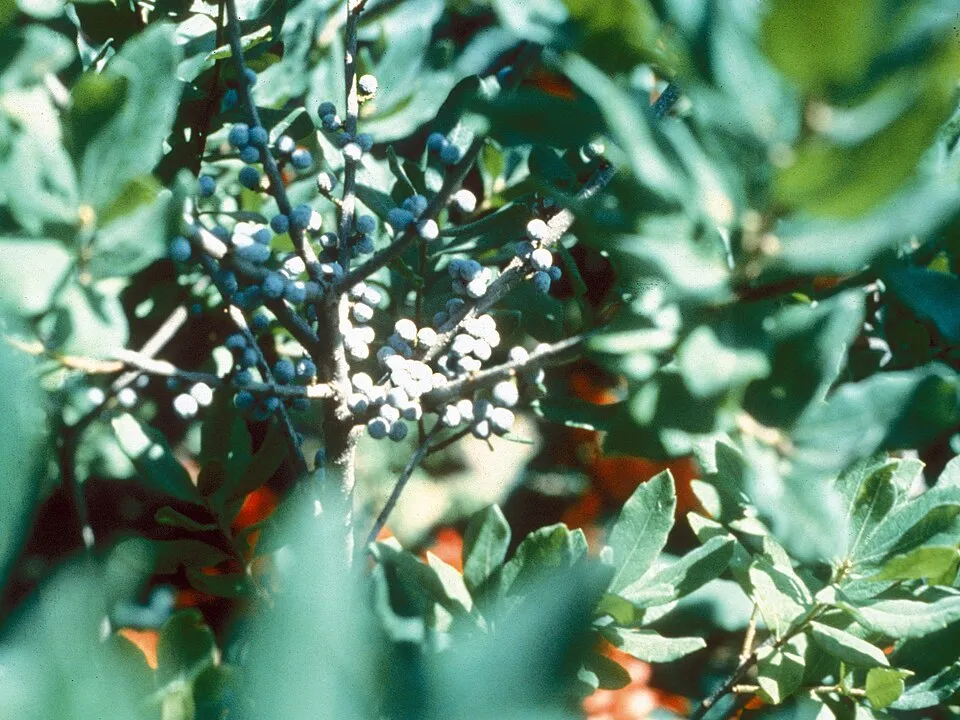
Morella pensylvanica, commonly known as Northern Bayberry, Bayberry, or Wax Myrtle, is a robust semi-evergreen to deciduous shrub or small tree indigenous to eastern North America. Belonging to the Myricaceae family, this plant is celebrated for its distinctive aromatic foliage and waxy berries. It typically attains a height of 1.5 to 4.5 meters (5 to 15 feet), occasionally reaching up to 9 meters (30 feet), exhibiting a dense, rounded to spreading growth habit. The leaves are oblong to oblanceolate, measuring 5 to 12.5 cm (2 to 5 inches) in length, featuring serrated margins and a deep green hue that transitions to mottled yellow or bronze in autumn before dropping or persisting through milder winters. The most characteristic feature of Morella pensylvanica is its fruit; small, greenish-white drupes encased in a thick, bluish-gray waxy coating.
These berries cluster on female plants in fall and remain throughout winter, serving as a vital food source for avian species. Historically, the wax extracted from these berries was a primary material for candle production. This species is renowned for its resilience, thriving in full sun to partial shade and adapting exceptionally well to diverse soil types, including poor, sandy, clay, and waterlogged conditions. Its remarkable salt tolerance makes it an ideal candidate for coastal plantings and areas exposed to de-icing salts. A significant ecological advantage is its ability to fix atmospheric nitrogen, thereby enriching soil fertility.
Propagation occurs via seeds and vegetative spread through root suckers, often leading to the formation of dense colonies. The crushed foliage emits a pleasant, spicy aroma, further enhancing its appeal. Beyond its ornamental and historical utility, Morella pensylvanica plays a crucial ecological role by providing habitat and sustenance for local wildlife.
Trusted Scientific References
1. Authoritative external sources for Morella pensylvanica
1.1 Wikipedia — Morella pensylvanica
1.2 Kew POWO (Plants of the World Online)
1.3 PubMed — peer-reviewed research
1.4 NCBI Taxonomy Browser
1.5 GBIF — Global Biodiversity
1.1.Morella Pensylvanica — Key Features
- ✓ <strong>Botanical Name</strong> — Morella pensylvanica, formerly Myrica pensylvanica.
- ✓ <strong>Common Names</strong> — Northern Bayberry, Bayberry, Wax Myrtle, Candleberry.
- ✓ <strong>Family</strong> — Myricaceae.
- ✓ <strong>Native Range</strong> — Eastern North America, from Newfoundland to North Carolina.
- ✓ <strong>Growth Habit</strong> — Deciduous to semi-evergreen shrub or small tree, 1.5-9m tall.
- ✓ <strong>Distinctive Leaves</strong> — Aromatic, oblong to oblanceolate, deep green, sometimes serrated.
- ✓ <strong>Waxy Berries</strong> — Bluish-gray, wax-covered drupes on female plants, persistent through winter.
- ✓ <strong>Aromatic Foliage</strong> — Crushed leaves emit a spicy, pleasant fragrance.
- ✓ <strong>Ecological Role</strong> — Nitrogen-fixing, provides food and habitat for wildlife.
- ✓ <strong>Adaptability</strong> — Tolerant of various soils, salt-tolerant, thrives in sun to partial shade.
1.2.Morella Pensylvanica — Quick Summary
- ✓ Northern Bayberry (Morella pensylvanica) is a native eastern North American shrub.
- ✓ Known for its aromatic foliage and waxy, bird-attracting berries.
- ✓ Traditionally used for its astringent, stimulant, and antidiarrheal properties.
- ✓ Contains tannins, volatile oils, and flavonoids, contributing to its medicinal actions.
- ✓ Adaptable to diverse environments, including coastal and poor soils.
- ✓ Important for wildlife, providing food and habitat.
2.Morella Pensylvanica — Scientific Identity
3.Morella Pensylvanica — Quick Facts
4.Morella Pensylvanica — Appearance & Identification
5.Morella Pensylvanica — Native Habitat
6.Morella Pensylvanica — Water Requirements
- ✓ Site Selection — Thrives in full sun to partial shade; adaptable to various light conditions.
- ✓ Soil Requirements — Prefers well-drained, acidic to neutral soils; tolerant of sandy, clay, and poor nutrient soils.
- ✓ Water Needs — Drought-tolerant once established but benefits from regular watering during dry spells.
- ✓ Planting — Best planted in spring or fall; space multiple plants 1.5 to 3 meters apart for optimal growth.
- ✓ Propagation — Can be propagated by seeds, root cuttings, or layering; seeds may require stratification.
- ✓ Fertilization — Generally low-maintenance; can benefit from a light application of balanced fertilizer in spring if soil is poor.
- ✓ Pruning — Prune in late winter or early spring to shape the plant, remove dead wood, or control size.
- ✓ Pests and Diseases — Generally resistant to most pests and diseases, making it a hardy landscape plant.
Reviewed by the Flora Medical Global Botanical Review Panel
Multi-disciplinary editorial group · Botany · Ethnobotany · Herbal-medicine literature
Who reviewed this: This page was checked by the Flora Medical Global Botanical Review Panel — an in-house editorial group of botany graduates, ethnobotany researchers, and horticulture practitioners who collectively maintain our 7,000+ plant encyclopedia. Meet the team.
Our 4-step verification process
1. Taxonomic verification
Scientific names and synonyms cross-checked against Kew POWO, World Flora Online, and The Plant List.
2. Phytochemical & medicinal cross-reference
Active compounds, traditional uses, and reported activities are cross-referenced with PubMed, USDA Dr. Duke's database, and peer-reviewed ethnobotanical literature.
3. Conservation & distribution check
Distribution, ecology, and conservation status confirmed against GBIF occurrence records and the IUCN Red List.
4. Editorial & safety review
Every entry passes an editorial pass for clarity, originality, and safety notices (toxicity, contraindications, dosage caveats) before publication.
Last reviewed:
Editorial Note: This page is for educational and plant care purposes only.
Written by: Flora Medical Global Editorial Team
Reviewed by: Flora Medical Global Botanical Review Panel
Last Updated: June 15, 2026







Morella Pensylvanica — Comments & Community Reviews
Rate this plant