

Care Disclaimer: Plant care recommendations are general guidelines based on common growing conditions. Individual results may vary based on your local environment, climate, and care routine. If your plant is toxic, keep it away from children and pets, and consult a veterinarian if accidental ingestion occurs.
1.Nemophila Menziesii — Overview
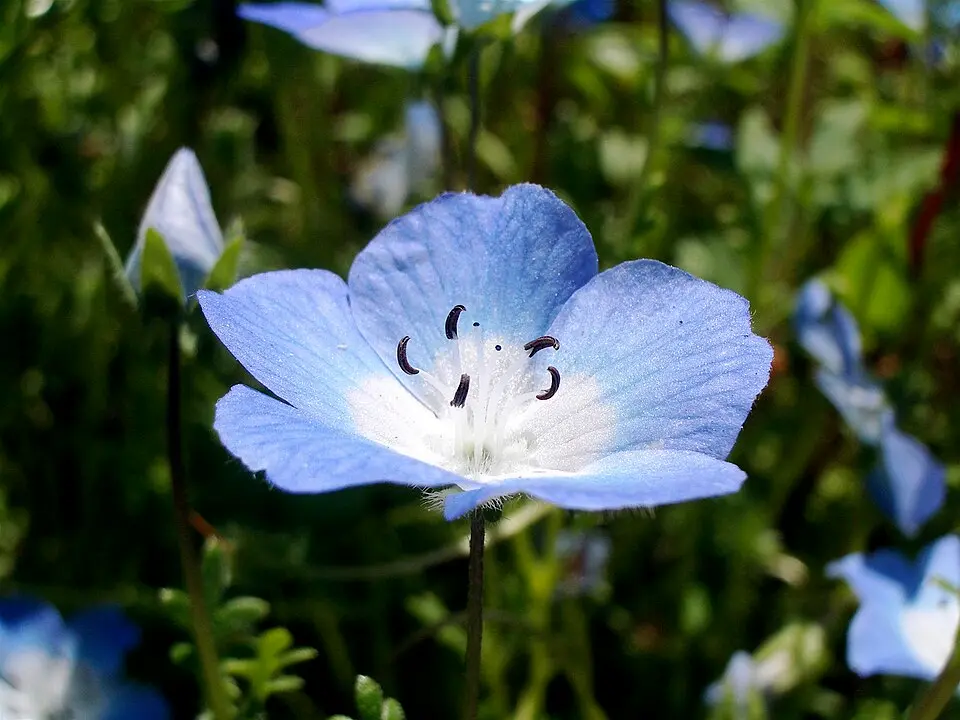
Nemophila Menziesii, universally cherished as Baby Blue Eyes, is a captivating annual wildflower indigenous to the sun-drenched landscapes of California and the coastal regions of Oregon. This low-growing herbaceous plant is renowned for its delicate, cup-shaped blossoms, which typically unfurl in a brilliant sky-blue hue, often accentuated by a contrasting pristine white center. Floral variations include speckling or deeper shades of blue, adding to its visual diversity.
The plant forms a dense, verdant mat of finely dissected, fern-like leaves that are deeply lobed, making it an exceptional choice for naturalistic ground cover, intricate rock gardens, and soft garden borders. Blooming profusely throughout the spring season, Nemophila Menziesii creates a breathtaking carpet of blue that serves as a vital magnet for a myriad of pollinators, including various species of native bees and butterflies. Its characteristic rapid growth cycle and relatively short annual lifespan contribute to its popularity as a source of vibrant seasonal color in temperate climates.
Taxonomically, it belongs to the genus Nemophila, a member of the Hydrophyllaceae family, sometimes now grouped within Boraginaceae, reflecting its botanical relationships. The species also encompasses notable varieties such as Nemophila Menziesii var. atomaria, which presents white corollas dotted with distinct black or dark blue spots.
Trusted Scientific References
1. Authoritative external sources for Nemophila Menziesii
1.1 Wikipedia — Nemophila Menziesii
1.2 Kew POWO (Plants of the World Online)
1.3 PubMed — peer-reviewed research
1.4 NCBI Taxonomy Browser
1.5 GBIF — Global Biodiversity
1.6Nemophila Menziesii should be interpreted through verified botanical identity, practical care, and responsible safety language. This recovery note adds the missing context needed for a complete profile: match light to the plant's habit, use well-drained soil, water according to season, and avoid unsupported medicinal or edible claims. For publishing, the plant can be presented as a source-backed garden plant with clear care guidance, common problem diagnosis, and conservative safety wording.
1.1.Nemophila Menziesii — Key Features
- ✓ <strong>Common Name</strong> — Baby Blue Eyes
- ✓ <strong>Scientific Name</strong> — Nemophila Menziesii
- ✓ <strong>Plant Type</strong> — Annual Wildflower
- ✓ <strong>Native Range</strong> — California and Oregon
- ✓ <strong>Flower Color</strong> — Sky-blue with white center (variations exist)
- ✓ <strong>Growth Habit</strong> — Low-growing, mat-forming ground cover
- ✓ <strong>Bloom Time</strong> — Profuse spring bloomer
- ✓ <strong>Pollinator Attractor</strong> — Attracts bees and butterflies
- ✓ <strong>Cultivation</strong> — Easy to grow from seed, readily self-seeds
- ✓ <strong>Primary Use</strong> — Ornamental, ecological, and horticultural therapy
1.2.Nemophila Menziesii — Quick Summary
- ✓ Native California Wildflower — Celebrated for its delicate, sky-blue flowers and fern-like foliage, originating from Western North America.
- ✓ Ornamental Value — Primarily cultivated for its exceptional aesthetic appeal in gardens, containers, and as vibrant ground cover.
- ✓ Pollinator Magnet — Highly effective in attracting native bees and butterflies, playing a crucial role in supporting local biodiversity.
- ✓ Easy to Grow — Thrives readily from seed in cool weather with full sun to partial shade and well-draining soil, often self-seeding.
- ✓ Minimal Medicinal Documentation — Lacks traditional or scientific evidence for direct medicinal use; valued predominantly for aesthetic and ecological benefits.
- ✓ Mood Enhancer — Its inherent beauty is often associated with evoking feelings of joy and tranquility, offering psychological well-being through visual engagement.
2.Nemophila Menziesii — Scientific Identity
3.Nemophila Menziesii — Quick Facts
4.Nemophila Menziesii — Appearance & Identification
5.Nemophila Menziesii — Native Habitat
6.Nemophila Menziesii — Water Requirements
- ✓ Seed Sowing — Direct sow Nemophila Menziesii seeds outdoors in early spring after the last frost or in late fall in mild climates for optimal spring bloom.
- ✓ Site Selection — Choose a location with full sun to partial shade, ensuring the soil is well-draining to prevent waterlogging and promote healthy root development.
- ✓ Soil Preparation — Prepare a moderately fertile, loamy soil, which can be improved with organic matter for optimal growth, although the plant tolerates leaner, less rich soils.
- ✓ Planting Depth — Lightly cover the small seeds with approximately 1/8 inch of fine soil, as they require some light for successful germination.
- ✓ Watering Regime — Maintain consistent moisture until germination, typically occurring within 7-14 days, and continue regular watering during dry periods, especially in warmer climates.
- ✓ Spacing and Thinning — Thin emergent seedlings to a final spacing of 6-8 inches apart to allow for proper air circulation, robust mat formation, and abundant flowering.
- ✓ Container Cultivation — Ideal for wide, shallow containers (no deeper than one foot) where their lax stems can intermingle, creating a dense, attractive display.
- ✓ Self-Seeding — This annual wildflower readily self-seeds in favorable conditions, ensuring a continuous display in subsequent seasons without significant intervention, returning year after year.
Reviewed by the Flora Medical Global Botanical Review Panel
Multi-disciplinary editorial group · Botany · Ethnobotany · Herbal-medicine literature
Who reviewed this: This page was checked by the Flora Medical Global Botanical Review Panel — an in-house editorial group of botany graduates, ethnobotany researchers, and horticulture practitioners who collectively maintain our 7,000+ plant encyclopedia. Meet the team.
Our 4-step verification process
1. Taxonomic verification
Scientific names and synonyms cross-checked against Kew POWO, World Flora Online, and The Plant List.
2. Phytochemical & medicinal cross-reference
Active compounds, traditional uses, and reported activities are cross-referenced with PubMed, USDA Dr. Duke's database, and peer-reviewed ethnobotanical literature.
3. Conservation & distribution check
Distribution, ecology, and conservation status confirmed against GBIF occurrence records and the IUCN Red List.
4. Editorial & safety review
Every entry passes an editorial pass for clarity, originality, and safety notices (toxicity, contraindications, dosage caveats) before publication.
Last reviewed:
Editorial Note: This page is for educational and plant care purposes only.
Written by: Flora Medical Global Editorial Team
Reviewed by: Flora Medical Global Botanical Review Panel
Last Updated: June 15, 2026







Nemophila Menziesii — Comments & Community Reviews
Rate this plant