
Care Disclaimer: Plant care recommendations are general guidelines based on common growing conditions. Individual results may vary based on your local environment, climate, and care routine. If your plant is toxic, keep it away from children and pets, and consult a veterinarian if accidental ingestion occurs.
1.Nepeta Faassenii — Overview
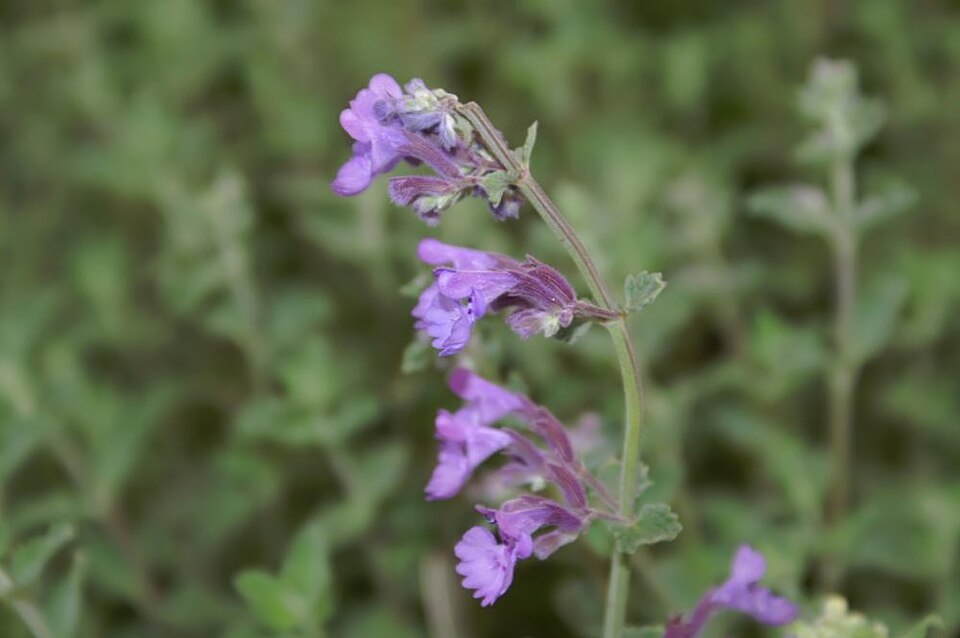
Nepeta faassenii, commonly known as Catmint or Faassen's Catmint, is a widely cherished herbaceous perennial belonging to the Lamiaceae family, which also includes familiar herbs like mint and lavender. This particular cultivar is a sterile hybrid, believed to be a cross between Nepeta nepetella and Nepeta mussinii, though sometimes attributed to Nepeta racemosa. Originating from European cultivation, it has become a staple in gardens worldwide for its ornamental appeal and ease of care.
The plant forms a beautiful, mounding, and spreading habit, typically reaching heights of 30 to 90 cm (1 to 3 feet) with a similar spread. Its taxonomic classification places it firmly within the mint family, characterized by square stems, opposite leaves, and distinctive flower structures.
The foliage of Nepeta faassenii is a key feature, comprising ovate to heart-shaped leaves with finely toothed margins. These leaves are covered in fine, downy hairs, imparting a soft, grayish-green appearance and a slightly fuzzy texture that aids in drought tolerance.
When bruised or crushed, the leaves release a robust, pleasant, minty aroma, a characteristic shared with its relatives, and notably irresistible to many felines due to the presence of nepetalactones.
Flowering is prolific and extended, typically from late spring through fall. The plant produces delicate, whorled flowers arranged in tiered rings along slender, upright stems that rise above the foliage. The blossoms are predominantly a charming lavender-blue to violet-blue, creating a spectacular and long-lasting display.
This continuous bloom makes Nepeta faassenii an exceptional choice for attracting a diverse array of pollinators, including bees, butterflies, and hoverflies, thereby enhancing garden biodiversity. Its adaptability to various conditions and minimal care requirements further solidify its status as a popular garden plant, often used in borders, rock gardens, and as a groundcover.
Trusted Scientific References
1. Authoritative external sources for Nepeta faassenii
1.1 Wikipedia — Nepeta faassenii
1.2 Kew POWO (Plants of the World Online)
1.3 PubMed — peer-reviewed research
1.4 NCBI Taxonomy Browser
1.5 GBIF — Global Biodiversity
1.1.Nepeta Faassenii — Key Features
- ✓ <strong>Botanical Name</strong> — Nepeta faassenii
- ✓ <strong>Common Names</strong> — Catmint, Faassen's Catmint, Blue Catmint
- ✓ <strong>Plant Family</strong> — Lamiaceae (Mint Family)
- ✓ <strong>Growth Habit</strong> — Mounding, spreading herbaceous perennial, typically 1 to 3 feet tall and wide.
- ✓ <strong>Foliage</strong> — Aromatic, ovate to heart-shaped, grayish-green, finely toothed, with a downy texture.
- ✓ <strong>Flowers</strong> — Abundant, small, lavender-blue to violet-blue, arranged in whorled spikes, blooming from late spring through fall.
- ✓ <strong>Pollinator Attraction</strong> — Highly attractive to a wide range of pollinators including bees, butterflies, and hoverflies.
- ✓ <strong>Feline Attraction</strong> — Contains nepetalactones, which elicit a playful and euphoric response in many domestic cats.
- ✓ <strong>Drought Tolerance</strong> — Extremely resilient and low-water once established, suitable for xeriscaping and dry garden conditions.
- ✓ <strong>Landscape Use</strong> — Excellent for borders, rock gardens, mass plantings, groundcover, and sensory gardens.
1.2.Nepeta Faassenii — Quick Summary
- ✓ Nepeta faassenii is a sterile hybrid catmint, highly valued for its ornamental beauty and ease of cultivation.
- ✓ Features soft, grayish-green, aromatic foliage and profuse, long-blooming lavender-blue flowers.
- ✓ Famously attracts many cats due to nepetalactones and is a significant draw for beneficial pollinators.
- ✓ Exceptionally drought-tolerant and low-maintenance, making it ideal for diverse garden landscapes.
- ✓ Offers a mild, calming aroma and possesses subtle traditional uses for relaxation and digestive comfort.
2.Nepeta Faassenii — Scientific Identity
3.Nepeta Faassenii — Quick Facts
4.Nepeta Faassenii — Appearance & Identification
5.Nepeta Faassenii — Native Habitat
6.Nepeta Faassenii — Water Requirements
- ✓ Site Selection — Plant Nepeta faassenii in full sun to partial shade; full sun promotes the most abundant flowering and robust growth, especially in cooler climates.
- ✓ Soil Requirements — Prefers well-drained soil and is highly adaptable to various soil types, including sandy, loamy, or rocky; avoid heavy, waterlogged conditions to prevent root rot.
- ✓ Watering — Once established, this catmint is remarkably drought-tolerant, requiring infrequent watering. Water deeply during prolonged dry spells, but allow the soil to dry out between waterings.
- ✓ Pruning and Shearing — Shear back spent flower spikes after the initial bloom flush in late spring or early summer to encourage continuous reblooming throughout the season and maintain a tidy form.
- ✓ Propagation — Primarily propagated by division of established clumps in spring or early fall, as Nepeta faassenii is a sterile hybrid and does not produce viable seeds.
- ✓ Fertilization — Generally a low-maintenance plant that does not require heavy feeding. A light application of a balanced, slow-release granular fertilizer in early spring is sufficient if soil fertility is poor.
- ✓ Pest and Disease Management — Highly resistant to most common pests and diseases. Ensure good air circulation and well-drained soil to minimize any potential fungal issues like root rot.
Reviewed by the Flora Medical Global Botanical Review Panel
Multi-disciplinary editorial group · Botany · Ethnobotany · Herbal-medicine literature
Who reviewed this: This page was checked by the Flora Medical Global Botanical Review Panel — an in-house editorial group of botany graduates, ethnobotany researchers, and horticulture practitioners who collectively maintain our 7,000+ plant encyclopedia. Meet the team.
Our 4-step verification process
1. Taxonomic verification
Scientific names and synonyms cross-checked against Kew POWO, World Flora Online, and The Plant List.
2. Phytochemical & medicinal cross-reference
Active compounds, traditional uses, and reported activities are cross-referenced with PubMed, USDA Dr. Duke's database, and peer-reviewed ethnobotanical literature.
3. Conservation & distribution check
Distribution, ecology, and conservation status confirmed against GBIF occurrence records and the IUCN Red List.
4. Editorial & safety review
Every entry passes an editorial pass for clarity, originality, and safety notices (toxicity, contraindications, dosage caveats) before publication.
Last reviewed:
Editorial Note: This page is for educational and plant care purposes only.
Written by: Flora Medical Global Editorial Team
Reviewed by: Flora Medical Global Botanical Review Panel
Last Updated: June 15, 2026







Nepeta Faassenii — Comments & Community Reviews
Rate this plant