
Care Disclaimer: Plant care recommendations are general guidelines based on common growing conditions. Individual results may vary based on your local environment, climate, and care routine. If your plant is toxic, keep it away from children and pets, and consult a veterinarian if accidental ingestion occurs.
1.Nepeta Walker Low — Overview
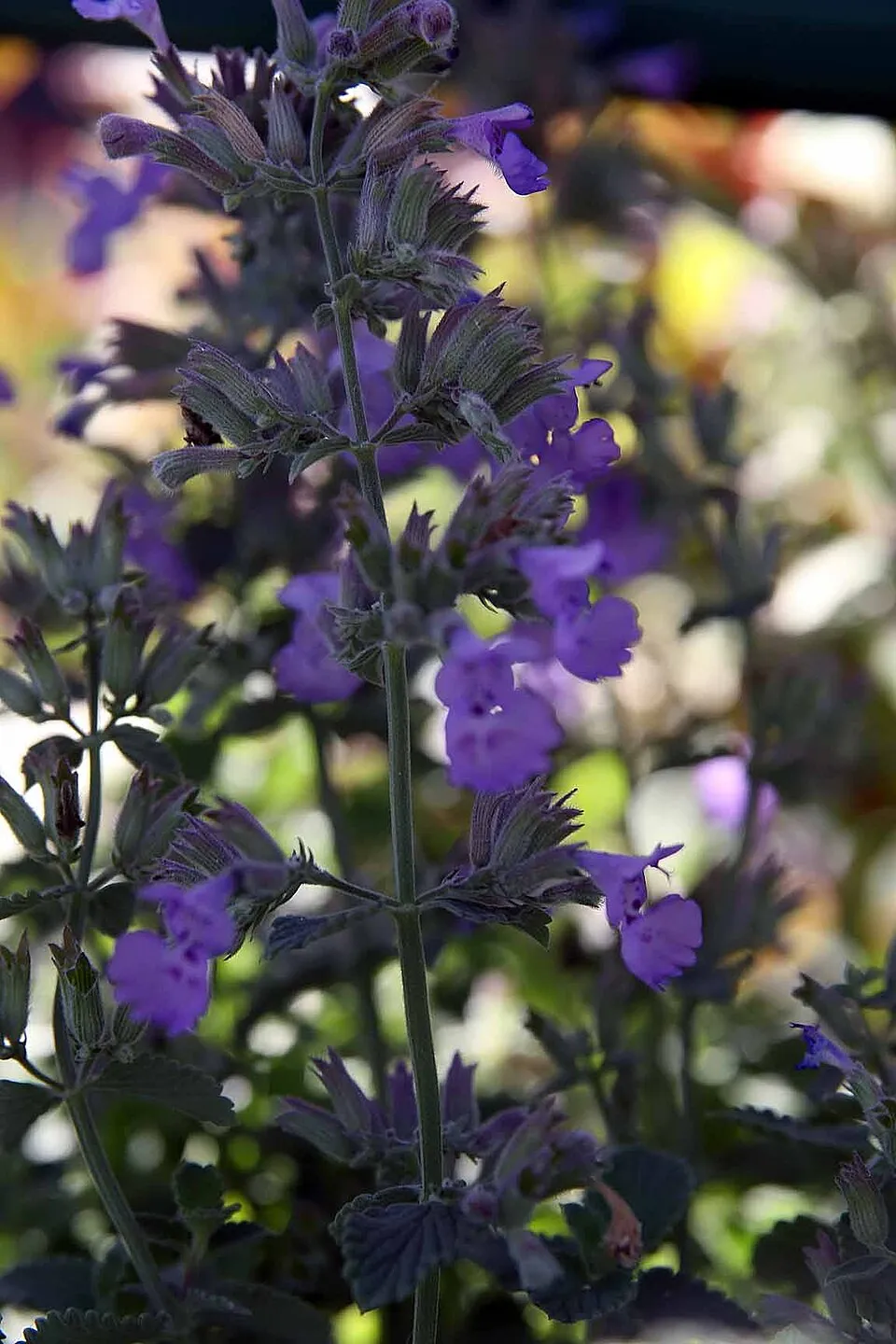
Nepeta x faassenii 'Walker's Low,' commonly known as 'Walker's Low' Catmint, is an esteemed herbaceous perennial within the Lamiaceae (mint) family. This remarkable cultivar is a sterile hybrid, resulting from a cross between Nepeta racemosa and Nepeta nepetella, originating from West Asia. It typically forms a dense, mounding habit, reaching heights of 2 to 3 feet and spreading 3 to 4 feet, making it an excellent choice for groundcover and borders.
The plant is celebrated for its abundant, long-lasting inflorescences of delicate lavender-blue, trumpet-shaped flowers, approximately 1/2 inch in size, which emerge in late spring and continue to rebloom prolifically throughout the summer and into fall, especially with regular deadheading. Its distinctive foliage consists of soft, grey-green, ovate-cordate leaves, 1-2 inches long with crenate margins and intricate venation. These leaves are hairy and release a pleasant, minty fragrance when brushed or crushed.
Unlike many of its relatives in the mint family, 'Walker's Low' is a well-behaved garden plant that produces few, if any, viable seeds, preventing aggressive self-seeding. It is exceptionally resilient, thriving in full sun to partial shade and well-drained, even rocky, soils. Once established, it demonstrates remarkable drought tolerance and resistance to common pests and diseases, as well as deer, making it a low-maintenance and ecologically beneficial addition to diverse garden settings, from rock gardens to pollinator havens.
Trusted Scientific References
Authoritative external sources for Nepeta x faassenii Walkers Low:
Wikipedia — Nepeta x faassenii Walkers Low
Kew POWO (Plants of the World Online)
PubMed — peer-reviewed research
NCBI Taxonomy Browser
GBIF — Global Biodiversity
Nepeta Walker Low should be interpreted through verified botanical identity, practical care, and responsible safety language. This recovery note adds the missing context needed for a complete profile: match light to the plant's habit, use well-drained soil, water according to season, and avoid unsupported medicinal or edible claims.
For publishing, the plant can be presented as a source-backed garden plant with clear care guidance, common problem diagnosis, and conservative safety wording.
1.1.Nepeta Walker Low — Key Features
- ✓ <strong>Botanical Name</strong> — Nepeta x faassenii 'Walker's Low'
- ✓ <strong>Common Names</strong> — Catmint, Faassen’s Catnip, Walker's Low Catmint
- ✓ <strong>Plant Type</strong> — Herbaceous Perennial, sterile hybrid
- ✓ <strong>Flower Color</strong> — Lavender-blue to purple
- ✓ <strong>Bloom Season</strong> — Late Spring through Fall, continuous rebloom
- ✓ <strong>Foliage</strong> — Aromatic, soft grey-green, ovate, crenate margins
- ✓ <strong>Size</strong> — Grows 2-3 feet tall with a 3-4 feet spread
- ✓ <strong>Hardiness Zones</strong> — USDA Zones 4-8
- ✓ <strong>Environmental Adaptability</strong> — Drought-tolerant, full sun to partial shade, diverse soil types
- ✓ <strong>Ecological Benefits</strong> — Strong pollinator attractant (bees, butterflies, hummingbirds); deer-resistant
1.2.Nepeta Walker Low — Quick Summary
- ✓ 'Walker's Low' Catmint (Nepeta x faassenii) is a sterile, ornamental hybrid perennial.
- ✓ Features abundant, long-blooming lavender-blue flowers and fragrant grey-green foliage.
- ✓ Highly adaptable, drought-tolerant, low-maintenance, and deer-resistant.
- ✓ A powerful pollinator magnet, attracting bees, butterflies, and hummingbirds.
- ✓ Thrives in full sun to partial shade and well-drained soils, ideal for various garden settings.
2.Nepeta Walker Low — Scientific Identity
3.Nepeta Walker Low — Quick Facts
4.Nepeta Walker Low — Appearance & Identification
5.Nepeta Walker Low — Native Habitat
6.Nepeta Walker Low — Water Requirements
- ✓ Light Requirements — Thrives best in full sun (at least 6 hours of direct sunlight daily) but can tolerate partial shade, particularly in hotter southern climates.
- ✓ Soil Conditions — Prefers well-drained soil and is adaptable to a wide range of soil types, including sandy, loamy, or clayey, and tolerates various pH levels from acidic to alkaline.
- ✓ Watering — Drought-tolerant once established, requiring minimal supplemental watering; overwatering should be avoided to prevent root rot.
- ✓ Hardiness Zones — Hardy in USDA Plant Hardiness Zones 4a through 8b, demonstrating excellent cold tolerance.
- ✓ Propagation — Primarily propagated by division in spring or early fall, as it is a sterile hybrid and does not produce viable seeds.
- ✓ Maintenance — Low maintenance; deadhead spent flower spikes regularly to encourage continuous blooming throughout the growing season and maintain a tidy appearance.
- ✓ Pests and Diseases — Generally robust and resistant to most common garden pests and diseases, as well as being highly deer-resistant.
Reviewed by the Flora Medical Global Botanical Review Panel
Multi-disciplinary editorial group · Botany · Ethnobotany · Herbal-medicine literature
Who reviewed this: This page was checked by the Flora Medical Global Botanical Review Panel — an in-house editorial group of botany graduates, ethnobotany researchers, and horticulture practitioners who collectively maintain our 7,000+ plant encyclopedia. Meet the team.
Our 4-step verification process
1. Taxonomic verification
Scientific names and synonyms cross-checked against Kew POWO, World Flora Online, and The Plant List.
2. Phytochemical & medicinal cross-reference
Active compounds, traditional uses, and reported activities are cross-referenced with PubMed, USDA Dr. Duke's database, and peer-reviewed ethnobotanical literature.
3. Conservation & distribution check
Distribution, ecology, and conservation status confirmed against GBIF occurrence records and the IUCN Red List.
4. Editorial & safety review
Every entry passes an editorial pass for clarity, originality, and safety notices (toxicity, contraindications, dosage caveats) before publication.
Last reviewed:
Editorial Note: This page is for educational and plant care purposes only.
Written by: Flora Medical Global Editorial Team
Reviewed by: Flora Medical Global Botanical Review Panel
Last Updated: June 15, 2026







Nepeta Walker Low — Comments & Community Reviews
Rate this plant