


Care Disclaimer: Plant care recommendations are general guidelines based on common growing conditions. Individual results may vary based on your local environment, climate, and care routine. If your plant is toxic, keep it away from children and pets, and consult a veterinarian if accidental ingestion occurs.
1.Nolina Microcarpa — Overview
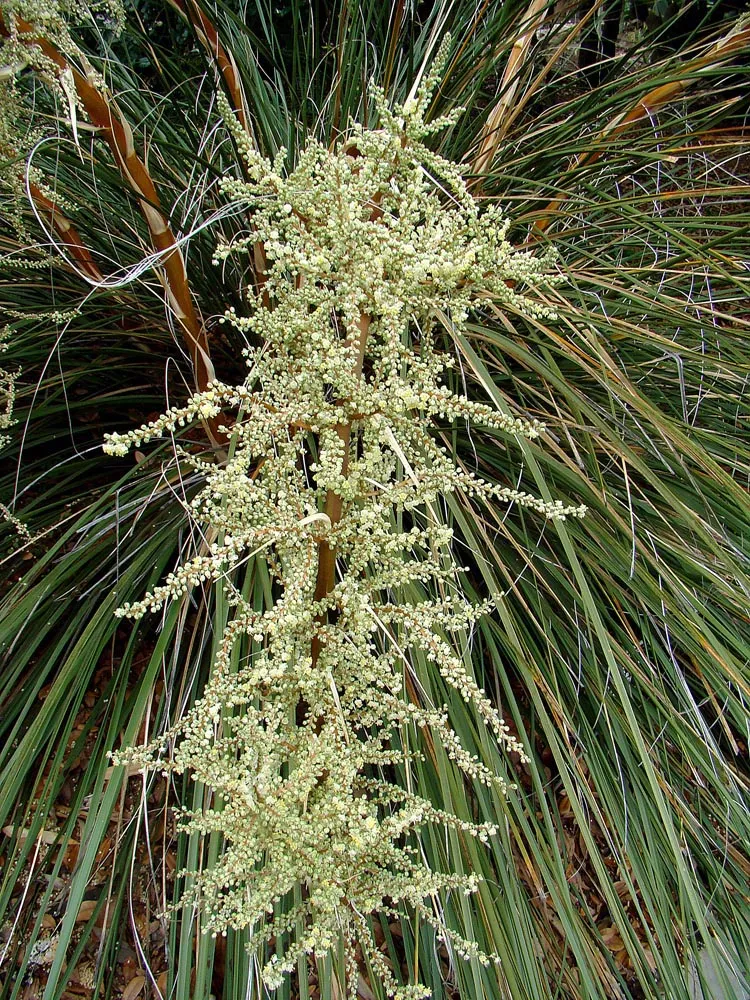
Nolina microcarpa, commonly known as Sacahuista or Southwestern Beargrass, is a remarkably resilient and visually distinctive evergreen perennial belonging to the Asparagaceae family, which also includes agaves and yuccas. Native to the arid and semi-arid regions of the southwestern United States, specifically Arizona, New Mexico, Utah, and potentially western Texas, extending into northern Mexico, this plant is not a true grass despite its common name. It forms dense, architectural clumps up to 6.6 feet (2 meters) in diameter, characterized by numerous long, narrow, fibrous, and often finely serrated leaves that can reach 3 to 4 feet in length and width.
These tough leaves emerge from a substantial woody caudex. In late spring to early summer, Nolina microcarpa produces a striking, erect flower stalk that can soar several feet above the foliage, adorned with a multitude of small, creamy white to yellowish flowers. These blossoms eventually give way to small, papery seed capsules.
Highly adapted to its native environment, Sacahuista thrives in full sun and requires well-drained, often rocky or sandy soils, making it an excellent choice for xeriscaping and sustainable landscape design. Historically, indigenous peoples utilized its robust foliage for crafting durable baskets, mats, and other woven goods, underscoring its cultural and practical significance beyond its aesthetic appeal.
Trusted Scientific References
1. Authoritative external sources for Nolina Microcarpa
1.1 Wikipedia — Nolina Microcarpa
1.2 Kew POWO (Plants of the World Online)
1.3 PubMed — peer-reviewed research
1.4 NCBI Taxonomy Browser
1.5 GBIF — Global Biodiversity
1.6Nolina Microcarpa should be interpreted through verified botanical identity, practical care, and responsible safety language. This recovery note adds the missing context needed for a complete profile: match light to the plant's habit, use well-drained soil, water according to season, and avoid unsupported medicinal or edible claims. For publishing, the plant can be presented as a source-backed garden plant with clear care guidance, common problem diagnosis, and conservative safety wording.
1.1.Nolina Microcarpa — Key Features
- ✓ <strong>Resilient Evergreen Perennial</strong> — Adapts to harsh desert conditions.
- ✓ <strong>Native to Southwestern US and Northern Mexico</strong> — Thrives in arid and semi-arid climates.
- ✓ <strong>Forms Dense Clumps</strong> — Characterized by a distinctive architectural growth habit.
- ✓ <strong>Tough, Fibrous, Grass</strong> — like Leaves — Providing structural interest and drought resistance.
- ✓ <strong>Produces Tall, Creamy White Flower Stalks</strong> — A spectacular display in late spring to early summer.
- ✓ <strong>Highly Drought</strong> — Tolerant — Requires minimal water once established.
- ✓ <strong>Low Maintenance Plant</strong> — Ideal for sustainable landscaping and xeriscaping.
- ✓ <strong>Historically Used for Weaving</strong> — Significant cultural importance for indigenous peoples.
- ✓ <strong>No Documented Medicinal Uses</strong> — Primarily valued for its ornamental and utilitarian properties.
- ✓ <strong>Contains Inferred Phytochemicals</strong> — Saponins and phenolics are expected based on related species.
1.2.Nolina Microcarpa — Quick Summary
- ✓ Nolina microcarpa is an evergreen perennial native to the arid Southwestern US and Northern Mexico.
- ✓ Known as Sacahuista or Beargrass, it is a resilient, drought-tolerant member of the Asparagaceae family.
- ✓ Historically, its fibrous leaves were used by indigenous cultures for weaving baskets and mats.
- ✓ It is highly valued in modern xeriscaping for its architectural form and low maintenance.
- ✓ There are no documented traditional or modern medicinal uses for Nolina microcarpa.
- ✓ Phytochemicals like saponins and phenolics are inferred based on related species, warranting further research.
2.Nolina Microcarpa — Scientific Identity
3.Nolina Microcarpa — Quick Facts
4.Nolina Microcarpa — Appearance & Identification
5.Nolina Microcarpa — Native Habitat
6.Nolina Microcarpa — Water Requirements
- ✓ Site Selection — Choose a location with full sun exposure and excellent drainage, mimicking its native arid habitat conditions.
- ✓ Soil Requirements — Nolina microcarpa thrives in sandy, gravelly, or rocky soils; avoid heavy clay or consistently moist substrates.
- ✓ Watering — Once established, the plant is highly drought-tolerant and requires minimal supplemental water, typically only during prolonged dry spells.
- ✓ Propagation — Can be propagated from fresh seeds, which germinate best after stratification, or by carefully dividing mature clumps to separate offsets.
- ✓ Hardiness Zones — Best suited for USDA hardiness zones 7-10, tolerating cold down to approximately 0°F (-18°C).
- ✓ Maintenance — Requires very low maintenance; prune only to remove dead or damaged leaves or spent flower stalks, which can be cut at the base.
- ✓ Landscape Use — Ideal for xeriscaping, rock gardens, desert gardens, and as an architectural accent plant in water-wise landscapes.
- ✓ Pest and Disease Resistance — Generally resistant to most common pests and diseases due to its tough nature and arid adaptations.
Reviewed by the Flora Medical Global Botanical Review Panel
Multi-disciplinary editorial group · Botany · Ethnobotany · Herbal-medicine literature
Who reviewed this: This page was checked by the Flora Medical Global Botanical Review Panel — an in-house editorial group of botany graduates, ethnobotany researchers, and horticulture practitioners who collectively maintain our 7,000+ plant encyclopedia. Meet the team.
Our 4-step verification process
1. Taxonomic verification
Scientific names and synonyms cross-checked against Kew POWO, World Flora Online, and The Plant List.
2. Phytochemical & medicinal cross-reference
Active compounds, traditional uses, and reported activities are cross-referenced with PubMed, USDA Dr. Duke's database, and peer-reviewed ethnobotanical literature.
3. Conservation & distribution check
Distribution, ecology, and conservation status confirmed against GBIF occurrence records and the IUCN Red List.
4. Editorial & safety review
Every entry passes an editorial pass for clarity, originality, and safety notices (toxicity, contraindications, dosage caveats) before publication.
Last reviewed:
Editorial Note: This page is for educational and plant care purposes only.
Written by: Flora Medical Global Editorial Team
Reviewed by: Flora Medical Global Botanical Review Panel
Last Updated: June 15, 2026







Nolina Microcarpa — Comments & Community Reviews
Rate this plant