
Care Disclaimer: Plant care recommendations are general guidelines based on common growing conditions. Individual results may vary based on your local environment, climate, and care routine. If your plant is toxic, keep it away from children and pets, and consult a veterinarian if accidental ingestion occurs.
1.Nyssa Sylvatica — Overview
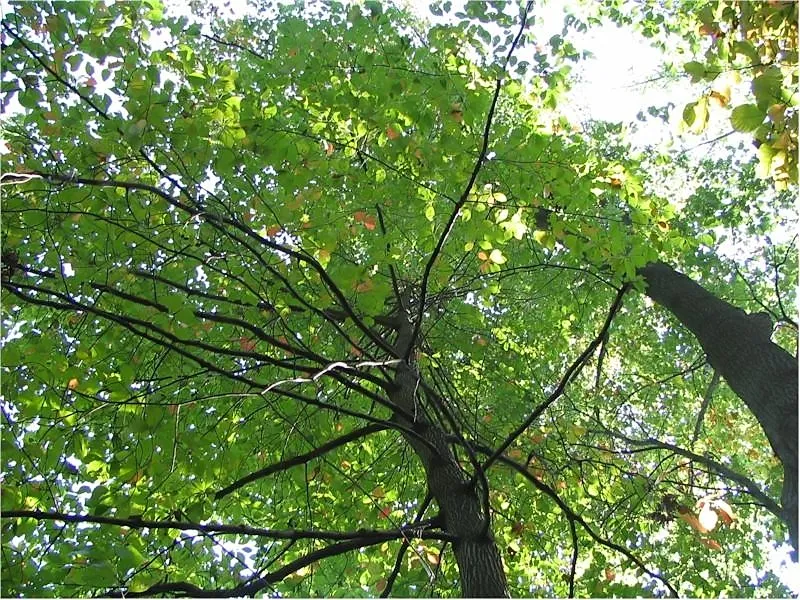
Nyssa sylvatica, commonly known as Black Tupelo, Black Gum, or Sour Gum, is a distinguished deciduous tree indigenous to the eastern regions of North America, extending its natural range from the northern reaches of Maine down to Florida and westward to Michigan and Texas. This majestic species is highly esteemed for its breathtaking autumn display, where its lustrous dark green summer foliage transforms into a vivid spectrum of scarlet, fiery orange, and deep purple hues, making it a prized ornamental specimen in landscapes. Typically reaching heights of 30-50 feet, with some specimens exceeding this, and boasting a spread of 20-30 feet, it characteristically develops a straight, often slightly tapered trunk crowned by a rounded to pyramidal canopy.
The mature bark of Nyssa sylvatica is dark gray, deeply furrowed, and develops a distinctive, almost alligator-hide-like texture. Its leaves are simple, arranged alternately along the stems, and are oval to obovate in shape with entire, often subtly wavy margins. In spring, the tree produces inconspicuous greenish-white flowers, which mature into small, dark blue, oval drupes (berries) by late summer.
These berries are not only visually appealing but also serve as a crucial food source for a diverse array of birds and other wildlife, underscoring its significant ecological value within its native ecosystems. The tree prefers moist, acidic, well-drained soils and tolerates both full sun and partial shade, demonstrating remarkable adaptability.
Trusted Scientific References
1. Authoritative external sources for Nyssa sylvatica
1.1 Wikipedia — Nyssa sylvatica
1.2 Kew POWO (Plants of the World Online)
1.3 PubMed — peer-reviewed research
1.4 NCBI Taxonomy Browser
1.5 GBIF — Global Biodiversity
1.6Nyssa Sylvatica should be interpreted through verified botanical identity, practical care, and responsible safety language. This recovery note adds the missing context needed for a complete profile: match light to the plant's habit, use well-drained soil, water according to season, and avoid unsupported medicinal or edible claims. For publishing, the plant can be presented as a source-backed garden plant with clear care guidance, common problem diagnosis, and conservative safety wording.
1.1.Nyssa Sylvatica — Key Features
- ✓ <strong>Majestic Deciduous Tree</strong> — Known for its stately form and impressive height.
- ✓ <strong>Stunning Fall Foliage</strong> — Exhibits brilliant shades of scarlet, orange, and purple in autumn.
- ✓ <strong>Valuable Wildlife Food Source</strong> — Produces small, dark blue drupes consumed by birds and other animals.
- ✓ <strong>Distinctive Bark</strong> — Mature specimens develop deeply furrowed, alligator-hide-like bark.
- ✓ <strong>Traditional Astringent Properties</strong> — Bark and roots were historically used for their tissue-contracting effects.
- ✓ <strong>Antioxidant</strong> — Rich Fruit — Berries contain high levels of anthocyanins and other beneficial compounds.
- ✓ <strong>Ecological Importance</strong> — Plays a vital role in native ecosystems of eastern North America.
- ✓ <strong>Adaptable Growth</strong> — Tolerates a range of soil types and light conditions, favoring moist, acidic soils.
- ✓ <strong>Unique Branching Pattern</strong> — Often develops horizontal branches, creating an attractive silhouette.
- ✓ <strong>North American Native</strong> — Indigenous to a broad region of eastern and central North America.
1.2.Nyssa Sylvatica — Quick Summary
- ✓ Nyssa sylvatica, or Black Tupelo, is a native Eastern North American deciduous tree.
- ✓ Celebrated for its stunning fall foliage and ecological role as a wildlife food source.
- ✓ Historically, Native American tribes used bark and roots for astringent purposes.
- ✓ The fruit is edible, tart, and rich in beneficial antioxidants like anthocyanins.
- ✓ Modern scientific research on its direct medicinal efficacy is significantly limited.
- ✓ Any potential medicinal use should be approached with caution and professional guidance.
2.Nyssa Sylvatica — Scientific Identity
3.Nyssa Sylvatica — Quick Facts
4.Nyssa Sylvatica — Appearance & Identification
5.Nyssa Sylvatica — Native Habitat
6.Nyssa Sylvatica — Water Requirements
- ✓ Site Selection — Prefers full sun to partial shade; adequate sunlight encourages denser growth and more vibrant fall foliage.
- ✓ Soil Requirements — Thrives in moist, acidic (pH 5.5-6.5), well-drained loamy or sandy soils, but is adaptable to various soil types including wet conditions.
- ✓ Watering — Requires consistent moisture, especially during establishment; mature trees are somewhat drought-tolerant but benefit from supplemental watering during dry spells.
- ✓ Propagation — Can be propagated from seeds, which require stratification for successful germination, or from semi-hardwood cuttings taken in summer.
- ✓ Fertilization — Generally does not require heavy fertilization; a balanced slow-release fertilizer can be applied in spring if soil nutrients are deficient.
- ✓ Pruning — Minimal pruning is needed, primarily for removing dead, damaged, or crossing branches to maintain tree health and shape.
- ✓ Pest and Disease Resistance — Exhibits good resistance to most common pests and diseases, making it a relatively low-maintenance tree.
- ✓ Hardiness Zones — Hardy in USDA Zones 4-9, tolerating a wide range of temperate climates.
Reviewed by the Flora Medical Global Botanical Review Panel
Multi-disciplinary editorial group · Botany · Ethnobotany · Herbal-medicine literature
Who reviewed this: This page was checked by the Flora Medical Global Botanical Review Panel — an in-house editorial group of botany graduates, ethnobotany researchers, and horticulture practitioners who collectively maintain our 7,000+ plant encyclopedia. Meet the team.
Our 4-step verification process
1. Taxonomic verification
Scientific names and synonyms cross-checked against Kew POWO, World Flora Online, and The Plant List.
2. Phytochemical & medicinal cross-reference
Active compounds, traditional uses, and reported activities are cross-referenced with PubMed, USDA Dr. Duke's database, and peer-reviewed ethnobotanical literature.
3. Conservation & distribution check
Distribution, ecology, and conservation status confirmed against GBIF occurrence records and the IUCN Red List.
4. Editorial & safety review
Every entry passes an editorial pass for clarity, originality, and safety notices (toxicity, contraindications, dosage caveats) before publication.
Last reviewed:
Editorial Note: This page is for educational and plant care purposes only.
Written by: Flora Medical Global Editorial Team
Reviewed by: Flora Medical Global Botanical Review Panel
Last Updated: June 15, 2026







Nyssa Sylvatica — Comments & Community Reviews
Rate this plant