
Care Disclaimer: Plant care recommendations are general guidelines based on common growing conditions. Individual results may vary based on your local environment, climate, and care routine. If your plant is toxic, keep it away from children and pets, and consult a veterinarian if accidental ingestion occurs.
1.Odontonema Cuspidatum — Overview
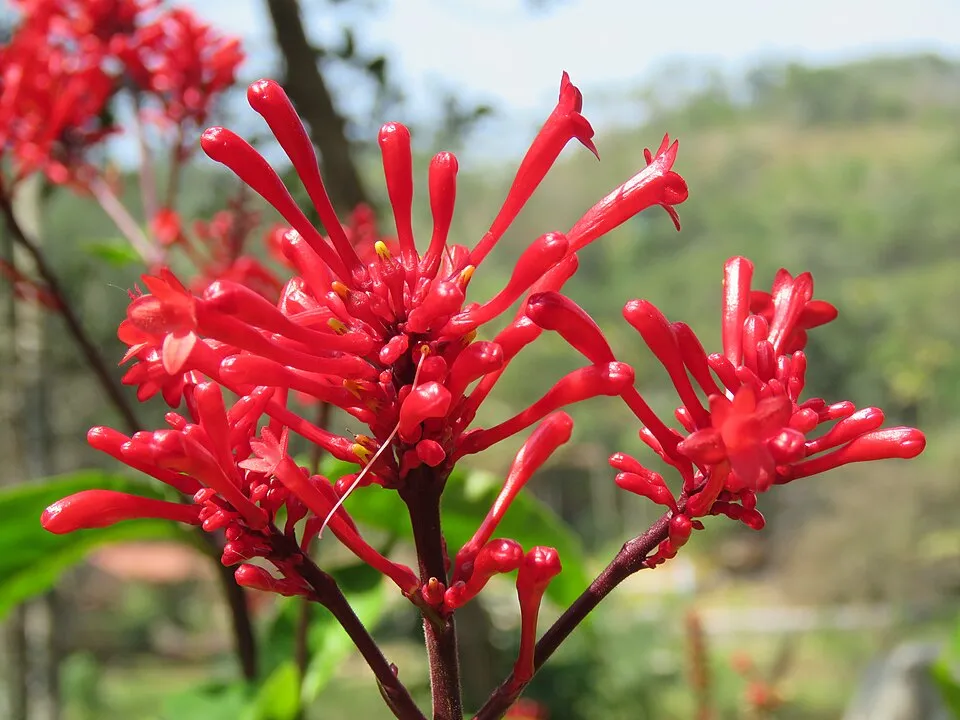
Odontonema cuspidatum, widely recognized by its common names Firespike, Cardinal's Guard, or Toothed Lance, is a visually striking perennial shrub belonging to the Acanthaceae family. Native to the warm, humid regions of Central America and Mexico, it has become a popular ornamental plant cultivated across tropical and subtropical zones globally.
This fast-growing species typically forms an upright, bushy habit, reaching heights of 3 to 10 feet with sparse, stiff branches. Its foliage consists of glossy, dark green, ovate leaves, often 4-6 inches long, characterized by wavy margins and distinct pointed tips, arranged oppositely along the stem.
The true spectacle of Firespike lies in its inflorescence. From late summer through fall, and frequently extending into winter in frost-free environments, the plant produces numerous slender, erect racemes. These spikes are densely adorned with brilliant, tubular, crimson-red flowers that evoke the appearance of miniature fireworks, making it an irresistible magnet for hummingbirds, butterflies, and other pollinators.
While primarily celebrated for its aesthetic appeal, Odontonema cuspidatum is highly adaptable, demonstrating resilience in various environments. It thrives best in moist, shady locations with fertile to moderately fertile, neutral pH soils, exhibiting good shade tolerance but a notable intolerance to freezing conditions and salty soils. Its ability to reproduce vegetatively through stem segments and root suckers, alongside seed production (though often sparse viable seeds), contributes to its adaptability, occasionally leading to its categorization as invasive in certain non-native understory habitats.
Trusted Scientific References
1. Authoritative external sources for Odontonema Cuspidatum
1.1 Wikipedia — Odontonema Cuspidatum
1.2 Kew POWO (Plants of the World Online)
1.3 PubMed — peer-reviewed research
1.4 NCBI Taxonomy Browser
1.5 GBIF — Global Biodiversity
1.6Odontonema Cuspidatum should be interpreted through verified botanical identity, practical care, and responsible safety language. This recovery note adds the missing context needed for a complete profile: match light to the plant's habit, use well-drained soil, water according to season, and avoid unsupported medicinal or edible claims. For publishing, the plant can be presented as a source-backed garden plant with clear care guidance, common problem diagnosis, and conservative safety wording.
1.1.Odontonema Cuspidatum — Key Features
- ✓ <strong>Botanical Name</strong> — Odontonema cuspidatum (Nees) Kuntze.
- ✓ <strong>Common Names</strong> — Firespike, Cardinal's Guard, Toothed Lance, Scarlet Fire-spike.
- ✓ <strong>Plant Family</strong> — Acanthaceae.
- ✓ <strong>Geographic Origin</strong> — Central America and Mexico (Neotropics).
- ✓ <strong>Striking Flowers</strong> — Produces brilliant, tubular, crimson-red flower spikes.
- ✓ <strong>Growth Habit</strong> — Upright, bushy perennial shrub, typically 3-10 feet tall.
- ✓ <strong>Pollinator Magnet</strong> — Highly attractive to hummingbirds, butterflies, and bees.
- ✓ <strong>Ornamental Value</strong> — Prized for its showy, late-season blooms and glossy foliage.
- ✓ <strong>Shade Tolerance</strong> — Adaptable and thrives in semi-shady to full sun conditions.
- ✓ <strong>Invasive Potential</strong> — Can exhibit invasive tendencies in certain non-native, humid understory environments.
1.2.Odontonema Cuspidatum — Quick Summary
- ✓ Firespike is a vibrant ornamental shrub, native to Central America and Mexico.
- ✓ Known for its striking crimson-red flower spikes that attract pollinators.
- ✓ Scientific research on its medicinal properties is extremely limited.
- ✓ Contains common plant compounds like flavonoids and phenolic acids.
- ✓ Not recommended for internal medicinal use due to lack of safety data.
- ✓ Primarily valued for its aesthetic appeal and ecological role in gardens.
2.Odontonema Cuspidatum — Scientific Identity
3.Odontonema Cuspidatum — Quick Facts
4.Odontonema Cuspidatum — Appearance & Identification
5.Odontonema Cuspidatum — Native Habitat
6.Odontonema Cuspidatum — Water Requirements
- ✓ Soil Preference — Thrives best in fertile to moderately fertile soils with a neutral pH, ensuring good drainage to prevent root rot.
- ✓ Light Requirements — Prefers semi-shady locations but can tolerate full sun, especially in cooler climates or when provided with consistent moisture.
- ✓ Water Needs — Requires moderate and consistent watering, maintaining soil moisture without allowing it to become waterlogged.
- ✓ Temperature & Climate — Optimal growth occurs in tropical and subtropical climates; it is highly sensitive to freezing temperatures and will not tolerate frost.
- ✓ Propagation — Easily propagated vegetatively using stem cuttings or root suckers; seed propagation is also possible but often yields fewer viable seeds.
- ✓ Pruning & Maintenance — Benefits from minimal pruning to maintain its desired upright, bushy form and encourage prolific flowering.
- ✓ Fertilization — Apply a balanced, slow-release fertilizer during the active growing season to support robust growth and vibrant blooms.
- ✓ Pest & Disease Management — Generally robust, but monitor for common garden pests like aphids or whiteflies in humid conditions, treating organically if necessary.
Reviewed by the Flora Medical Global Botanical Review Panel
Multi-disciplinary editorial group · Botany · Ethnobotany · Herbal-medicine literature
Who reviewed this: This page was checked by the Flora Medical Global Botanical Review Panel — an in-house editorial group of botany graduates, ethnobotany researchers, and horticulture practitioners who collectively maintain our 7,000+ plant encyclopedia. Meet the team.
Our 4-step verification process
1. Taxonomic verification
Scientific names and synonyms cross-checked against Kew POWO, World Flora Online, and The Plant List.
2. Phytochemical & medicinal cross-reference
Active compounds, traditional uses, and reported activities are cross-referenced with PubMed, USDA Dr. Duke's database, and peer-reviewed ethnobotanical literature.
3. Conservation & distribution check
Distribution, ecology, and conservation status confirmed against GBIF occurrence records and the IUCN Red List.
4. Editorial & safety review
Every entry passes an editorial pass for clarity, originality, and safety notices (toxicity, contraindications, dosage caveats) before publication.
Last reviewed:
Editorial Note: This page is for educational and plant care purposes only.
Written by: Flora Medical Global Editorial Team
Reviewed by: Flora Medical Global Botanical Review Panel
Last Updated: June 15, 2026







Odontonema Cuspidatum — Comments & Community Reviews
Rate this plant