
Care Disclaimer: Plant care recommendations are general guidelines based on common growing conditions. Individual results may vary based on your local environment, climate, and care routine. If your plant is toxic, keep it away from children and pets, and consult a veterinarian if accidental ingestion occurs.
1.Lily — Overview
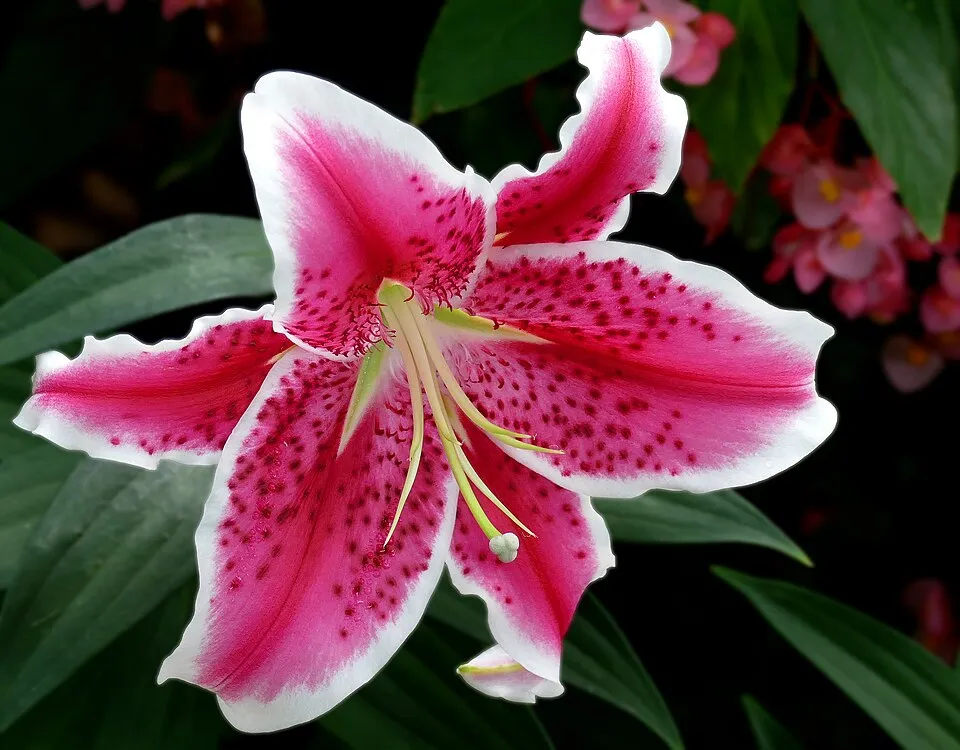
Lilium orientalis, commonly known as Oriental Lily, represents a distinguished group of hybrid lilies, celebrated globally for their extraordinary ornamental qualities. These showy, large-flowered perennials are a horticultural triumph, resulting from intricate cross-breeding among various species predominantly from Asia, belonging to the Liliaceae family. Morphologically, Oriental Lilies typically exhibit robust, upright stems that can reach heights of 2 to 4 feet, adorned with glossy, lance-shaped green leaves arranged spirally.
The star attraction is undoubtedly their magnificent blossoms, which emerge in mid to late summer, offering a spectacular burst of color and an intensely sweet, often spicy fragrance that can permeate an entire garden or indoor space. Flower colors range from pristine whites and delicate pinks to vibrant crimson reds and striking bi-color combinations, frequently embellished with contrasting speckles, brushstrokes, or central bands that enhance their visual allure. While not found in the wild, these cultivated beauties thrive in well-drained, fertile garden beds or containers, preferring locations with morning sun and some afternoon shade.
Their captivating appearance and potent aroma make them an enduringly popular choice for cut flower arrangements and as focal points in landscape design, embodying elegance and horticultural artistry.
Trusted Scientific References
1. Authoritative external sources for Lilium orientalis
1.1 Wikipedia — Lilium orientalis
1.2 Kew POWO (Plants of the World Online)
1.3 PubMed — peer-reviewed research
1.4 NCBI Taxonomy Browser
1.5 GBIF — Global Biodiversity
1.6Lily should be interpreted through verified botanical identity, practical care, and responsible safety language. This recovery note adds the missing context needed for a complete profile: match light to the plant's habit, use well-drained soil, water according to season, and avoid unsupported medicinal or edible claims. For publishing, the plant can be presented as a source-backed garden plant with clear care guidance, common problem diagnosis, and conservative safety wording.
1.1.Lily — Key Features
- ✓ <strong>Large, Showy Blooms</strong> — Produces impressive, visually striking flowers.
- ✓ <strong>Intense Sweet Fragrance</strong> — Emits a powerful, captivating aroma.
- ✓ <strong>Diverse Color Palette</strong> — Available in a wide range of brilliant whites, pinks, and reds.
- ✓ <strong>Mid to Late Summer Flowering</strong> — Offers spectacular blooms when many other plants fade.
- ✓ <strong>Excellent Cut Flower</strong> — Ideal for long-lasting, fragrant floral arrangements.
- ✓ <strong>Horticultural Hybrid</strong> — A result of extensive breeding for superior ornamental traits.
- ✓ <strong>Sturdy Upright Stems</strong> — Provides strong support for its magnificent flower heads.
- ✓ <strong>Glossy Green Foliage</strong> — Elegant backdrop to the vibrant blossoms.
- ✓ <strong>Bulbous Perennial</strong> — Returns reliably year after year from underground bulbs.
- ✓ <strong>Ornamental Value</strong> — Primarily grown for its exceptional aesthetic contribution to landscapes.
1.2.Lily — Quick Summary
- ✓ Ornamental hybrid lily cherished for its large, exquisitely fragrant flowers.
- ✓ Primarily cultivated for aesthetic appeal in gardens and as cut flowers.
- ✓ Known for its vibrant color palette, including whites, pinks, and reds.
- ✓ Highly toxic to felines, causing severe and potentially fatal kidney damage.
- ✓ Requires well-drained, slightly acidic soil and consistent moisture for optimal growth.
- ✓ No recognized medicinal uses or traditional herbal applications for this specific hybrid.
2.Lily — Scientific Identity
3.Lily — Quick Facts
4.Lily — Appearance & Identification
5.Lily — Native Habitat
6.Lily — Water Requirements
- ✓ Soil Preparation — Ensure well-drained, fertile soil with a slightly acidic pH (6.0-6.8); amend heavy clay soils with compost or organic matter to improve drainage and nutrient content.
- ✓ Planting Depth and Spacing — Plant bulbs 6 inches deep and space them 8-12 inches apart to allow for adequate growth and air circulation.
- ✓ Light Requirements — Provide partial to full sun, ideally morning sun with protection from intense afternoon heat, which can scorch petals.
- ✓ Watering — Water generously after planting and maintain consistent, deep watering (about 1 inch per week) throughout the growing season, especially during dry spells.
- ✓ Fertilization — Apply a balanced, slow-release fertilizer in early spring as new shoots emerge and again when flower buds begin to form to support vigorous growth and blooming.
- ✓ Mulching — Apply a 2-3 inch layer of organic mulch (e.g., shredded bark, compost) around the base of plants to conserve soil moisture, regulate temperature, and suppress weeds.
- ✓ Deadheading and Staking — Remove spent blooms (deadhead) to encourage the plant to put energy into bulb development rather than seed production; stake tall varieties to prevent bending or breaking.
- ✓ Winter Care — In colder zones (USDA Zone 3-7), reduce watering as foliage dies back; for optimal protection, some gardeners may dig up bulbs and store them in a cool, dry place over winter.
Reviewed by the Flora Medical Global Botanical Review Panel
Multi-disciplinary editorial group · Botany · Ethnobotany · Herbal-medicine literature
Who reviewed this: This page was checked by the Flora Medical Global Botanical Review Panel — an in-house editorial group of botany graduates, ethnobotany researchers, and horticulture practitioners who collectively maintain our 7,000+ plant encyclopedia. Meet the team.
Our 4-step verification process
1. Taxonomic verification
Scientific names and synonyms cross-checked against Kew POWO, World Flora Online, and The Plant List.
2. Phytochemical & medicinal cross-reference
Active compounds, traditional uses, and reported activities are cross-referenced with PubMed, USDA Dr. Duke's database, and peer-reviewed ethnobotanical literature.
3. Conservation & distribution check
Distribution, ecology, and conservation status confirmed against GBIF occurrence records and the IUCN Red List.
4. Editorial & safety review
Every entry passes an editorial pass for clarity, originality, and safety notices (toxicity, contraindications, dosage caveats) before publication.
Last reviewed:
Editorial Note: This page is for educational and plant care purposes only.
Written by: Flora Medical Global Editorial Team
Reviewed by: Flora Medical Global Botanical Review Panel
Last Updated: June 15, 2026







Lily — Comments & Community Reviews
Rate this plant